
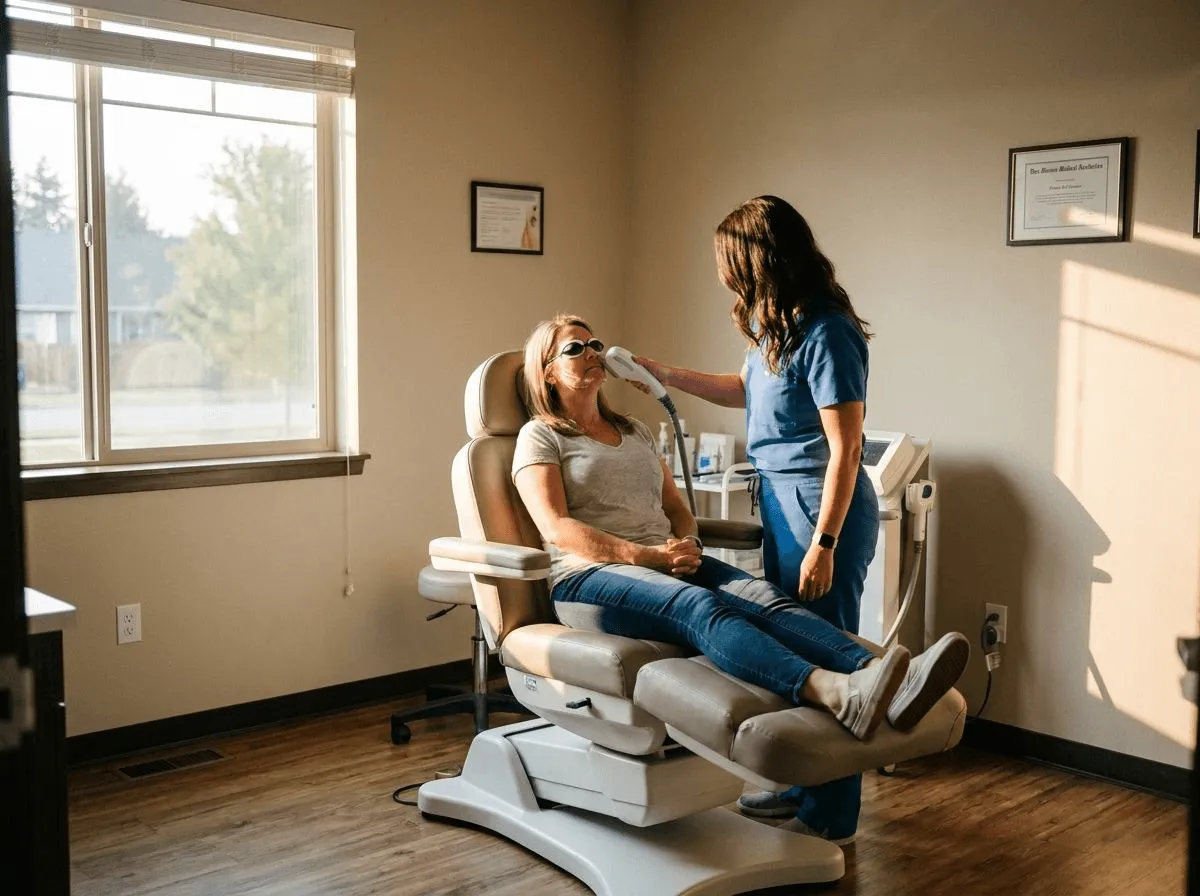
IPL Photofacial in Des Moines, WA
Reduce sun spots, redness, rosacea, and uneven skin tone with broad-spectrum intense pulsed light therapy. Allen Medical Aesthetics in Des Moines, WA offers IPL photofacial treatments for comprehensive skin tone correction with no downtime.
- Treatment Time
- 20-30 minutes
- Downtime
- None
- Results In
- 1-2 weeks
- Lasts
- 6-12 months
- Sessions
- 3-5
- Best For
- Sun damage
What Is an IPL Photofacial?
An IPL photofacial is a non-invasive light-based treatment that uses broad-spectrum intense pulsed light to target pigmentation, redness, and vascular irregularities in the skin. The light energy is selectively absorbed by chromophores in the skin, specifically melanin in brown spots and hemoglobin in red lesions and visible blood vessels. This targeted absorption heats and breaks down the pigmented or vascular cells without damaging the surrounding tissue.
IPL treatment is one of the most versatile light-based therapies available for skin rejuvenation. Unlike lasers that use a single focused wavelength, IPL delivers a broad spectrum of light wavelengths, which allows it to address multiple concerns in a single session. Sun spots, age spots, freckles, rosacea-related redness, broken capillaries, and general blotchiness can all be treated in one appointment.
At Allen Medical Aesthetics in Des Moines, WA, our licensed laser technicians perform all IPL photofacial treatments. If you have been searching for IPL laser treatment near me, we invite you to schedule a consultation to determine whether IPL is the right approach for your skin concerns.
How IPL Photofacial Treatment Works
IPL delivers broad-spectrum light in controlled pulses. The light is selectively absorbed by melanin (in pigmented lesions) and hemoglobin (in blood vessels). This targeted absorption heats the chromophore, causing it to break down or the vessel to collapse. The body then naturally clears the fragmented pigment or reabsorbs the treated blood vessel.
IPL is one of the most versatile light-based treatments we have. I use it for sun spots, redness, rosacea, and overall tone correction. Patients are often surprised by how much more even their skin looks after just one or two sessions.

Skin evaluation and consultation
Your provider assesses your skin type, identifies the specific concerns to be treated (sun damage, redness, rosacea, broken capillaries), and determines whether IPL is the most effective approach. They explain what to expect during and after treatment.
Pre-treatment guidelines
Avoid sun exposure and self-tanners for two to four weeks before your appointment. Active tans increase the risk of side effects. Arrive with clean skin, free of makeup and sunscreen.
IPL treatment
A cooling gel is applied to the treatment area. The IPL handpiece delivers pulses of light that feel like a warm snapping sensation. No anesthesia is typically required. A full-face session takes approximately 20 to 30 minutes.
Post-treatment response
Pigmented spots will darken over three to seven days, then flake off naturally. Redness from rosacea or broken capillaries improves within one to two weeks. Avoid sun exposure and apply broad-spectrum sunscreen daily during the healing period.
Ready to see if ipl photofacial is right for you?
$50 consultation fee, applied toward your first treatment. No pressure, no obligation.
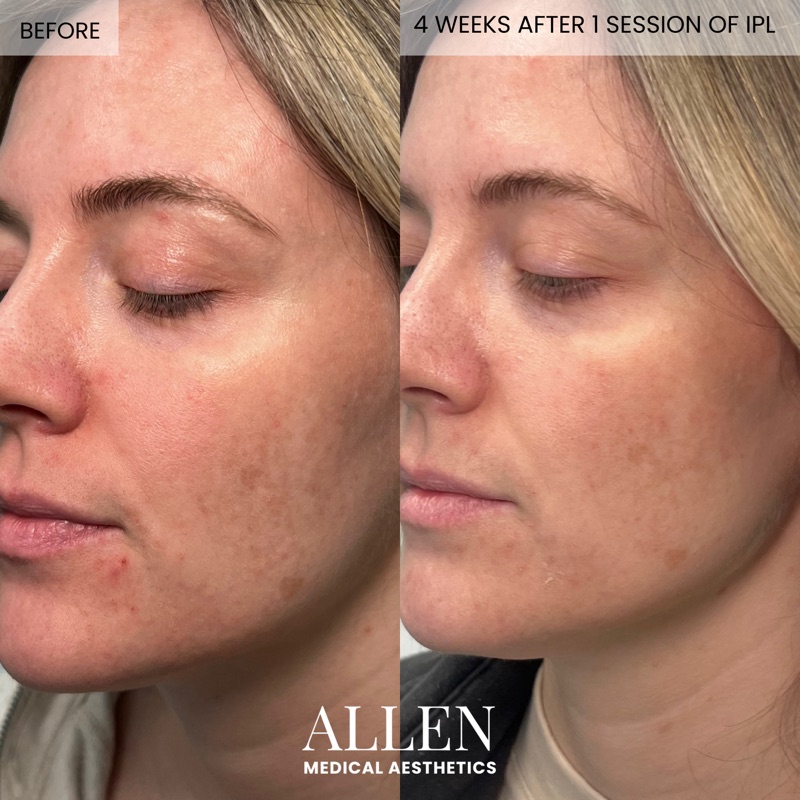
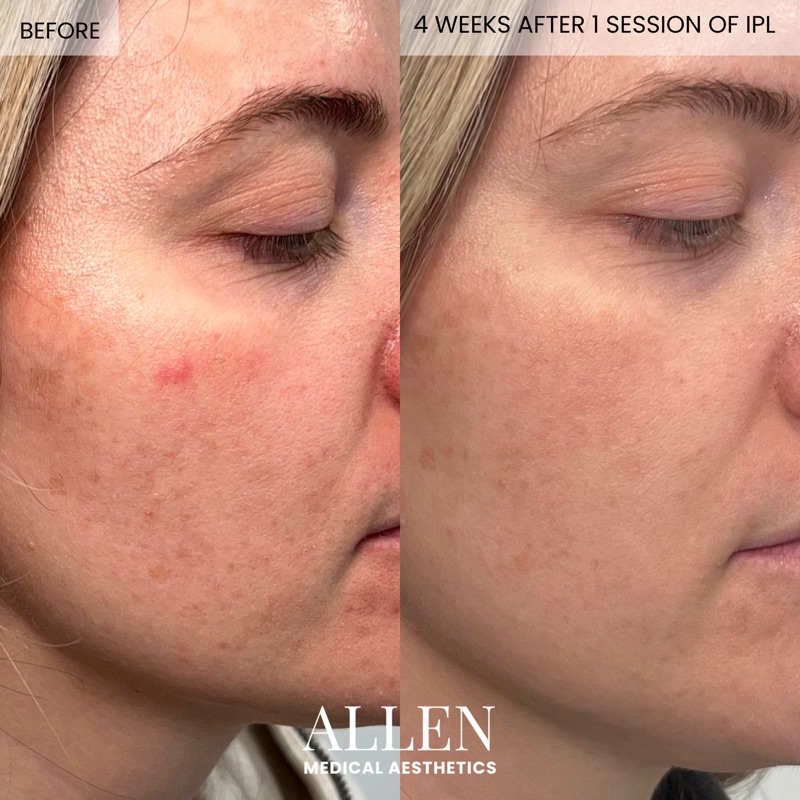
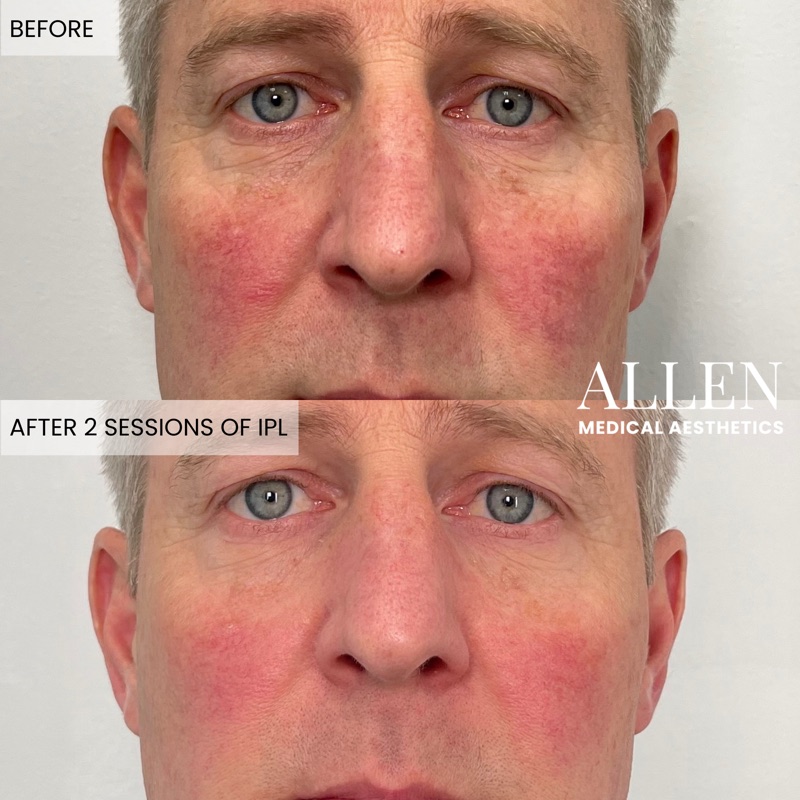
Before and After
Unretouched photos of real patients treated at Allen Medical Aesthetics, shared with consent.
Conditions Treated and Ideal Candidates
IPL photofacial is particularly effective for patients with visible sun damage, redness, and pigmentation concerns. Candidacy depends on your skin type, active lifestyle, and specific concerns.
- Sun spots and age spots (solar lentigines)
- Freckles and sun-induced pigmentation
- Rosacea and diffuse facial redness
- Broken capillaries and spider veins on the face
- Uneven skin tone and blotchiness
- Photoaged skin
Is This Treatment Right for You?
Sound like you? Let's talk about your goals.
Book a Consultation- Patients with fair to medium skin tones (Fitzpatrick I through III) with visible sun damage, pigmentation, or redness
- Those with rosacea-related redness and visible blood vessels who want a non-prescription treatment approach
- Patients looking for skin tone correction with zero downtime
- Anyone who wants to address multiple concerns (pigmentation and redness) in a single treatment session
- Not ideal for very dark skin tones (higher risk of hyperpigmentation), active tans, or melasma (requires a different treatment approach)
What to Expect: Recovery and Results
One of the key IPL photofacial benefits is the absence of real downtime. Immediately after treatment, you may notice mild redness and warmth, similar to a mild sunburn. This typically resolves within a few hours. You can apply makeup and return to your normal routine the same day.
The most visible part of the healing process occurs with pigmented spots. Brown spots will darken over three to seven days after treatment, then flake off naturally as the skin renews. This darkening is the expected response and means the treatment is working. Redness from rosacea or broken capillaries typically improves within one to two weeks.
Most patients achieve optimal results with three to five IPL sessions spaced three to four weeks apart. Maintenance treatments one to two times per year help manage the effects of ongoing sun exposure. IPL photofacial before and after comparisons typically show the most dramatic improvement in pigmentation after two to three sessions.
Mild redness and warmth that resolves within a few hours. You can apply makeup and return to normal activities the same day.
Pigmented spots begin to darken. This is the expected response. Do not pick or scrub at the darkened areas.
Darkened spots flake off naturally, revealing clearer, more even skin beneath. Redness from rosacea and visible vessels begins to fade.
Full results from the session become visible. Skin tone appears more even, and redness is noticeably reduced.
Cumulative improvement across all treated concerns. Pigmentation is significantly reduced, redness is calmed, and overall skin clarity is improved.
Common Questions About IPL Photofacial
What is the difference between IPL and laser treatment?
IPL (intense pulsed light) uses broad-spectrum light with multiple wavelengths to treat several concerns simultaneously. Lasers use a single, focused wavelength for more targeted treatment of specific conditions. IPL is ideal for overall tone correction and treating a combination of sun damage, pigmentation, and redness in one session. Lasers like CO2 are better suited for deep resurfacing, structural skin changes, and more concentrated treatment of individual concerns.
How many IPL treatments do I need?
Most patients see noticeable improvement after one to two sessions, with optimal results after three to five IPL sessions spaced three to four weeks apart. The number of sessions depends on the severity of your sun damage, pigmentation, or redness. Maintenance sessions one to two times per year help manage the effects of new sun exposure and keep your skin tone even.
What are the side effects of IPL?
The most common side effects are mild redness and warmth immediately after treatment, which resolve within a few hours. Pigmented spots will temporarily darken before flaking off within three to seven days. This is the expected, desired response. In rare cases, blistering or temporary hyperpigmentation can occur. Your provider evaluates your skin type before treatment to minimize these risks.
Can IPL treat rosacea?
IPL is one of the most effective non-prescription treatments for managing rosacea-related redness and visible blood vessels. The light energy targets hemoglobin in dilated blood vessels, reducing diffuse redness and broken capillaries over a series of treatments. IPL does not cure rosacea, but it significantly improves the visible symptoms and helps patients manage flare-ups long term.
What should I expect during an IPL treatment?
A cooling gel is applied to the treatment area. The IPL handpiece delivers pulses of broad-spectrum light across the skin. Most patients feel a warm snapping sensation with each pulse. The treatment is well-tolerated, and most patients do not require numbing. A full-face IPL session takes approximately 20 to 30 minutes. You can return to your normal routine immediately after.
How many IPL sessions do I need to get rid of sun spots and redness?
Most patients see significant improvement after three to five IPL sessions spaced three to four weeks apart. Mild sun damage may respond in fewer sessions, while deeper pigmentation or persistent redness (rosacea) may benefit from additional treatments. Dark spots typically darken and flake off within 7 to 14 days after each session, revealing clearer skin underneath.
Is IPL safe for my skin type, and can it make melasma worse?
IPL is safest for lighter skin types (Fitzpatrick I through III). Darker skin types have a higher risk of burns or hyperpigmentation with IPL and may benefit from alternative treatments. IPL can worsen melasma because the broad-spectrum light can stimulate melanocyte activity. If you have melasma, our providers may recommend SylfirmX RF microneedling instead, which is specifically designed to treat melasma without triggering rebound pigmentation.
What is the downtime after an IPL photofacial?
IPL has minimal downtime. Most patients return to normal activities immediately. You may experience mild redness for a few hours, similar to a light sunburn. Treated sun spots and freckles will darken over the next 3 to 7 days and then flake off naturally. Avoid direct sun exposure and wear SPF 30 or higher for at least two weeks after treatment to protect your results.
Explore Similar Services
CO2 Laser Resurfacing
Fractional CO2 laser resurfacing for deep wrinkles, scars, and comprehensive skin renewal.
Explore CO2 Laser ResurfacingLaser & SkinChemical Peels
Medical-grade chemical peels for skin renewal, pigmentation correction, and texture improvement.
Explore Chemical PeelsLaser & SkinVascular Laser Treatment
Targeted laser treatment for spider veins, broken capillaries, rosacea, and vascular lesions.
Explore Vascular Laser TreatmentLaser & SkinMicroneedling
Collagen-stimulating microneedling with PRF and PDRN for improved skin texture and firmness.
Explore MicroneedlingRelated Articles
How Long Does Laser Hair Removal Last?
One of the most important questions patients ask before starting laser hair removal is how long the results will actually last. After investing time and money i...
Read article Laser and SkinErbium Laser vs CO2 Laser: Which Is Better for Your Skin?
When researching laser skin resurfacing, you will encounter two dominant technologies: erbium YAG laser and CO2 laser. Both are ablative lasers that remove dama...
Read article Laser and SkinIs Laser Hair Removal Permanent? What the Science Actually Says
If you are considering laser hair removal, you have probably wondered whether the results are truly permanent. It is the most common question patients ask befor...
Read articleAllen Medical Aesthetics serves patients from across the greater Seattle area. Visit our Des Moines, WA clinic for ipl photofacial.
Book Your IPL Photofacial Consultation
Contact Allen Medical Aesthetics in Des Moines, WA to schedule an IPL photofacial consultation. Our licensed laser technicians will evaluate your skin, identify the concerns IPL can address, and build a treatment plan tailored to your goals. Call (206) 414-9979 or book online. We serve patients from Des Moines, Federal Way, Kent, Burien, Seattle, and throughout South King County.
- Board-certified providers
- FDA-approved products only
- $50 consultation fee applied to treatment
- Transparent, honest pricing
- Individualized treatment plans
Request a Consultation
We will respond within one business day.
Thank you for reaching out.
We will respond within one business day. You can also call us at (206) 414-9979.
Something went wrong.
Please try again or call us directly at (206) 414-9979.