

Hormones regulate nearly every system in your body, from metabolism and mood to sleep, bone density, and sexual health. When hormone levels decline, whether from aging, medical conditions, or lifestyle factors, the effects can be far-reaching and deeply disruptive to daily life. Bioidentical hormone replacement therapy, commonly known as BHRT, has emerged as a preferred approach for restoring hormonal balance using hormones that are structurally identical to those your body produces naturally.
Despite its growing popularity, BHRT is still surrounded by confusion. Patients often have questions about how it differs from synthetic hormones, which delivery method is best, and whether hormone therapy is safe. This guide addresses those questions with clinical context, practical information, and the transparency that any medical treatment deserves.
At Allen Medical Aesthetics, our hormone optimization program is designed to identify hormonal imbalances through comprehensive lab work and develop individualized treatment plans that address each patient's unique symptoms and goals.
BHRT uses hormones that are chemically and structurally identical to the hormones your body produces, including estradiol, progesterone, testosterone, and DHEA. Unlike synthetic hormones, which have altered molecular structures, bioidentical hormones bind to your body's receptors in the same way as endogenous hormones.
Bioidentical hormones are not "natural" in the sense that they come directly from nature. They are synthesized in a laboratory, typically from plant-derived precursors such as soy or wild yam. The term "bioidentical" refers to their molecular structure, which matches your body's own hormones exactly.
What Are Bioidentical Hormones?
To understand BHRT, it helps to first understand the difference between bioidentical and synthetic hormones. Both are manufactured in laboratories, but their molecular structures differ in important ways.
Bioidentical hormones have the exact same chemical structure as the hormones produced by your ovaries, testes, adrenal glands, and thyroid. Estradiol (the primary estrogen), progesterone, testosterone, and DHEA are the most commonly prescribed bioidentical hormones. Because their molecular shape matches your body's receptors perfectly, they can be metabolized through the same pathways your body uses to process its own hormones.
Synthetic hormones, by contrast, have been intentionally altered at the molecular level. Medroxyprogesterone acetate (Provera), for example, is a synthetic progestin. It shares some of progesterone's effects but also activates different receptor pathways, which has been associated with different side effect profiles. Conjugated equine estrogens (Premarin) are derived from horse urine and contain estrogen compounds not found in the human body.
The distinction matters because the body's hormone receptors are highly specific. A hormone molecule that is even slightly different from the endogenous version may trigger different cellular responses, potentially leading to effects that diverge from what the body expects. Proponents of BHRT argue that using hormones with identical structures minimizes these unexpected interactions.

“Bioidentical hormones work because they fit your body's receptors the same way your own hormones do. When we restore estradiol, progesterone, or testosterone to physiologic levels using molecularly identical compounds, we are working with your biology rather than against it.”
Tod Work, MSN, MPA, ARNP Medical Director & Medical Weight Loss Provider
Common Symptoms of Hormone Imbalance
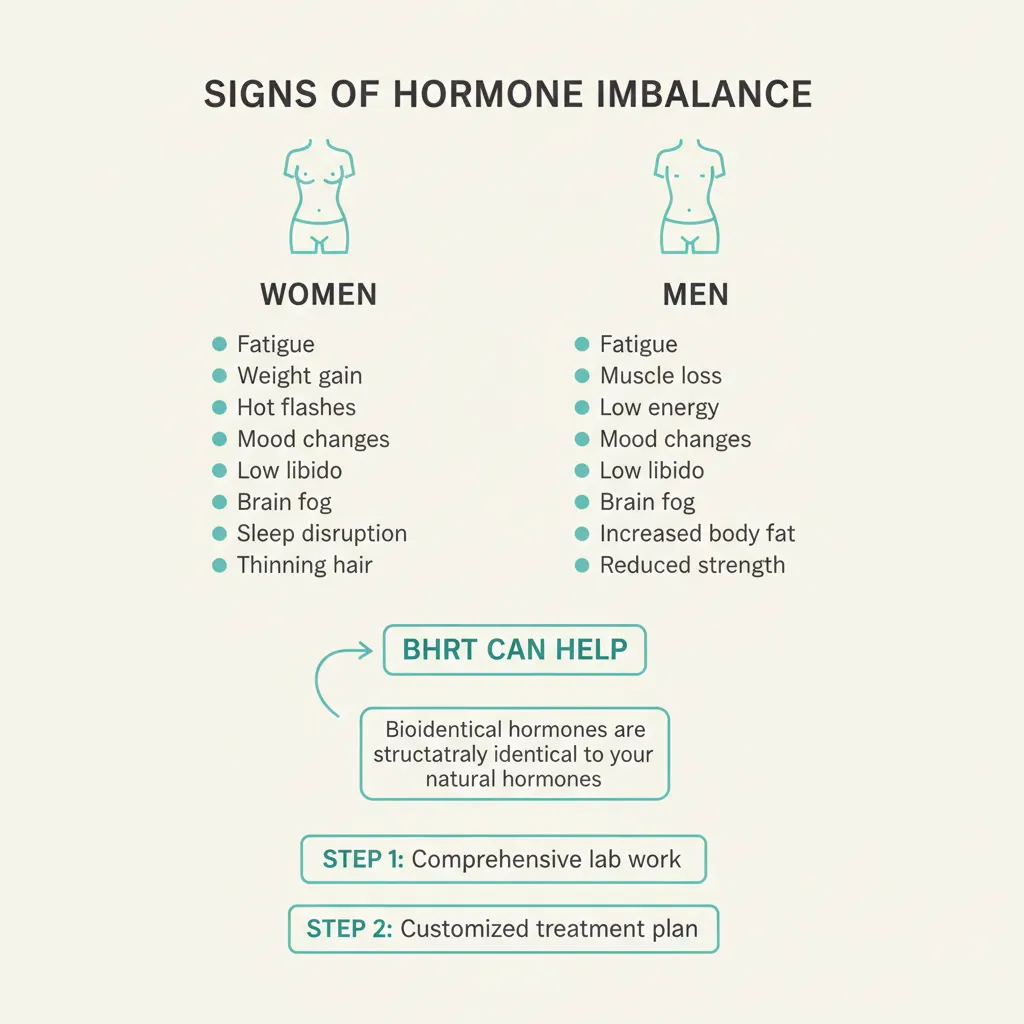
Hormonal decline can produce a wide range of symptoms that are easy to dismiss as "just aging" or attribute to stress, poor sleep, or other lifestyle factors. Recognizing these symptoms is the first step toward determining whether hormone imbalance may be contributing to how you feel. The table below outlines common symptoms organized by the primary hormone involved.
Many patients experience symptoms across multiple hormone categories because these systems are interconnected. Low thyroid function, for example, can impair the body's ability to utilize testosterone effectively, and cortisol imbalances can suppress both thyroid and reproductive hormone production. This is why a comprehensive approach that evaluates all relevant hormones, rather than testing just one or two, is essential for accurate diagnosis and effective treatment.
If you recognize several of these symptoms in yourself, hormonal imbalance may be a contributing factor worth investigating with your provider.
| Hormone | Common Symptoms in Women | Common Symptoms in Men |
|---|---|---|
| Estrogen | Hot flashes, night sweats, vaginal dryness, mood changes, brain fog, joint pain, thinning hair | Gynecomastia (if elevated), fatigue, weight gain (if imbalanced with testosterone) |
| Progesterone | Insomnia, anxiety, irritability, heavy or irregular periods, bloating, breast tenderness | Rarely deficient in isolation; may contribute to sleep disturbance if low |
| Testosterone | Low libido, fatigue, difficulty building muscle, brain fog, mood changes | Low libido, erectile dysfunction, fatigue, muscle loss, weight gain, depression, brain fog |
| Thyroid (T3/T4) | Weight gain, cold intolerance, constipation, dry skin, hair loss, fatigue, depression | Weight gain, cold intolerance, constipation, dry skin, hair loss, fatigue, depression |
| DHEA | Fatigue, decreased immunity, dry skin, reduced sense of well-being | Fatigue, decreased immunity, reduced sense of well-being, low libido |
| Cortisol | Chronic fatigue, weight gain (especially abdominal), anxiety, insomnia, sugar cravings | Chronic fatigue, weight gain (especially abdominal), anxiety, insomnia, sugar cravings |

How BHRT Works: From Testing to Treatment
BHRT is not a one-size-fits-all treatment. It begins with a thorough evaluation and is customized based on your lab results, symptoms, health history, and treatment goals. Here is what the process typically looks like.
Comprehensive Lab Testing
The foundation of any hormone optimization program is accurate, comprehensive blood work. At Allen Medical Aesthetics, we test a full panel that typically includes total and free testosterone, estradiol, progesterone, DHEA-S, thyroid hormones (TSH, free T3, free T4), fasting insulin, vitamin D, and a complete metabolic panel. For women, we may also evaluate follicle-stimulating hormone (FSH) and luteinizing hormone (LH) to assess ovarian function. For men, sex hormone-binding globulin (SHBG) and prostate-specific antigen (PSA) are included.
These labs provide a baseline that informs dosing decisions and allows us to track progress over time. We do not prescribe hormones based on symptoms alone. Lab-confirmed deficiency or imbalance is a prerequisite for treatment.
Individualized Treatment Plan
Once lab results are reviewed alongside your symptom profile and health history, your provider develops a customized hormone protocol. This includes which hormones to prescribe, the delivery method, the dosage, and the follow-up schedule. Dosing is conservative at the outset. The goal is to use the lowest effective dose that resolves symptoms while maintaining hormone levels within a physiologic range.
Ongoing Monitoring and Adjustment
BHRT is not a "set it and forget it" treatment. Follow-up lab work is typically performed 6 to 8 weeks after starting therapy, then every 3 to 6 months during the first year, and every 6 to 12 months thereafter once stable levels are achieved. These labs allow your provider to adjust dosing as needed and monitor safety markers. If side effects emerge, doses can be titrated down or delivery methods can be changed.
Questions about hormone health?
Our providers offer consultations to discuss your options. The $50 fee is applied toward your first treatment.
Talk to a ProviderBHRT Delivery Methods Compared
One of the most common questions patients ask is which delivery method is best. The truth is that each method has distinct advantages and limitations, and the right choice depends on your hormones, lifestyle, preferences, and how your body absorbs and metabolizes different formulations.
At Allen Medical Aesthetics, we work with each patient to determine the delivery method that best fits their clinical needs and lifestyle. Some patients prefer the convenience of pellets, while others value the flexibility of topical formulations. There is no universally "best" method, only the best method for you.
| Delivery Method | How It Works | Pros | Cons |
|---|---|---|---|
| Subcutaneous pellets | Small pellets inserted under the skin (typically hip area) every 3 to 6 months | Steady, consistent hormone levels; no daily application; convenient long-acting delivery | Requires minor in-office procedure; dose cannot be easily adjusted mid-cycle; occasional pellet extrusion |
| Topical creams/gels | Applied to skin daily (inner wrist, inner thigh, or other areas) | Easy to adjust dosing; non-invasive; allows gradual titration | Requires daily compliance; potential transfer to others via skin contact; absorption varies by individual |
| Transdermal patches | Adhesive patch applied to skin, changed 1 to 2 times per week | Consistent delivery; bypasses liver metabolism; easy to use | Skin irritation at patch site; visible; limited dosing options; may not adhere well with sweating |
| Injections | Intramuscular or subcutaneous injection, typically weekly or biweekly | Precise dosing; rapid absorption; cost-effective | Peak-and-trough hormone fluctuations; requires self-injection or office visits; injection site discomfort |
| Oral capsules | Taken by mouth daily (primarily for progesterone) | Simple to take; well-studied; effective for sleep and anxiety | Liver metabolism can alter hormone ratios; not recommended for estrogen in most cases |
If you are considering pellet therapy, ask about the specific pellet dosing protocol used. Consistent, evidence-based dosing with thorough follow-up lab work is essential for safe and effective pellet therapy.
BHRT for Women: Perimenopause, Menopause, and Beyond
For women, the most common reason to seek BHRT is the hormonal decline that occurs during perimenopause and menopause. Perimenopause can begin as early as the late 30s and is marked by fluctuating estrogen and progesterone levels that produce unpredictable symptoms. Menopause, defined as 12 consecutive months without a menstrual period, typically occurs between ages 45 and 55 and signals a permanent decline in ovarian hormone production.
The symptoms of this transition can range from mildly inconvenient to severely disruptive. Hot flashes and night sweats are the most well-known, but many women find that cognitive changes (difficulty concentrating, memory lapses), mood disturbances (anxiety, irritability, depression), and physical changes (vaginal dryness, joint pain, weight gain) have an even greater impact on quality of life.
BHRT can address these symptoms by restoring estradiol, progesterone, and testosterone to physiologic levels. Estradiol relieves vasomotor symptoms (hot flashes, night sweats), improves vaginal health, supports bone density, and may benefit cardiovascular health when started within 10 years of menopause onset. Progesterone protects the uterine lining (essential for any woman with a uterus who takes estrogen), promotes sleep, and has calming effects on the nervous system. Testosterone, though often overlooked in women's health, plays a vital role in libido, energy, muscle maintenance, and cognitive clarity.
Women with thyroid imbalances or adrenal fatigue may also benefit from a comprehensive approach that addresses these systems alongside reproductive hormones. The interplay between thyroid, adrenal, and reproductive hormones means that treating one system in isolation often produces incomplete symptom relief.
BHRT for Men: Testosterone and Total Optimization
Men experience a gradual decline in testosterone beginning around age 30 that continues progressively with age. Unlike menopause in women, this decline (sometimes called andropause) is gradual and does not have a clear onset point, which means many men live with suboptimal hormone levels for years without recognizing the cause of their symptoms.
Common symptoms of low testosterone include persistent fatigue despite adequate sleep, reduced motivation, difficulty building or maintaining muscle mass, increased abdominal fat, decreased libido, erectile dysfunction, brain fog, irritability, and depressed mood. These symptoms are frequently attributed to aging, stress, or poor sleep, but when testosterone levels are confirmed to be below optimal range, BHRT may help, and your provider evaluates that response with you over time.
Testosterone replacement in men is typically administered via weekly subcutaneous injections, topical creams, or subcutaneous pellets. The goal is to restore testosterone to a physiologic range that your provider determines from your labs and symptoms, while monitoring estradiol levels, hematocrit, PSA, and lipids. Estrogen management in men is important because testosterone can convert to estradiol through an enzyme called aromatase. If estradiol rises too high, it can counteract the benefits of testosterone therapy and produce symptoms like water retention, mood changes, and gynecomastia.
BHRT for men is not limited to testosterone. DHEA supplementation, thyroid optimization, and attention to cortisol patterns can all contribute to a comprehensive hormonal health strategy. At Allen Medical Aesthetics, our approach evaluates the full hormonal picture rather than focusing on a single number.
Benefits Beyond Symptom Relief
While most patients seek BHRT for symptom resolution, hormone levels influence several systems in the body well beyond how you feel day to day. Your provider can discuss these in more depth relative to your own health history.
Bone density: Estrogen is a critical regulator of bone metabolism, and postmenopausal estrogen decline is a driver of osteoporosis in women. Testosterone also plays a role in bone density in both men and women. Your provider factors bone health into your overall hormone evaluation.
Cardiovascular health: The relationship between hormones and heart health is nuanced and depends on factors including age, timing relative to menopause onset, and individual health history. This is a topic to discuss directly with your provider rather than a claim we will generalize here.
Cognitive function: Estrogen receptors are abundant in the brain, particularly in areas involved in memory and learning, and testosterone receptors are present as well. Whether hormone therapy affects cognitive function for a given individual is not something we will promise, and it is a question worth raising with your provider.
Body composition: Hormonal optimization can support healthier body composition by promoting lean muscle mass, reducing visceral fat accumulation, and improving metabolic efficiency. This is particularly relevant for patients also pursuing medical weight loss, as hormonal balance can influence the effectiveness of weight management programs.
Mental health: Hormonal imbalance is a contributor to anxiety, depression, and emotional dysregulation that is not always recognized as such. Many patients report improvement in mood stability, stress resilience, and overall sense of well-being after hormone optimization, though individual response varies.
Safety, Monitoring, and Common Concerns
Any discussion of hormone therapy must address safety transparently. BHRT, like all medical treatments, carries both benefits and risks that should be evaluated individually.
The Women's Health Initiative (WHI), published in 2002, raised significant concerns about hormone replacement therapy by associating it with increased risks of breast cancer, cardiovascular events, and stroke. The WHI study used synthetic hormones (conjugated equine estrogens and medroxyprogesterone acetate), and the study population's average age was 63, meaning most participants were more than a decade past menopause onset. This is important context, and it is also why individual risk assessment with your provider matters more than any single study result.
Risk profiles can differ by hormone type, delivery method, and the timing of when therapy starts relative to menopause onset. Your provider discusses what is known and what is not established about your specific situation, including formulation and delivery method, rather than a generalized risk statement.
BHRT is not appropriate for everyone. Certain conditions, including a history of hormone-sensitive cancers, active blood clots, undiagnosed vaginal bleeding, or severe liver disease, are contraindications that must be evaluated.
The key to safe BHRT is comprehensive, ongoing monitoring. At Allen Medical Aesthetics, we follow a structured monitoring protocol:
- Baseline labs before treatment initiation.
- Follow-up labs at 6 to 8 weeks to assess initial response.
- Quarterly labs during the first year to fine-tune dosing.
- Semi-annual to annual labs once stable levels are achieved.
- Annual mammography and clinical breast exams for women on estrogen therapy.
- PSA monitoring for men on testosterone therapy.
- Hematocrit monitoring for men (testosterone can increase red blood cell production).
- Ongoing symptom assessment at every follow-up visit.
Common Myths About Hormone Therapy
Misinformation about hormone therapy is widespread. Here are some of the most common myths and the clinical reality behind them.
Myth: BHRT causes cancer. The relationship between hormones and cancer risk is complex and depends on the specific hormone, delivery method, dose, and patient history. Estrogen therapy is not recommended for patients with a history of hormone-receptor-positive breast cancer. Individual risk assessment with your provider is essential, and we will not make a blanket claim in either direction.
Myth: Hormone therapy is only for women. Men experience significant hormonal decline with age and can benefit substantially from testosterone optimization. The symptoms of low testosterone are well documented and treatable.
Myth: BHRT is "natural" and therefore risk-free. While bioidentical hormones match your body's own hormones molecularly, they are still pharmaceutical products that require medical supervision. All hormone therapy carries some risk and requires proper monitoring.
Myth: You should wait until symptoms are severe before starting. There is growing support for the concept of preventive hormone optimization, addressing declining levels before they cause significant symptoms. Earlier intervention may also provide better long-term outcomes for bone, cardiovascular, and cognitive health.
Myth: All BHRT is compounded and unregulated. While compounded BHRT is an option, many bioidentical hormones are available as FDA-approved pharmaceutical products, including estradiol patches, progesterone capsules (Prometrium), and testosterone formulations. Your provider can discuss which option is most appropriate for your situation.
BHRT should always be prescribed and monitored by a qualified medical provider. Self-prescribing hormones or purchasing them from unregulated sources carries significant health risks.
How Allen Medical Approaches Hormone Optimization
At Allen Medical Aesthetics, we view hormone optimization as a cornerstone of long-term health, not just a treatment for uncomfortable symptoms. Our approach is built on several principles that guide every patient interaction.
First, we test comprehensively. A single testosterone or estrogen level does not tell the whole story. We evaluate the full hormonal ecosystem, including thyroid function, adrenal markers, metabolic indicators, and nutrient levels that influence hormone metabolism.
Second, we treat the patient, not just the lab values. Numbers on a page are meaningless without clinical context. Two patients with the same testosterone level may feel entirely different, and their treatment plans should reflect that.
Third, we monitor diligently. Hormone therapy is a dynamic process that requires ongoing attention. Your needs may change over time, and your treatment should evolve accordingly.
Finally, we integrate hormone health with our broader wellness offerings. Many patients pursuing hormone optimization also benefit from our medical weight loss program, as hormonal balance and weight management are deeply interconnected. Addressing both simultaneously often produces outcomes that neither treatment could achieve alone.
Frequently Asked Questions
How long does it take for BHRT to start working?
We will not give you a number, because we cannot honestly promise one. Response to hormone therapy varies between individuals, and different symptoms often shift at different rates from one another. Your provider evaluates your actual response using follow-up laboratory results and a structured symptom review, and adjusts dosing from there.
Is BHRT covered by insurance?
FDA-approved bioidentical hormones (such as estradiol patches and oral progesterone) are often covered by insurance. Compounded preparations, pellet insertions, and comprehensive lab panels may not be covered or may require out-of-pocket payment. Our team can help you understand the costs involved before treatment begins.
Can BHRT help with weight loss?
Hormonal optimization can support weight management by improving metabolism, reducing insulin resistance, increasing lean muscle mass, and improving energy for physical activity. However, BHRT alone is not a weight loss treatment. It works best as part of a comprehensive approach that includes nutrition, exercise, and, when appropriate, medical weight loss interventions.
What is the difference between compounded and pharmaceutical BHRT?
Pharmaceutical BHRT products are FDA-approved, mass-produced in standardized doses, and subject to rigorous quality testing. Compounded BHRT is custom-prepared by a compounding pharmacy based on a provider's prescription. Compounding allows for personalized dosing and unique combinations but is not subject to the same FDA oversight. Both have a place in treatment; the choice depends on clinical needs.
Are bioidentical hormones safer than synthetic hormones?
"Safer" is relative and depends on the specific hormone, delivery method, dose, and the individual patient's health profile. This is a question to discuss directly with your provider rather than a generalization we will make here. All hormone therapy requires proper medical supervision.
Can men take BHRT?
Absolutely. Testosterone replacement therapy is one of the most common applications of BHRT for men. Declining testosterone affects energy, mood, body composition, libido, and cognitive function. With proper testing and monitoring, BHRT can help men restore optimal hormone levels and improve quality of life.
Do I have to take hormones forever?
The duration of BHRT depends on your individual situation and goals. Some patients use hormone therapy for a defined period to manage acute symptoms (such as menopausal hot flashes) and then gradually taper. Others choose to continue long-term for the broader health benefits. This decision is made collaboratively between you and your provider.
What happens if I stop BHRT suddenly?
Abruptly stopping hormone therapy can cause a return of symptoms, sometimes more intensely than before treatment began. If you decide to discontinue BHRT, a gradual taper under medical supervision is recommended to allow your body to adjust.
Related Articles
This article supports our Hormone Replacement Therapy service page. Learn more about treatment options, candidacy, and what to expect.