

The symptoms of hormonal imbalance rarely announce themselves clearly. There is no single moment when your body says, "Your hormones are off." Instead, the changes creep in gradually: a little more fatigue, a few extra pounds that will not budge, a shorter temper, less interest in intimacy. Individually, each symptom seems explainable. Collectively, they paint a picture that points toward something more systemic.
Hormone decline is a natural part of aging for both women and men. But "natural" does not mean you have to accept the impact on your quality of life without question. The line between normal aging and treatable hormonal imbalance is one that many people never explore, often because they do not realize that their collection of seemingly unrelated symptoms has a common thread.
This guide walks through the most common signs of hormone imbalance in both women and men, explains when those symptoms warrant medical evaluation, and outlines what testing looks like so you know what to expect if you decide to pursue answers. At Allen Medical Aesthetics, we help patients identify whether hormonal imbalance is contributing to their symptoms and develop treatment plans grounded in comprehensive lab work.
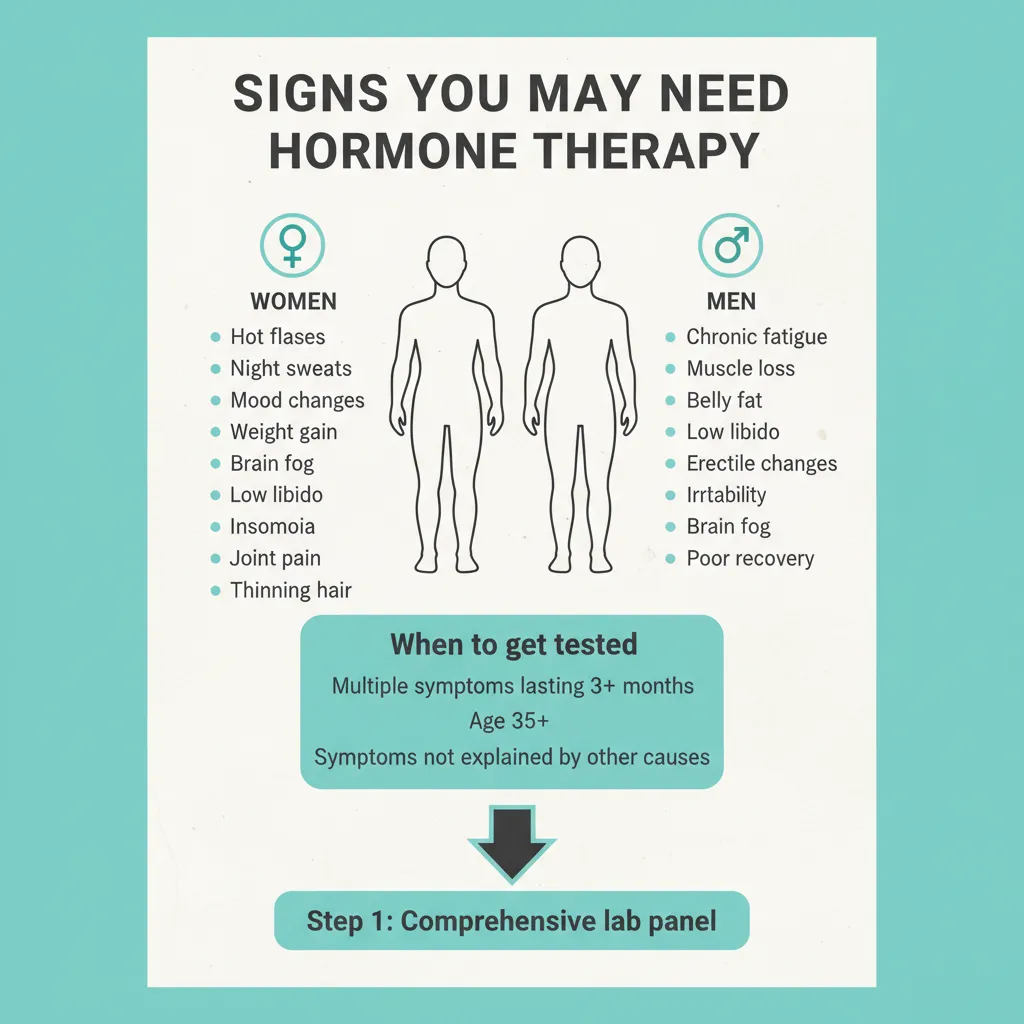
The most common signs that hormone therapy may be warranted include persistent fatigue, unexplained weight gain (especially around the midsection), mood changes, brain fog, sleep disruption, decreased libido, hot flashes or night sweats, and muscle loss. If multiple symptoms are present simultaneously and cannot be explained by other factors, hormonal evaluation through blood work is a reasonable next step.
No single symptom definitively indicates hormonal imbalance. It is the pattern of multiple symptoms occurring together, especially when they do not respond to lifestyle changes, that suggests hormones may be a contributing factor.
Common Signs in Women
Women experience hormonal shifts throughout their lives, from puberty through reproductive years, perimenopause, menopause, and beyond. The most significant hormonal transition occurs during perimenopause and menopause, when estrogen, progesterone, and testosterone levels decline substantially. However, hormonal imbalances can occur at any age.
Hot Flashes and Night Sweats
Vasomotor symptoms are the hallmark of estrogen decline and are among the most common symptoms reported by perimenopausal and menopausal women. Hot flashes produce sudden waves of heat, typically across the face, neck, and chest, often accompanied by flushing and sweating. Night sweats are the nocturnal equivalent and can be severe enough to disrupt sleep entirely.
The severity varies enormously. Some women experience mild, infrequent episodes. Others have dozens of hot flashes per day that interfere with work, sleep, and daily activities. If hot flashes are affecting your quality of life, this is one of the clearest indications that hormonal evaluation is warranted.
Mood Changes and Emotional Dysregulation
Estrogen and progesterone both influence neurotransmitter function, particularly serotonin and GABA. When these hormones decline, the impact on mood can be significant. Women may experience increased anxiety, irritability, depressive episodes, emotional reactivity (crying more easily or becoming frustrated more quickly), and a general sense of emotional instability.
These mood changes are often dismissed as situational or attributed to external stressors. While life circumstances certainly contribute to emotional well-being, persistent mood changes that coincide with other hormonal symptoms deserve investigation rather than assumption.
Weight Gain and Metabolic Shifts
Many women notice that their body composition changes during perimenopause and menopause, even when diet and exercise remain consistent. The shift typically involves increased abdominal fat (which is metabolically distinct from peripheral fat and carries greater health risks), reduced lean muscle mass, and a slower metabolism.
Estrogen decline alters how the body stores fat, shifting distribution from the hips and thighs (gynoid pattern) to the abdomen (android pattern). Declining testosterone further reduces metabolic rate by decreasing muscle mass. Insulin sensitivity may also decrease, making weight management progressively more difficult.
If you have noticed weight gain that does not respond to your usual strategies, hormonal factors may be contributing. Our medical weight loss program often works in conjunction with hormone optimization for this reason.
Brain Fog and Cognitive Changes
Difficulty concentrating, memory lapses, word-finding problems, and a general sense of mental "cloudiness" are among the most frustrating symptoms of hormonal decline. Estrogen receptors are abundant in the brain, particularly in areas involved in memory and executive function. When estrogen levels drop, these cognitive pathways can be affected.
Many women describe the experience as feeling like their brain is "running in a lower gear." Tasks that once felt effortless require more concentration. Important details slip through the cracks. These changes can be alarming, especially for women who pride themselves on mental sharpness.
Low Libido and Sexual Dysfunction
Declining estrogen affects vaginal health (dryness, thinning tissue, discomfort during intercourse), while declining testosterone, yes, women produce and need testosterone too, reduces sexual desire and arousal. The combination can make intimacy physically uncomfortable and psychologically uninteresting.
Sexual health is a legitimate medical concern, not a cosmetic issue. If your libido has declined substantially or sex has become painful, these symptoms are worth discussing with your provider.
Sleep Disruption
Progesterone has natural calming and sleep-promoting effects. When progesterone levels decline, insomnia, difficulty staying asleep, and non-restorative sleep are common consequences. Night sweats compound the problem by waking women multiple times per night. The resulting sleep deprivation then worsens virtually every other symptom, creating a compounding cycle.
Common Signs in Men
Men experience a more gradual hormonal decline than women, without a clear "menopause" equivalent. This gradual nature means symptoms often develop slowly over years, making them easy to rationalize as normal aging. The term "andropause" is sometimes used, though it is not a universally accepted clinical term.
Persistent Fatigue
Fatigue that does not improve with rest is one of the most common symptoms of low testosterone in men. This is not the normal tiredness after a long day. It is a deep, pervasive exhaustion that affects motivation, productivity, and enjoyment of activities that once felt energizing.
Men with low testosterone often describe needing excessive caffeine to function, feeling drained by mid-afternoon, and lacking the energy for exercise or social activities they previously enjoyed.
Muscle Loss and Increased Body Fat
Testosterone is essential for maintaining lean muscle mass and regulating fat distribution. As testosterone declines, men often notice that maintaining muscle requires significantly more effort, and that body fat accumulates more readily, particularly around the midsection.
Some men describe a "softening" of their physique despite maintaining the same exercise routine. The combination of less muscle and more fat alters metabolic rate, creating a cycle that becomes progressively harder to break without addressing the underlying hormonal component.
Erectile Dysfunction and Low Libido
Reduced interest in sex and difficulty achieving or maintaining erections are among the most well-known symptoms of low testosterone. However, it is important to recognize that erectile dysfunction specifically can have multiple causes, including cardiovascular disease, diabetes, medication side effects, and psychological factors.
When erectile dysfunction occurs alongside other symptoms of low testosterone (fatigue, mood changes, body composition shifts), it is more likely that hormonal factors are contributing. Testosterone evaluation should be part of any comprehensive erectile dysfunction workup.
Irritability and Depressed Mood
The "grumpy old man" stereotype may actually have a hormonal basis. Low testosterone is associated with increased irritability, decreased patience, depressive symptoms, and a diminished sense of well-being. Some men are prescribed antidepressants for these symptoms without ever having their hormones evaluated, which is a missed diagnostic opportunity.
If mood changes are accompanied by physical symptoms like fatigue and body composition shifts, the combination strongly suggests that hormonal evaluation is appropriate.

When Symptoms Warrant Testing
Not every instance of fatigue or mood change requires hormone testing. However, there are patterns and circumstances that make evaluation particularly worthwhile.
Multiple symptoms occurring together: A single symptom (fatigue alone, for example) can have dozens of causes. But when fatigue is combined with weight gain, mood changes, low libido, and cognitive fog, the cluster points toward a systemic issue like hormonal imbalance.
Symptoms that do not respond to lifestyle changes: If you have genuinely addressed sleep, exercise, nutrition, and stress and still feel symptomatic, hormones may be the missing piece. Many patients seeking hormone evaluation have already "tried everything" from a lifestyle perspective.
Age-appropriate timing: Women in their late 30s through 50s experiencing new-onset symptoms should consider perimenopause and menopause as potential contributors. Men over 35 with progressive symptoms should have testosterone evaluated. However, hormonal imbalance can occur at any age.
Family history: A family history of early menopause, thyroid disease, or metabolic conditions increases the likelihood that hormonal factors may be relevant to your symptoms.
Prior to starting other medications: If your provider recommends antidepressants, sleep medications, or erectile dysfunction treatments for symptoms that could have a hormonal basis, requesting hormone testing first is reasonable. Addressing the root cause is preferable to treating individual symptoms.
Keep a symptom journal for 2 to 4 weeks before your appointment. Tracking when symptoms occur, their severity, and any patterns (time of day, menstrual cycle timing for women, sleep quality) provides valuable information for your provider and helps ensure nothing is overlooked during evaluation.
Questions about hormone health?
Our providers offer consultations to discuss your options. The $50 fee is applied toward your first treatment.
Talk to a Provider
“The patients I see most often have been dealing with fatigue, weight gain, and mood changes for months or even years before they connect the dots. They come in thinking something is wrong with them, but once we run comprehensive labs, the picture becomes clear. Hormonal imbalance is one of the most underdiagnosed contributors to the symptoms people write off as "just getting older."”
Brittanie Lane, MSN, ARNP Functional Wellness Nurse Practitioner
What Lab Tests to Expect
Comprehensive hormone evaluation involves more than checking a single estrogen or testosterone level. Because hormones operate as an interconnected system, evaluating one in isolation can lead to incomplete conclusions.
For Women
A thorough female hormone panel typically includes estradiol (the primary active estrogen), progesterone (essential for sleep, mood, and uterine protection), total and free testosterone (yes, women need testosterone too), DHEA-S (adrenal hormone that supports energy and vitality), thyroid panel including TSH, free T3, and free T4 (thyroid dysfunction mimics many hormonal symptoms), FSH and LH (to assess ovarian function and menopausal status), fasting insulin and hemoglobin A1c (metabolic markers), vitamin D, and a complete metabolic panel.
For premenopausal women, blood draws are ideally timed to specific days of the menstrual cycle (typically day 3 for baseline reproductive hormones and day 21 for progesterone) to get the most accurate picture. For perimenopausal and menopausal women, timing is less critical.
For Men
A comprehensive male hormone panel includes total testosterone, free testosterone, sex hormone-binding globulin (SHBG), estradiol, DHEA-S, thyroid panel (TSH, free T3, free T4), PSA (prostate-specific antigen, baseline for monitoring), complete blood count with hematocrit, fasting insulin, lipid panel, vitamin D, and a complete metabolic panel.
Morning blood draws (before 10:00 AM) are essential for men because testosterone levels follow a circadian rhythm, peaking in the early morning and declining throughout the day. Afternoon testing can produce results that appear artificially low.
Age-Related Hormone Decline: What Is Normal?
Understanding the normal trajectory of hormone decline helps distinguish between expected aging and treatable imbalance.
Women: Estrogen and progesterone levels begin fluctuating during perimenopause, which can start as early as the late 30s but more commonly begins in the mid-40s. During perimenopause, hormone levels can swing considerably from month to month, producing inconsistent and confusing symptoms. After menopause (12 consecutive months without a period, average age 51), estrogen levels decline substantially from premenopausal levels, and testosterone in women declines more gradually over the same decades.
Men: Testosterone declines gradually beginning around age 30, and the decline continues progressively with age for most men. The rate of decline varies enormously between individuals, influenced by genetics, body composition, lifestyle, and overall health.
The challenge with "normal" reference ranges is that they are based on population averages, not on what is optimal for individual function. A lab result that falls within the standard reference range may still be well below the level at which a given individual feels and functions best. Your provider interprets your labs alongside your symptoms rather than against a population average alone.
Normal Aging vs Treatable Imbalance
This distinction is one of the most important concepts in hormone health. Not every age-related change requires treatment, but not every age-related symptom should be accepted as inevitable either.
Normal aging involves gradual changes that do not significantly impair function or quality of life. Some decline in energy, muscle mass, and metabolic rate is expected. Mild changes in sleep patterns, libido, and body composition are part of the aging process.
Treatable imbalance involves changes that meaningfully impair quality of life, function, or health. When fatigue prevents you from engaging in activities you value, when mood changes affect your relationships or work, when cognitive fog impairs your productivity, when weight gain creates metabolic health risks, or when sexual dysfunction affects your intimate life, these are not things you simply have to accept.
The decision to treat hormonal decline is personal. Some patients choose to accept age-related changes and focus on lifestyle optimization alone. Others choose hormone therapy to restore function to a level that supports the quality of life they want. Neither choice is wrong, but the choice should be informed by accurate lab data, honest clinical assessment, and a clear understanding of the benefits and risks.
The goal of hormone therapy is not to defy aging. It is to ensure that treatable hormonal deficiencies are not silently eroding your quality of life, cognitive function, metabolic health, and emotional well-being when effective treatment is available.
Taking the First Step
If you have recognized several of the symptoms described in this guide, the most productive next step is a comprehensive hormonal evaluation. At Allen Medical Aesthetics, the process is straightforward.
The initial consultation involves a detailed discussion of your symptoms, health history, medications, and goals. We want to understand not just what you are experiencing but how it is affecting your daily life. This conversation helps us determine which tests to order and what conditions to evaluate.
Lab work is then ordered and results are typically available within a few days. We review the results in context, correlating lab values with your symptom profile. Numbers on a page do not tell the whole story. Two patients with identical lab values may feel entirely different, and treatment decisions reflect the individual, not just the data.
If hormonal imbalance is confirmed, we develop an individualized treatment plan. If the evaluation reveals that your symptoms are more likely related to thyroid dysfunction, nutritional deficiencies, sleep disorders, or other factors, we will direct you toward the appropriate care pathway. The goal is accurate diagnosis, not predetermined treatment.
For patients where hormonal optimization and weight management intersect, our medical weight loss program can be coordinated with hormone therapy for a comprehensive approach.
Frequently Asked Questions
Can hormone imbalance cause anxiety?
Yes. Both estrogen and progesterone influence neurotransmitter pathways that regulate anxiety. Declining progesterone, which has natural calming effects, and fluctuating estrogen levels can both contribute to increased anxiety, particularly during perimenopause. Testosterone decline in men can also manifest as increased anxiety and irritability.
At what age should I start thinking about hormone testing?
Women experiencing new symptoms in their late 30s to 50s should consider testing, especially if symptoms align with perimenopause. Men over 35 with symptoms of low testosterone should be evaluated. However, hormonal imbalance can occur at any age, and symptom-driven testing is appropriate regardless of age.
Can I check my hormones at home?
At-home hormone test kits exist, but their accuracy varies and they typically test a limited panel. Comprehensive hormonal evaluation requires a full blood draw with testing for multiple interconnected hormones. The interpretation of results in clinical context is equally important and requires medical expertise.
My doctor said my hormone levels are normal. Can I still benefit from therapy?
Standard reference ranges are based on population averages and do not necessarily reflect optimal individual function. A level that falls within the "normal" range may still be suboptimal for your body. Providers who specialize in hormone optimization often use tighter reference ranges and weigh lab values alongside symptom burden.
Is it possible to have hormone imbalance in your 30s?
Absolutely. Premature ovarian insufficiency, thyroid disorders, PCOS, chronic stress, and other conditions can cause hormonal imbalance at any age. Men in their 30s can also have clinically low testosterone, especially with lifestyle risk factors like obesity, sleep apnea, or chronic stress.
How quickly can hormone therapy improve my symptoms?
We will not give you a number, because we cannot honestly promise one. Response to hormone therapy varies between individuals, and different symptoms often shift at different rates from one another. Your provider evaluates your actual response using follow-up laboratory results and a structured review of your symptoms, and adjusts from there.
Related Articles
This article supports our Hormone Replacement Therapy service page. Learn more about treatment options, candidacy, and what to expect.