

Hormone replacement therapy is often associated with women navigating menopause, but men experience their own form of hormonal decline that can be equally disruptive to quality of life. Testosterone levels decline gradually starting around age 30, and by the time many men reach their 40s and 50s, the cumulative decline has produced symptoms that are too significant to ignore.
The challenge is that low testosterone symptoms, including fatigue, weight gain, reduced motivation, and diminished libido, overlap with so many other conditions that they are frequently misattributed to stress, aging, poor sleep, or depression. Many men spend years trying to address individual symptoms without recognizing the underlying hormonal component.
Bioidentical hormone replacement therapy (BHRT) offers a targeted approach to restoring testosterone and related hormones to optimal levels using hormones that are molecularly identical to what the body produces naturally. At Allen Medical Aesthetics, our hormone optimization program for men is designed to identify deficiencies through comprehensive testing and develop individualized treatment plans that address the full scope of hormonal health.
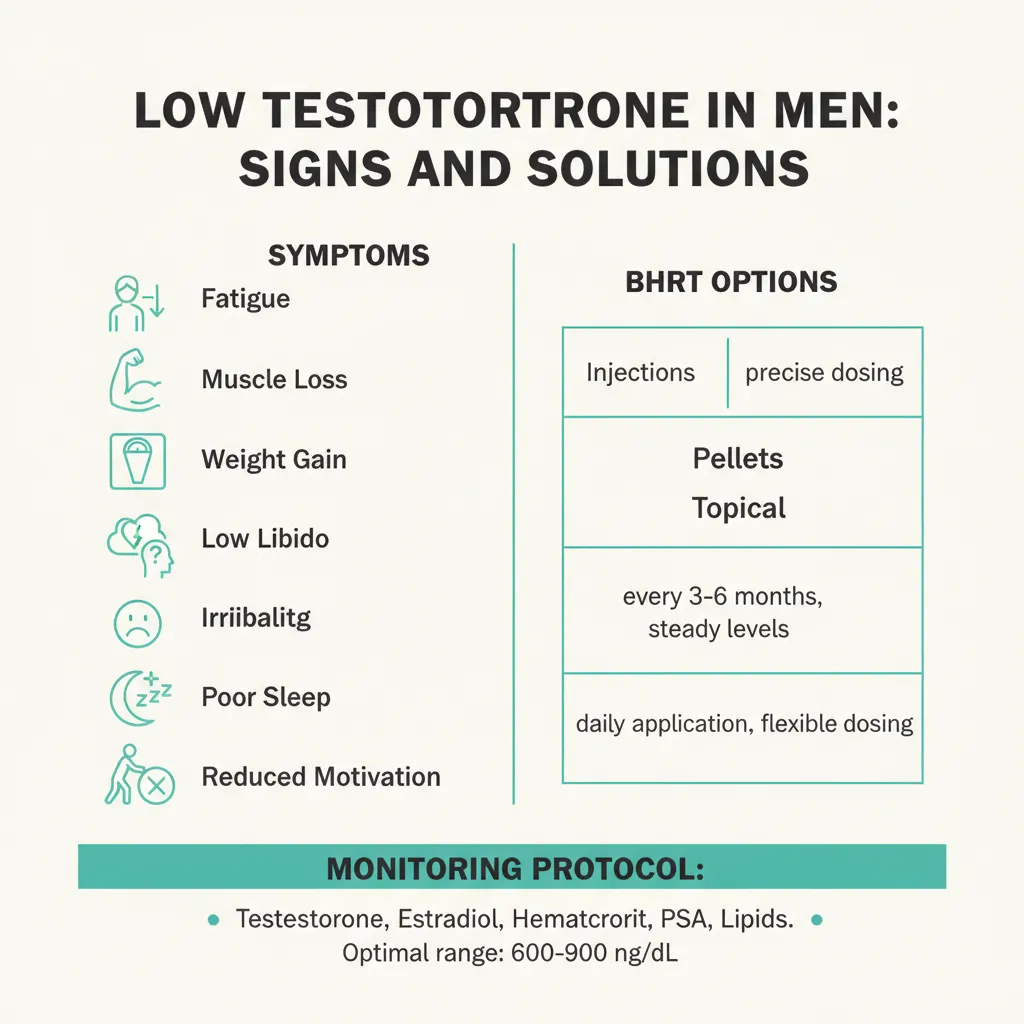
BHRT for men primarily involves restoring testosterone to a physiologic range determined by your labs and symptoms, using bioidentical testosterone delivered through injections, topical formulations, or subcutaneous pellets. When properly prescribed and monitored, BHRT can support energy, body composition, libido, mood, and cognitive clarity, though individual response varies. Treatment requires ongoing lab monitoring for safety markers including PSA, hematocrit, and estradiol.
BHRT for men is not just about boosting testosterone numbers. It is a comprehensive approach that evaluates thyroid function, DHEA, cortisol, and metabolic markers alongside testosterone to create a complete hormonal health picture.
Why Men Need Hormone Therapy
The male endocrine system is more complex than a single testosterone number suggests. While testosterone is the primary androgen and drives many of the functions men associate with vitality, including muscle mass, energy, libido, and mood, it operates within an interconnected system of hormones that all influence each other.
Testosterone production is regulated by the hypothalamic-pituitary-gonadal (HPG) axis. The hypothalamus releases gonadotropin-releasing hormone (GnRH), which signals the pituitary gland to produce luteinizing hormone (LH) and follicle-stimulating hormone (FSH). LH then stimulates the Leydig cells in the testes to produce testosterone. This feedback loop means that problems at any level of the axis can result in suboptimal testosterone levels.
Beyond the natural age-related decline, modern lifestyle factors are contributing to testosterone levels that are lower across all age groups compared to previous generations. Environmental toxins, chronic stress, poor sleep quality, excess body fat (adipose tissue converts testosterone to estrogen through aromatase activity), and sedentary lifestyles all suppress testosterone production.
The result is that many men in their 30s, 40s, and 50s have testosterone levels that were once considered low but are now being dismissed as "within normal range" by providers using broad reference ranges. A level within the statistical normal range is not automatically the level at which a given individual feels and functions best, which is why symptoms and lab values are reviewed together rather than against a population range alone.
Symptoms of Low Testosterone in Men
The symptoms of low testosterone develop gradually, which makes them easy to normalize or attribute to other causes. Many men do not realize how much their quality of life has deteriorated until they begin treatment and experience the contrast.
Physical Symptoms
Persistent fatigue that does not improve with sleep is one of the most common complaints. Men describe feeling like they are "running on empty" regardless of how much rest they get. Difficulty building or maintaining muscle mass, increased body fat (particularly around the midsection), decreased physical stamina, and longer recovery times after exercise are all hallmarks of testosterone deficiency.
Reduced bone density is a less visible but clinically significant consequence. Men with chronically low testosterone are at increased risk for osteopenia and osteoporosis, conditions often associated primarily with women but affecting men as well.
Sexual Symptoms
Decreased libido (reduced interest in sex) is often the symptom that finally prompts men to seek evaluation. Erectile dysfunction, difficulty achieving or maintaining erections, reduced ejaculate volume, and decreased sexual satisfaction are all associated with low testosterone. These symptoms can have a significant impact on relationships and self-esteem.
It is important to note that erectile dysfunction can have multiple causes, including cardiovascular disease, diabetes, medications, and psychological factors. Low testosterone is one possible contributor, but not the only one. A comprehensive evaluation is necessary to identify the appropriate treatment approach.
Cognitive and Emotional Symptoms
Brain fog, difficulty concentrating, and memory lapses are frequently reported by men with low testosterone. The cognitive effects can impact work performance and daily functioning in ways that are difficult to quantify but deeply frustrating.
Mood changes are also common, including irritability, depression, decreased motivation, and a reduced sense of well-being. Some men describe feeling emotionally "flat," as though their normal emotional range has been compressed. These psychological symptoms are often the most debilitating and are sometimes treated with antidepressants when hormonal evaluation would be more appropriate.
If you are experiencing several of these symptoms simultaneously, particularly the combination of fatigue, reduced motivation, weight gain, and decreased libido, hormonal imbalance is worth investigating. These symptoms may overlap with other conditions, but a simple blood test can determine whether low testosterone is a contributing factor.

The Testing Process
Accurate diagnosis is the foundation of effective hormone therapy. At Allen Medical Aesthetics, we use comprehensive lab panels that go beyond a basic testosterone check to evaluate the full hormonal ecosystem.
The standard testing panel for men includes total testosterone, free testosterone (the bioavailable fraction not bound to proteins), sex hormone-binding globulin (SHBG, which affects how much testosterone is available for use), estradiol (men need estrogen in appropriate amounts, but elevated levels cause problems), DHEA-S (an adrenal hormone that supports testosterone function), thyroid panel (TSH, free T3, free T4), complete metabolic panel, fasting insulin, lipid panel, prostate-specific antigen (PSA, baseline for monitoring), complete blood count with hematocrit (baseline for monitoring), and vitamin D.
Blood draws are performed in the morning, ideally between 7:00 and 10:00 AM, because testosterone levels naturally peak in the early morning and decline throughout the day. Afternoon testing can produce artificially lower results.
We do not prescribe testosterone based on symptoms alone. Lab-confirmed deficiency or suboptimal levels, evaluated in the context of symptoms and clinical presentation, are prerequisites for treatment. A man with clearly low labs and significant symptoms has a straightforward case for treatment. A man with borderline labs and no symptoms may not need hormonal intervention at all. Your provider reviews your specific results and symptom picture together rather than applying a single cutoff.
Questions about hormone health?
Our providers offer consultations to discuss your options. The $50 fee is applied toward your first treatment.
Talk to a ProviderTreatment Options for Men
Several delivery methods are available for bioidentical testosterone replacement. Each has distinct advantages and limitations, and the best choice depends on your lifestyle, preferences, and how your body responds to different formulations.
Subcutaneous Injections
Testosterone cypionate or enanthate injected subcutaneously (into the fat layer just beneath the skin) once or twice weekly is one of the most common and cost-effective delivery methods. Subcutaneous injection has become preferred over intramuscular injection for many patients because the needle is smaller, the injection is less painful, and absorption is more gradual, resulting in steadier blood levels.
The primary advantage of injections is precise dose control. If labs indicate that levels need to be adjusted, the dose can be changed at the next injection without waiting for a previous delivery method to clear the system. The main drawback is that self-injection is required (or weekly office visits), which some men find inconvenient.
Subcutaneous Pellets
Small testosterone pellets (each about the size of a grain of rice) are inserted beneath the skin in a brief office procedure, typically in the hip or buttock area. The pellets dissolve slowly over 3 to 6 months, providing a consistent release of testosterone without daily or weekly administration.
Pellets are popular for their convenience. Once inserted, there is nothing to remember, apply, or inject until the next pellet insertion. The trade-off is that doses cannot be adjusted mid-cycle. If a patient's levels are running too high or too low after insertion, the options are limited until the next insertion cycle.
Topical Creams and Gels
Testosterone creams or gels are applied daily to the skin, typically on the inner thigh, shoulder, or inner wrist. The testosterone absorbs through the skin and enters the bloodstream. Topicals allow for easy dose adjustment and do not require needles.
The main concerns with topical testosterone are transfer risk (the medication can transfer to others through skin contact, which is a particular concern for partners and children), variable absorption between individuals, and the daily compliance requirement. Some men also find that topical application is messy or inconvenient.
| Method | Frequency | Pros | Cons |
|---|---|---|---|
| Subcutaneous injections | 1 to 2 times per week | Precise dosing, cost-effective, steady levels with frequent dosing | Requires self-injection, slight peak-trough pattern |
| Subcutaneous pellets | Every 3 to 6 months | Convenient, consistent levels, no daily compliance | Minor office procedure, dose not easily adjustable, rare extrusion |
| Topical creams/gels | Daily application | Easy to adjust dose, non-invasive, no needles | Transfer risk, variable absorption, daily compliance required |
Expected Benefits of Testosterone Optimization
When testosterone is restored to a physiologic level appropriate for the individual and maintained with proper monitoring, patients often notice meaningful changes. We will not promise a timeline for any specific benefit, because response varies considerably from one man to the next.
Energy and vitality: Improved energy is one of the benefits patients most often report. The persistent fatigue that characterizes low testosterone can lift as treatment progresses, though the pace differs by individual.
Mood and motivation: Many men report improved mood stability, reduced irritability, and a restored sense of motivation and drive over the course of treatment.
Libido and sexual function: Improved sex drive and sexual function are among the benefits most consistently reported with testosterone replacement, though the timing and degree vary by individual.
Body composition: Changes in body composition, including lean muscle mass and body fat, tend to develop gradually and are supported by exercise and nutrition alongside treatment.
Cognitive clarity: Some men report improvement in brain fog and difficulty concentrating as testosterone levels stabilize, though we do not promise this outcome for every patient.
Bone density: Bone mineral density is monitored through periodic DEXA scans when baseline levels indicate concern, since any change here develops over a longer treatment duration and is tracked with objective testing rather than how you feel.

“When we optimize testosterone in men, the changes go well beyond the lab numbers. Patients tell me they feel like themselves again, with energy they had not felt in years, sharper focus at work, and motivation to get back to the gym. Hormone optimization is not about turning back the clock. It is about giving your body the tools it needs to function at its best.”
Tod Work, MSN, MPA, ARNP Medical Director & Medical Weight Loss Provider
Risks and Safety Monitoring
Responsible testosterone replacement therapy requires ongoing monitoring to ensure safety and optimize results. The potential risks of testosterone therapy are well documented and manageable when monitored appropriately.
Erythrocytosis (elevated hematocrit): Testosterone stimulates red blood cell production, which can increase hematocrit (the percentage of blood volume occupied by red blood cells). Elevated hematocrit increases blood viscosity and, theoretically, the risk of blood clots. Hematocrit is monitored at every follow-up lab draw, and if levels rise above the range your provider considers safe, the testosterone dose may be reduced or a therapeutic blood donation may be recommended.
Prostate considerations: Testosterone does not cause prostate cancer, but it can stimulate the growth of existing prostate tissue. PSA levels are monitored at baseline and at regular intervals during treatment. Any significant PSA elevation warrants urological evaluation. Men with a history of prostate cancer should discuss the risks and benefits of testosterone therapy carefully with their provider.
Estrogen conversion: Testosterone can convert to estradiol through aromatase enzyme activity, particularly in men with higher body fat. Elevated estradiol in men can cause water retention, mood changes, gynecomastia (breast tissue development), and reduced efficacy of testosterone therapy. Estradiol levels are monitored regularly, and aromatase inhibitors can be prescribed if levels rise above optimal range.
Fertility impact: Exogenous testosterone suppresses the HPG axis, which can reduce sperm production. Men who are actively trying to conceive or want to preserve fertility should discuss this with their provider before starting testosterone. Alternative protocols using medications like clomiphene or hCG can stimulate the body's own testosterone production while preserving fertility.
Skin and hair: Some men experience increased oiliness, acne, or accelerated male pattern hair loss on testosterone therapy. These effects are dose-dependent and manageable.
- Baseline labs before treatment (testosterone, PSA, hematocrit, estradiol, lipids, metabolic panel)
- Follow-up labs at 6 to 8 weeks after starting therapy
- Quarterly labs during the first year
- Semi-annual labs once stable levels are achieved
- PSA monitoring at every lab draw
- Hematocrit monitoring at every lab draw
- Estradiol monitoring and management as needed
- Annual digital rectal exam and/or urological referral as indicated
Testosterone replacement therapy requires medical supervision and regular monitoring. Purchasing testosterone from online sources without proper medical oversight, or using doses that exceed physiologic ranges (as in anabolic steroid use), carries significantly higher risks.
Lifestyle Factors That Support Hormone Health
BHRT is most effective when combined with lifestyle practices that support hormonal health. These factors can amplify the benefits of treatment and, in some cases, may improve testosterone levels even before starting replacement therapy.
Resistance training: Compound exercises like squats, deadlifts, bench press, and rows stimulate testosterone production and improve the body's sensitivity to testosterone. A consistent strength training program 3 to 4 times per week is one of the most impactful lifestyle interventions for hormonal health.
Sleep optimization: The majority of daily testosterone production occurs during sleep, particularly during deep sleep stages. Chronic sleep deprivation or poor sleep quality directly suppresses testosterone. Prioritizing 7 to 9 hours of quality sleep and addressing sleep disorders (such as sleep apnea, which is strongly associated with low testosterone) is essential.
Body composition management: Excess adipose tissue increases aromatase activity, converting more testosterone to estradiol. Reducing body fat through nutrition and exercise can improve the testosterone-to-estrogen ratio and enhance the effectiveness of BHRT. Our medical weight loss program can support men pursuing both weight management and hormone optimization simultaneously.
Stress management: Chronic stress elevates cortisol, which directly suppresses testosterone production through the HPG axis. Effective stress management practices, including exercise, adequate sleep, mindfulness, and workload management, support healthier cortisol and testosterone balance.
Nutrition: Adequate protein intake supports muscle synthesis and testosterone utilization. Healthy fats (particularly monounsaturated and omega-3 fatty acids) support hormone production. Zinc, magnesium, and vitamin D are micronutrients that play direct roles in testosterone synthesis. Excessive alcohol consumption suppresses testosterone and should be moderated.
Combining IV hydration therapy with BHRT can support nutrient delivery and overall wellness, particularly for men with demanding training schedules or high-stress lifestyles.
When to Consider BHRT
The decision to pursue testosterone replacement therapy should be based on the combination of symptoms and lab-confirmed hormonal deficiency. Here are situations where BHRT evaluation is warranted.
You should consider getting tested if you are experiencing persistent fatigue that does not respond to sleep, exercise, or stress management. If you have noticed progressive difficulty maintaining muscle mass or losing body fat despite consistent effort. If your libido has declined significantly or you are experiencing erectile dysfunction. If you feel mentally foggy, unmotivated, or emotionally flat in a way that is not consistent with your baseline personality.
You should particularly prioritize evaluation if you are over 40 and have not had your hormones checked, if you have risk factors for accelerated hormonal decline (obesity, chronic stress, sleep apnea, diabetes), or if you have been prescribed antidepressants or erectile dysfunction medications without having your hormones evaluated first.
At Allen Medical Aesthetics, the process begins with a comprehensive consultation where we review your symptoms, health history, and goals, followed by lab work designed to provide a complete picture of your hormonal status. Based on the results, we develop an individualized treatment plan or recommend alternative approaches if BHRT is not appropriate for your situation.
Frequently Asked Questions
At what age should men consider BHRT?
There is no specific age threshold. Testosterone decline begins around 30 and accelerates with age, but lifestyle factors can cause low testosterone at any adult age. If you are experiencing symptoms consistent with low testosterone, testing is appropriate regardless of age. Most men seeking BHRT are in their 40s to 60s.
Will testosterone replacement therapy make me aggressive?
No. When testosterone is dosed to achieve physiologic (normal) levels, aggression is not a side effect. The "roid rage" stereotype is associated with supraphysiologic doses used in anabolic steroid abuse, which far exceed the levels targeted in medical BHRT. Most men actually report improved mood stability and reduced irritability on appropriate testosterone replacement.
Can I still have children while on testosterone?
Exogenous testosterone suppresses sperm production in most men. If you are actively trying to conceive or want to preserve the option, discuss this with your provider before starting treatment. Alternative protocols that stimulate natural testosterone production while maintaining fertility are available.
How long does it take to feel the effects of testosterone therapy?
We will not give you a number, because we cannot honestly promise one. Response varies considerably between individuals, and different benefits often develop at different rates. Your provider evaluates your actual response using follow-up labs and a structured symptom review, and adjusts from there.
Is testosterone replacement therapy safe long-term?
Long-term testosterone replacement, when properly monitored, has a well-established safety profile. The key is regular monitoring of PSA, hematocrit, estradiol, and metabolic markers. Men who are monitored appropriately can continue testosterone therapy for many years with a favorable risk-benefit ratio.
What happens if I stop testosterone therapy?
If you stop exogenous testosterone, your body's natural production will resume, though it may take weeks to months to recover. Symptoms that resolved during treatment will likely return as levels decline. Gradual tapering under medical supervision is preferred over abrupt discontinuation.
Does insurance cover testosterone replacement therapy?
FDA-approved testosterone formulations (injectable testosterone cypionate, certain topical preparations) may be covered by insurance when lab results confirm a clinical deficiency. Compounded preparations, pellet insertions, and comprehensive lab panels may require out-of-pocket payment. Our team can help clarify costs before treatment begins.
Related Articles
This article supports our Hormone Replacement Therapy service page. Learn more about treatment options, candidacy, and what to expect.