
If you have been researching skin rejuvenation treatments, you have likely encountered both microneedling and RF microneedling. The names sound similar, and both involve tiny needles penetrating the skin. But the treatments differ in meaningful ways that affect results, downtime, cost, and which skin concerns they address most effectively.
Standard microneedling has been a staple in aesthetic medicine for over a decade, prized for its ability to stimulate collagen production and improve skin texture with minimal downtime. RF (radiofrequency) microneedling takes the concept further by delivering thermal energy through the needles into deeper tissue layers, producing more significant tightening and remodeling effects.
At Allen Medical Aesthetics, we offer both treatments and frequently help patients determine which option will deliver the best results for their specific goals. This guide provides a thorough, side-by-side comparison to help you make an informed decision.
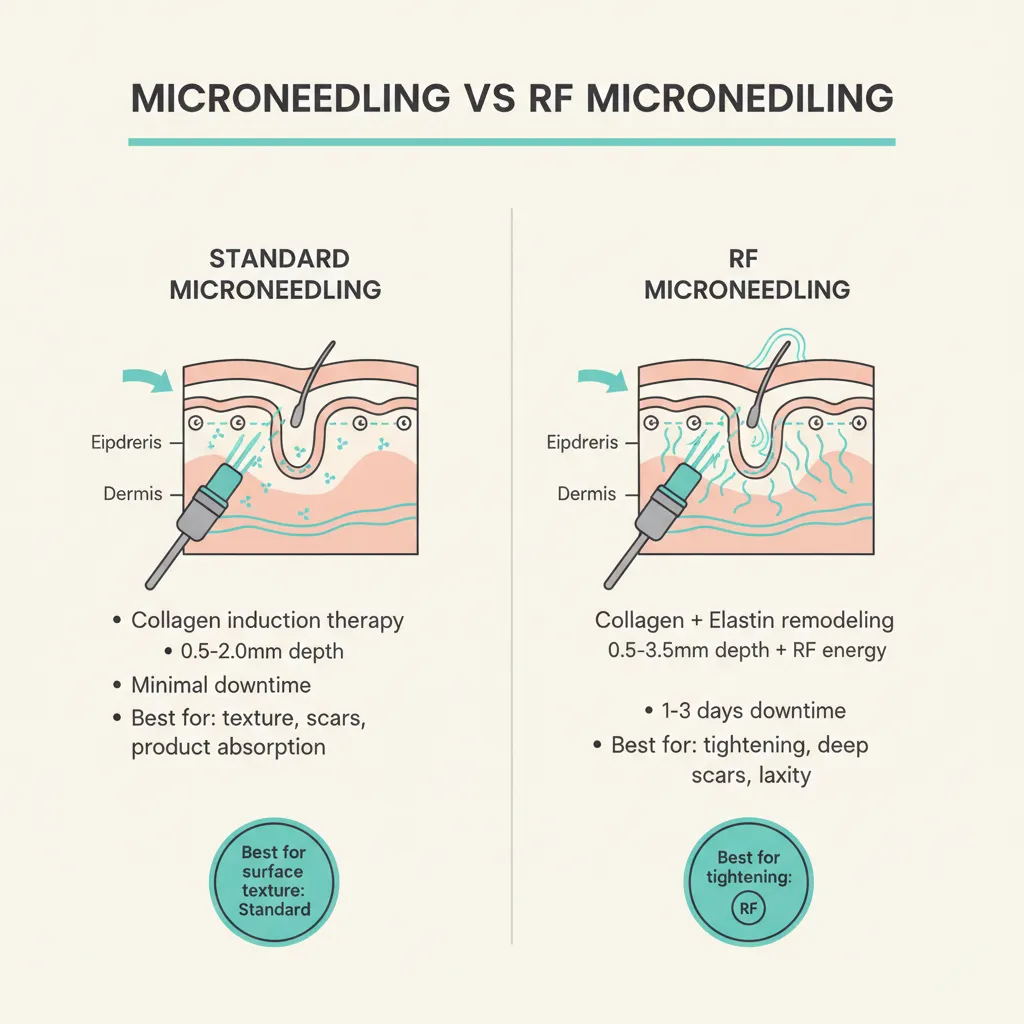
Standard microneedling creates controlled micro-injuries in the skin to trigger collagen induction therapy. RF microneedling adds radiofrequency energy delivered through insulated or non-insulated needles, heating deeper tissue to produce more dramatic tightening, remodeling, and scar revision. Both are effective, but RF microneedling generally delivers stronger results for skin laxity, deep acne scars, and pore refinement.
Choose standard microneedling for general skin texture improvement and mild concerns. Choose RF microneedling when you need deeper remodeling, skin tightening, or more aggressive scar treatment.
How Standard Microneedling Works
Standard microneedling, also called collagen induction therapy (CIT), uses a device equipped with fine, sterile needles that create thousands of controlled micro-channels in the skin. These channels are tiny, typically 0.5 to 2.5 millimeters in depth, but they are sufficient to trigger the body's wound healing cascade.
When the skin detects these micro-injuries, it responds with three overlapping phases. The inflammatory phase begins immediately, bringing platelets and growth factors to the treatment area. The proliferative phase follows over the next days to weeks, during which fibroblasts produce new collagen and elastin. Finally, the remodeling phase continues for months as the new collagen matures and strengthens.
The result is smoother, firmer, more evenly toned skin. Standard microneedling is effective for fine lines, mild acne scarring, uneven texture, enlarged pores, stretch marks, and general skin rejuvenation. It can also enhance the penetration of topical serums and growth factors applied during or immediately after treatment.
Modern microneedling devices use motorized pen-style applicators that allow precise control over needle depth, speed, and pattern. This precision is important because different facial zones have different skin thicknesses and require different treatment depths. The forehead and under-eye area, for example, require shallower depths than the cheeks or jawline.
How RF Microneedling Works
RF microneedling combines the mechanical micro-channeling of standard microneedling with the delivery of radiofrequency energy through the needles. The needles penetrate the skin to a predetermined depth, and once in position, they emit RF energy that heats the surrounding tissue to temperatures between 60 and 70 degrees Celsius.
This thermal energy causes immediate contraction of existing collagen fibers and triggers a more robust wound healing response than mechanical needling alone. The heat denatures collagen at the targeted depth, prompting the body to produce new, tightly organized collagen bundles during the healing process. The result is not just surface-level smoothing but genuine tissue remodeling and tightening at the dermal level.
RF microneedling devices use two types of needle configurations. Insulated needles deliver energy only at the tip, concentrating the thermal effect at a specific depth while sparing the surface epidermis. Non-insulated needles deliver energy along the full length of the needle, treating a wider column of tissue. The choice between insulated and non-insulated depends on the treatment goals and the specific concern being addressed.
The deeper thermal effect of RF microneedling makes it particularly effective for concerns that standard microneedling alone cannot fully address, including moderate to severe acne scars, skin laxity, jowling, and deep textural irregularities. It can also treat active acne by reducing sebaceous gland activity and decreasing oil production.
The fundamental difference is energy delivery. Standard microneedling relies solely on the mechanical wound healing response. RF microneedling adds thermal energy that heats tissue at precise depths, creating a dual mechanism of action that produces more dramatic collagen remodeling and skin tightening.
Head-to-Head Comparison: Microneedling vs RF Microneedling
The following table provides a direct comparison across the factors that matter most when choosing between these two treatments.
| Factor | Standard Microneedling | RF Microneedling |
|---|---|---|
| Mechanism | Mechanical micro-injury only | Mechanical micro-injury + radiofrequency heat |
| Needle depth | 0.5 to 2.5 mm | 0.5 to 4.0 mm (deeper penetration possible) |
| Collagen stimulation | Moderate (wound healing response) | Significant (wound healing + thermal remodeling) |
| Skin tightening | Mild | Moderate to significant |
| Downtime | 1 to 3 days redness | 2 to 5 days redness, mild swelling |
| Pain level | Mild to moderate (with numbing) | Moderate (with numbing) |
| Sessions recommended | 3 to 6 sessions, 4 weeks apart | 3 to 4 sessions, 4 to 6 weeks apart |
| Results visible | 2 to 4 weeks, peak at 3 months | 2 to 6 weeks, peak at 3 to 6 months |
| Relative cost per session | Lower | Higher |
| Best for | Fine lines, mild scars, texture, product absorption | Acne scars, skin laxity, pores, deep remodeling |
Questions about skin rejuvenation?
Our providers offer consultations to discuss your options. The $50 fee is applied toward your first treatment.
Talk to a ProviderWhich Is Better for Your Specific Concern?
The right choice depends on what you are trying to treat. Below is a breakdown of how each treatment performs for the most common skin concerns.
Acne Scars
For mild, superficial acne scarring, standard microneedling can produce meaningful improvement over a series of treatments. The collagen remodeling helps fill in shallow, rolling scars and improve overall skin texture. However, for moderate to severe acne scars, particularly boxcar and ice pick varieties, RF microneedling is the stronger choice. The thermal energy reaches deeper scar tissue and stimulates more aggressive collagen reorganization over a treatment series.
Fine Lines and Wrinkles
Both treatments can reduce fine lines effectively. Standard microneedling is often sufficient for early fine lines and crepe-like skin texture. RF microneedling provides an edge when dealing with deeper wrinkles or when the lines are accompanied by skin laxity, as the thermal component addresses both texture and firmness simultaneously.
Skin Tightening and Laxity
This is where the two treatments diverge most clearly. Standard microneedling produces minimal tightening because it primarily affects the upper dermis. RF microneedling, with its ability to deliver thermal energy at depths of up to 4 millimeters, can contract and remodel collagen in the deeper dermis and even the subdermal layer. For patients concerned about early skin laxity along the jawline, neck, or lower face, RF microneedling is the preferred option.
Enlarged Pores
RF microneedling is generally more effective for pore reduction. The thermal energy can shrink the sebaceous glands and tighten the collagen surrounding pore openings, producing a more refined skin surface. Standard microneedling can improve the appearance of pores modestly, but the results are typically less dramatic.
Overall Skin Texture and Tone
For general skin texture improvement, tone evening, and a "glass skin" effect, standard microneedling is an excellent and cost-effective choice. It is particularly effective when combined with topical serums, growth factors, or PRF applied during the treatment. If texture concerns are your primary goal and you do not have significant scarring or laxity, standard microneedling may deliver everything you need at a lower cost per session.
The SylfirmX Advantage: Why Device Technology Matters
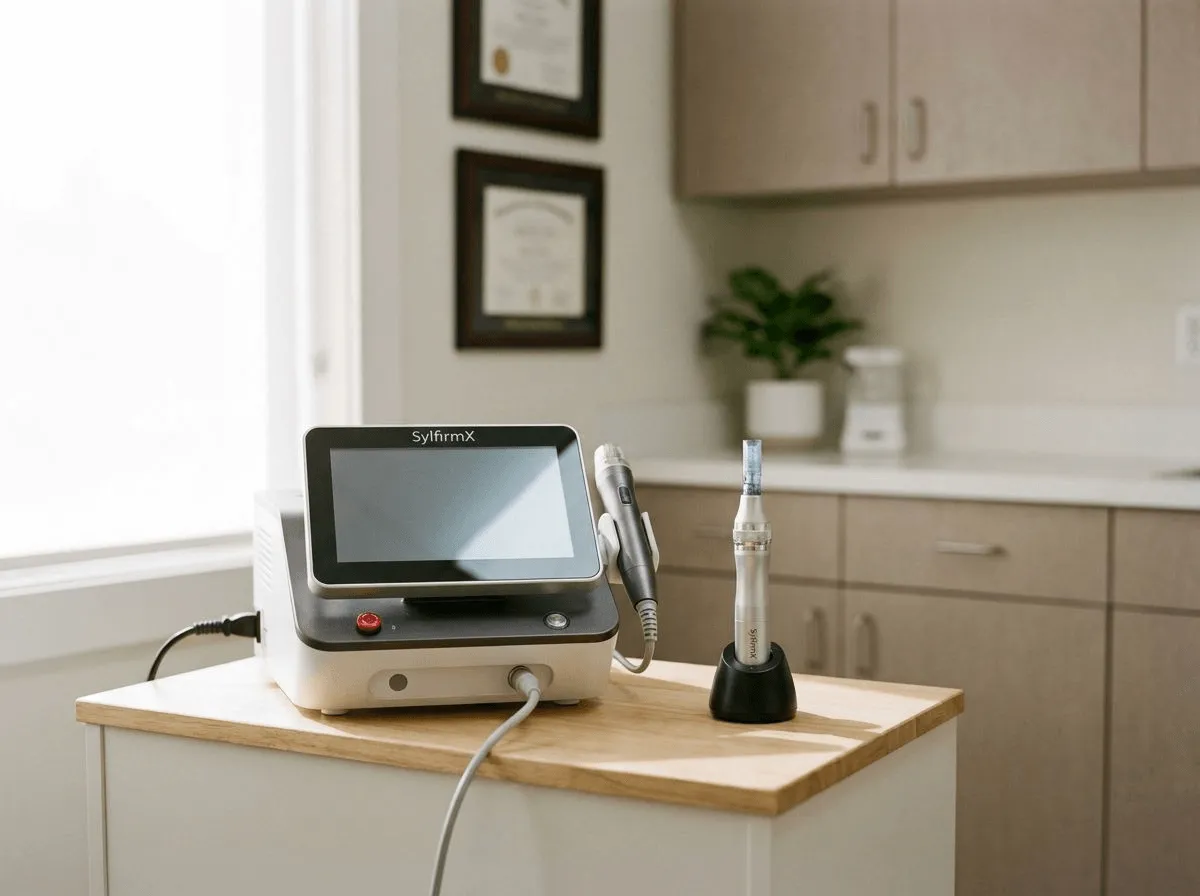
Not all RF microneedling devices are created equal. At Allen Medical Aesthetics, we use the SylfirmX, which represents the latest advancement in RF microneedling technology. What sets SylfirmX apart is its dual-wave radiofrequency system.
Most RF microneedling devices deliver energy in a single mode: continuous wave (CW). Continuous wave RF is effective for collagen remodeling and skin tightening, but it treats all tissue layers uniformly. The SylfirmX adds a second mode: pulsed wave (PW). Pulsed wave RF delivers energy in short bursts that selectively target abnormal blood vessels and pigmented cells without damaging surrounding healthy tissue.
This dual-wave capability makes SylfirmX uniquely effective for conditions like melasma, rosacea, and post-inflammatory hyperpigmentation, where other RF microneedling devices may actually worsen the condition by generating too much heat. The pulsed wave mode can treat the vascular component of these conditions while the continuous wave mode addresses texture and laxity.
The SylfirmX also features non-insulated needles that treat a broader column of tissue per pass, reducing the number of passes needed and shortening treatment time. Its precision depth control allows needle penetration from 0.3 to 4.0 millimeters, making it adaptable to every area of the face and body.

“I choose between standard microneedling and SylfirmX RF microneedling based on what the skin actually needs. For a patient with fine lines and dull texture, standard microneedling with PRF delivers beautiful results. But when I am treating deep acne scars, laxity along the jawline, or a condition like melasma where heat management is critical, the SylfirmX dual-wave system gives me precision that no other device in this category can match.”
Therese Allen, MSN, RN Lead Aesthetic Nurse Injector
Can You Combine Both Treatments?
Yes, and in many cases, combining standard microneedling with RF microneedling creates a comprehensive skin rejuvenation strategy. This approach is sometimes called treatment stacking, and it allows you to address multiple concerns efficiently.
One common strategy is to alternate between the two treatments. For example, a patient might start with 2 to 3 RF microneedling sessions to address deeper concerns like acne scarring and laxity, then transition to standard microneedling sessions for maintenance and continued texture refinement. RF microneedling can be performed every 4 to 6 weeks, while standard microneedling can be performed every 3 to 4 weeks.
Another approach is to use RF microneedling for areas of the face that need the most correction (such as acne-scarred cheeks or a lax jawline) and standard microneedling for less affected areas (such as the forehead or upper lip) during the same visit. This targeted approach can reduce overall treatment costs while still addressing the most important concerns with the most appropriate technology.
Both treatments can also be combined with topical applications of PRF, growth factors, or hyaluronic acid serums to enhance results. The micro-channels created during treatment allow these products to penetrate far deeper than they would when applied to intact skin.
Recovery Comparison
Recovery is an important consideration, especially if you have work, social events, or other commitments that require a presentable appearance. Here is what to expect from each treatment.
Standard microneedling recovery: Most patients experience redness similar to a mild sunburn for 12 to 24 hours. By day 2 to 3, redness has faded for most skin types. Mild flaking or dryness may occur around days 3 to 5 as the skin sheds its outermost layer. You can typically return to work the next day with mineral makeup to cover any residual redness. Sun exposure should be avoided for 7 to 10 days, and SPF 30 or higher is mandatory.
RF microneedling recovery: Expect more pronounced redness and mild swelling for the first 24 to 48 hours. The swelling typically resolves by day 3, and redness fades over days 3 to 5. Small, pinpoint scabs may form at the needle entry points and typically resolve within a week. Some patients notice a tight, "pulled" sensation as the treated tissue heals, which is actually a positive indicator of the thermal remodeling process. Makeup can usually be applied after 24 hours, and sun protection is critical for at least 2 weeks.
Both treatments require that you avoid active ingredients like retinoids, vitamin C serums, and AHAs/BHAs for 3 to 5 days post-treatment. Gentle hydrating products and a physical sunscreen are your best friends during recovery.
Cost Comparison and Value Considerations
Cost is often a deciding factor, and it is important to evaluate not just the per-session price but the total investment required to achieve your goals. Ask for a specific quote at consultation, since pricing depends on treatment area and the number of sessions your provider recommends.
Standard microneedling typically carries a lower per-session cost, with most patients needing 3 to 6 sessions for optimal results.
RF microneedling typically carries a higher per-session cost, with most patients needing 3 to 4 sessions.
While RF microneedling is more expensive per session, it typically requires fewer sessions to work toward comparable or more dramatic results for moderate to severe concerns. For a patient with significant acne scarring, for example, fewer RF microneedling sessions may produce a better result than a longer series of standard microneedling, which can narrow the total cost gap while requiring half the number of office visits.
For patients with mild concerns or those primarily seeking maintenance, standard microneedling offers excellent value. The lower per-session cost makes it a sustainable option for ongoing skin health.
Consider the total cost of achieving your goals, not just the per-session price. RF microneedling may require fewer sessions for complex concerns, which can offset the higher per-treatment cost.
How to Decide: A Practical Framework
Choosing between microneedling and RF microneedling comes down to three factors: what you are trying to treat, how much downtime you can accommodate, and your budget.
Choose standard microneedling if: Your primary concerns are fine lines, mild texture issues, enlarged pores, superficial scarring, dullness, or uneven skin tone. You want minimal downtime (1 to 2 days). You prefer a lower per-session cost and are willing to do more sessions. You want to combine treatment with topical growth factors or PRF for enhanced results.
Choose RF microneedling if: You have moderate to severe acne scars, noticeable skin laxity, deep pores, or concerns that have not responded adequately to standard microneedling. You can accommodate 3 to 5 days of downtime. You want more dramatic results in fewer sessions. You are also dealing with active acne and want to reduce oil production.
At Allen Medical Aesthetics, we evaluate each patient individually. During your consultation, we assess your skin, discuss your goals and timeline, and recommend the treatment (or combination of treatments) that will deliver the best outcome.
Frequently Asked Questions
Is RF microneedling more painful than regular microneedling?
RF microneedling can be slightly more uncomfortable due to the thermal energy component, but both treatments are performed with topical numbing cream applied 30 to 45 minutes beforehand. Most patients rate the discomfort as moderate and very manageable.
Can microneedling make acne scars worse?
When performed correctly by an experienced provider, microneedling does not make acne scars worse. However, treating active inflammatory acne (not scarring) with standard microneedling can potentially spread bacteria. RF microneedling is generally a better option for patients with both active acne and scarring.
How many RF microneedling sessions do I need for acne scars?
Most patients with moderate acne scarring see significant improvement after 3 to 4 RF microneedling sessions spaced 4 to 6 weeks apart. Severe scarring may benefit from additional sessions. Your provider will assess your scar type and depth to recommend a personalized treatment plan.
Can I do microneedling and RF microneedling in the same session?
It is possible to use both technologies in a single session, treating different areas of the face with each device. However, this is a decision best made by your provider based on your specific treatment plan.
Is RF microneedling safe for dark skin tones?
RF microneedling is generally a lower-risk option than laser treatments across the Fitzpatrick range, including types IV through VI, because the RF energy bypasses the epidermis (where melanin resides) and targets the dermis. Needle depth and energy are still selected after a Fitzpatrick skin type assessment, which reduces the risk of post-inflammatory hyperpigmentation further.
How long do microneedling results last?
Results from both standard and RF microneedling can last 6 to 12 months or longer, depending on the concern being treated and your skin care routine. Maintenance sessions every 3 to 6 months can help sustain and build on your results over time.
Related Articles
This article supports our Rf Microneedling service page. Learn more about treatment options, candidacy, and what to expect.