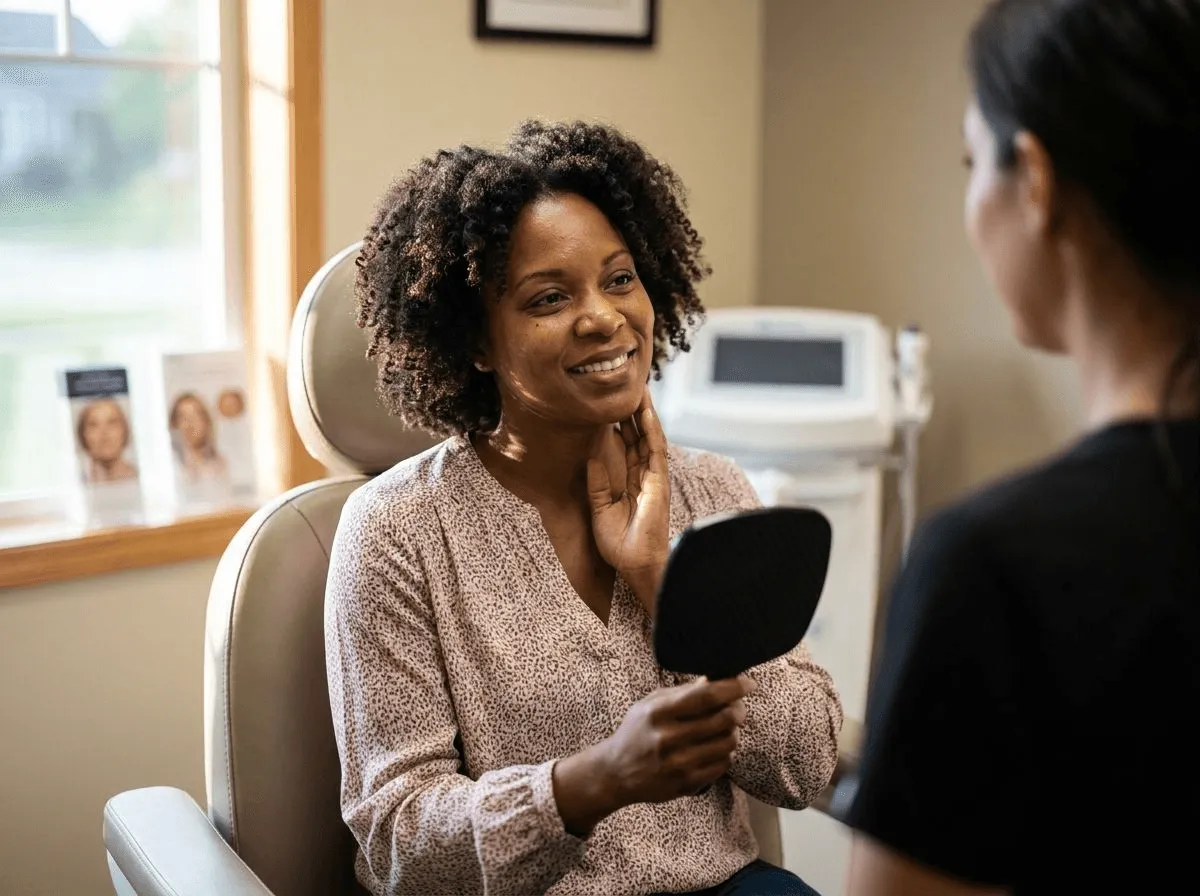
When considering a non-invasive skin tightening treatment, one of the first things patients want to see is results. Ultherapy before and after photos are widely shared online, but the images rarely tell the full story. They do not explain the timeline, the gradual nature of collagen remodeling, or why some patients see more dramatic improvement than others.
Ultherapy is the only FDA-cleared non-invasive treatment for lifting the brow, chin, and jawline, and for improving lines on the decolletage, using micro-focused ultrasound with visualization (MFU-V). Unlike treatments that work at the surface level, Ultherapy delivers focused energy deep into the foundational tissue layers where structural support originates. This depth of treatment is what makes results possible without surgery, but it also means that results develop gradually over months rather than appearing immediately.
At Allen Medical Aesthetics, we believe in setting transparent expectations about Ultherapy. This guide walks through what results actually look like at each stage, which treatment areas respond best, and what factors influence your individual outcome.
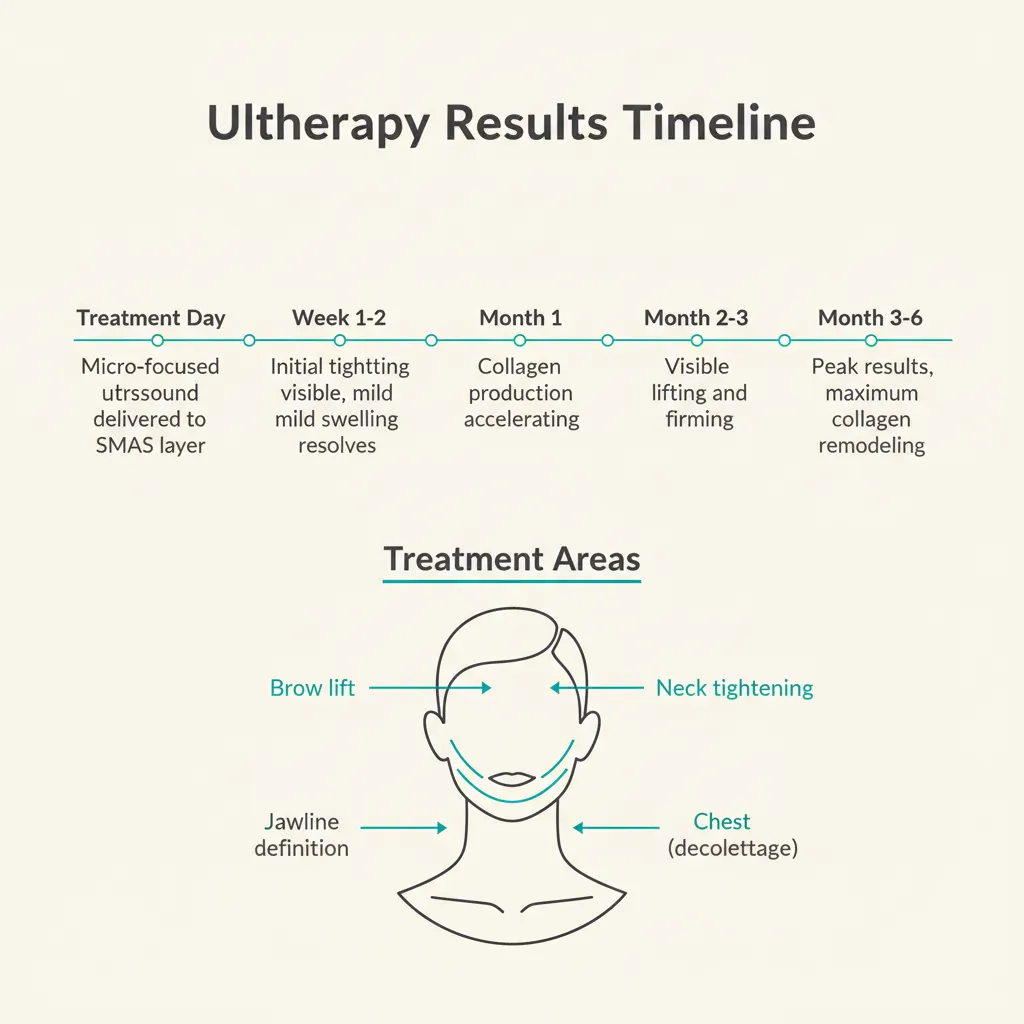
Ultherapy results are not immediate. You may notice subtle tightening in the first few weeks, but the real transformation occurs over 2 to 6 months as your body produces new collagen in response to the ultrasound energy. Most patients see visible improvement in skin laxity, with the best results appearing around the 3 to 6 month mark.
Ultherapy is a single-session treatment with gradual results. Patience is essential because the collagen remodeling process that produces visible lifting takes months, not days.
How Ultherapy Creates Visible Results
Understanding what happens beneath the skin during and after Ultherapy helps explain why the before and after timeline unfolds the way it does.
During treatment, the Ultherapy device delivers focused ultrasound energy to precise depths beneath the skin, targeting the superficial muscular aponeurotic system (SMAS), the same deep tissue layer that surgeons address during a facelift. The ultrasound energy creates small, controlled thermal coagulation points at temperatures between 60 and 70 degrees Celsius. These thermal points are spaced strategically to trigger a wound healing response without damaging the skin surface.
The thermal injury sets off a three-phase healing cascade. First, an inflammatory response brings growth factors and repair cells to the treated areas. Second, new collagen fibers begin forming around the thermal coagulation points during the proliferative phase. Third, and most importantly, the remodeling phase sees these new collagen fibers mature, tighten, and organize into stronger, more supportive tissue architecture.
This entire process takes 3 to 6 months to complete, which is why Ultherapy results are progressive rather than immediate. The treatment essentially reprograms your tissue to rebuild its own structural support from within.
The Ultherapy Results Timeline
One of the most common sources of frustration with Ultherapy is unrealistic timeline expectations. Here is what you can genuinely expect at each stage after treatment.
Day 1 to Week 1: Immediately After Treatment
Immediately after your Ultherapy session, you may notice mild redness, slight swelling, and tenderness in the treated areas. Some patients report a tingling or warm sensation that persists for a few hours. These effects typically resolve within a few days and are a normal part of the body's initial response to the ultrasound energy.
Some patients perceive a very subtle "tightness" in the first few days, but this is primarily due to mild tissue swelling rather than actual collagen remodeling. It is important not to judge your results at this stage. The real work is just beginning beneath the surface.
Weeks 2 to 4: Early Changes
During the second through fourth weeks, the inflammatory phase transitions into active collagen production. You likely will not see significant visible changes yet, though some patients notice that their skin feels slightly firmer to the touch. The treated areas may feel subtly different, even if the mirror does not yet reflect major changes.
This is the phase where patience matters most. Many patients who later report excellent results describe this period as "waiting and wondering." Trust the biological process.
Months 1 to 3: Visible Improvement Begins
Between weeks 4 and 12, newly formed collagen fibers begin to mature and provide structural support. This is when most patients start noticing visible changes. Common observations during this period include a more defined jawline, subtle lifting along the brow line, improved contour beneath the chin, and smoother skin on the neck and chest.
The changes are gradual enough that you may not notice them day to day. Comparing photos taken before treatment to photos at the 2 to 3 month mark typically reveals more improvement than the mirror suggests. This is why we recommend taking standardized before photos at your appointment.
Months 3 to 6: Peak Results
The 3 to 6 month window is when Ultherapy results reach their peak. The collagen remodeling process is well advanced, and the cumulative effect of months of new collagen production becomes clearly visible. This is the stage where before and after comparisons are most striking.
This is when patients typically notice lifting in the brow, improved jawline definition, reduced submental fullness (the area beneath the chin), and visible smoothing of chest wrinkles. Even a subtle change in tissue position can produce noticeable aesthetic improvement.
Months 6 to 12 and Beyond: Longevity
After reaching peak results, Ultherapy outcomes can last 1 to 2 years for most patients. The new collagen your body produced does not disappear overnight, but the natural aging process continues. Gravity, sun exposure, and ongoing collagen degradation will gradually diminish the results over time.
Many patients choose to schedule a maintenance treatment at the 12 to 18 month mark to sustain their results. Some providers recommend annual touch-up sessions, though this varies based on individual aging patterns and goals.
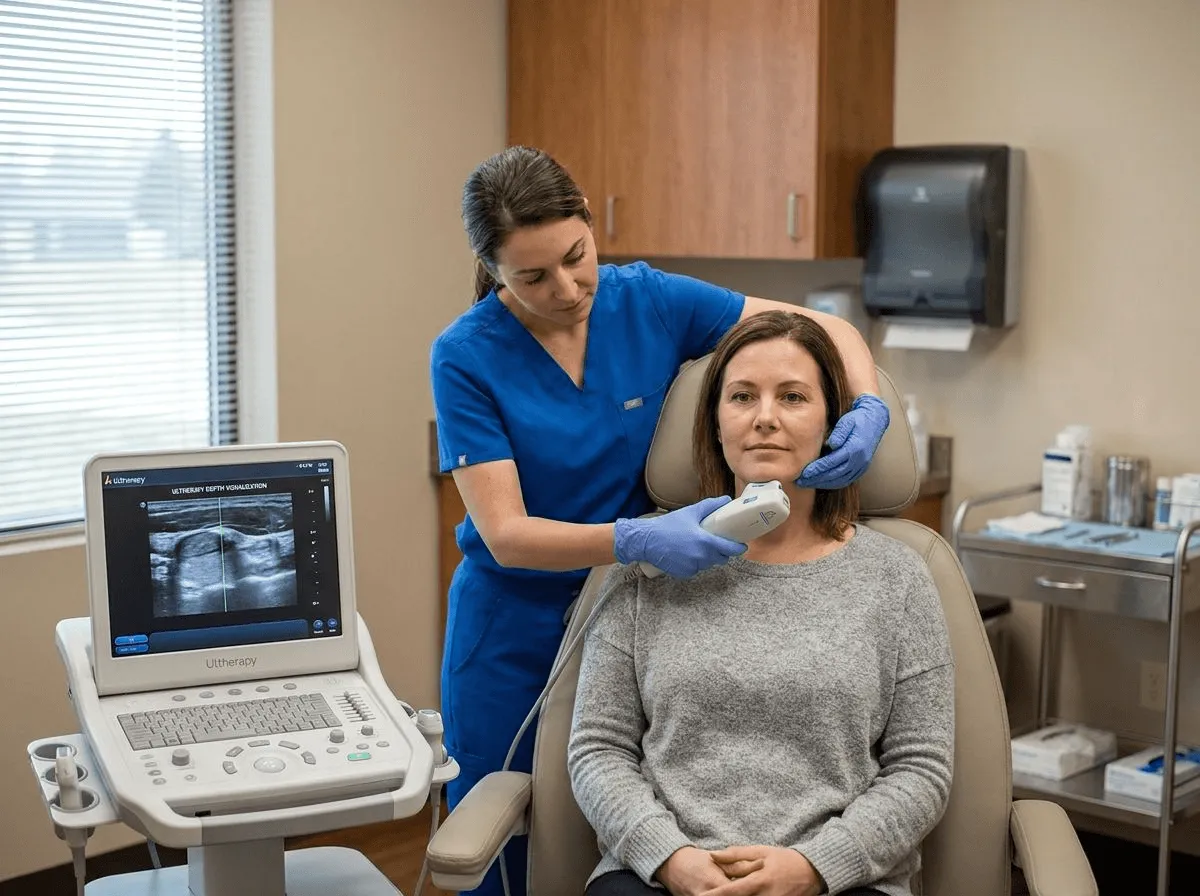

“I always tell my Ultherapy patients to think in terms of months, not days. The collagen your body builds after treatment is real, structural tissue, and that process takes time. When patients come back at the three to six month mark and compare their photos, they are genuinely surprised by how much has changed. The key is trusting the timeline and understanding that gradual results are lasting results.”
Linda Borge Jouini, MSN, RN Aesthetic Nurse Injector
Results by Treatment Area
Ultherapy is FDA-cleared for three specific areas, and each responds somewhat differently to treatment. Understanding these differences helps calibrate expectations for your particular treatment plan.
Brow Lift
The brow area is one of the most responsive treatment zones for Ultherapy, and it is one of the treatment's FDA-cleared indications. Patients who have experienced gradual brow descent (that "heavy" feeling above the eyes) often report that Ultherapy produces a subtle but meaningful lift that restores a more alert, youthful appearance.
Results in the brow area tend to appear earlier in the timeline, with some patients noticing improvement as early as 6 to 8 weeks.
Lower Face and Chin
The lower face and submental region (beneath the chin) are among the most requested treatment areas. Patients with early jowling, a softening jawline, or mild submental laxity are excellent candidates. Ultherapy can tighten the tissue along the jawline and beneath the chin, producing a more defined profile.
This area typically requires the full 3 to 6 months to show optimal results because the tissue is thicker and the collagen remodeling process takes longer in areas with more structural mass. Patients with moderate laxity tend to see more dramatic improvement than those with very mild or very advanced sagging.
Neck
The neck is a challenging area for non-invasive treatments because the skin is thin and the underlying muscle (platysma) contributes significantly to visible aging. Ultherapy can improve skin texture, reduce horizontal necklace lines, and provide subtle tightening along the anterior neck.
Neck results are generally more subtle than facial results. Patients with mild to moderate neck laxity see the best outcomes. Those with significant platysmal banding or very loose neck skin may need to combine Ultherapy with other treatments or consider surgical options for optimal improvement.
Decolletage (Chest)
Chest wrinkles caused by sun damage and sleep position are notoriously difficult to treat. Ultherapy is one of the few treatments that can address these lines effectively. The ultrasound energy stimulates collagen production in the chest tissue, smoothing fine lines and crepiness over 3 to 6 months.
The decolletage often shows impressive before and after results because the baseline condition (crepe-like, wrinkled skin) provides a clear contrast to the smoother, firmer texture that develops after treatment.
Questions about skin rejuvenation?
Our providers offer consultations to discuss your options. The $50 fee is applied toward your first treatment.
Talk to a ProviderWhat to Expect, by Treatment Area
The type of change and the timeline to peak results differ somewhat by treatment area. The table below summarizes what patients generally notice and when, based on the treatment mechanism.
| Treatment Area | What Patients Notice | Timeline to Peak |
|---|---|---|
| Brow lift | A more open, lifted eye area | 2 to 4 months |
| Lower face/jawline | Improved contour and definition | 3 to 6 months |
| Submental (under chin) | Tighter, more defined profile | 3 to 6 months |
| Neck | Smoother, firmer skin texture | 3 to 6 months |
| Chest (decolletage) | Smoother lines and reduced crepiness | 3 to 6 months |
These are general patterns based on the treatment mechanism and provider experience, not a guaranteed outcome. Individual results vary based on age, skin quality, degree of laxity, collagen production capacity, and lifestyle factors. Ultherapy produces meaningful improvement, not transformation equivalent to a surgical facelift.
Who Sees the Best Results?
Not every patient responds to Ultherapy equally, and understanding candidacy is essential for setting accurate expectations. The best results are consistently seen in patients who share certain characteristics.
Mild to moderate skin laxity: Ultherapy works best for patients who have noticeable but not severe looseness. If you can see that your skin has started to descend but the laxity is not extreme, you are in the ideal treatment window. Patients with very mild laxity may see limited improvement simply because there is less to correct, while those with significant sagging typically need surgical intervention for meaningful change.
Age range of 30 to 65: While there is no strict age limit, patients in this range tend to have sufficient collagen production capacity to respond well to the ultrasound stimulus. Younger patients (under 30) rarely have enough laxity to justify treatment, while patients over 65 may have diminished collagen synthesis capacity that limits results.
Good overall skin quality: Patients who maintain a consistent skincare routine, use sun protection, do not smoke, and have relatively healthy skin tend to produce collagen more efficiently and see better outcomes.
Realistic expectations: Patients who understand that Ultherapy provides lifting and tightening within a non-surgical range (not facelift-level results) are consistently more satisfied with their outcomes.
One Session vs Multiple Sessions
Ultherapy is typically performed as a single treatment session, which is one of its distinguishing features compared to treatments like RF microneedling that require a series. However, the question of whether a single session is sufficient or multiple sessions would benefit you depends on several factors.
For most patients with mild to moderate laxity, a single Ultherapy session produces satisfying results. The treatment delivers a concentrated dose of ultrasound energy across the treatment area in one sitting, and the body's collagen response unfolds over the following months.
Some patients, particularly those with more significant laxity or those who want to build on initial results, may benefit from a second session performed 6 to 12 months after the first. This "layering" approach allows the collagen from the first session to mature fully before adding a second stimulus.
It is important to note that performing a second session too early (before the collagen from the first session has fully matured) is generally not recommended. Waiting at least 6 months ensures that you are building on a foundation of new, mature collagen rather than disrupting collagen that is still in the remodeling phase.
Annual maintenance sessions are common among patients who want to sustain their results over time. These maintenance treatments are typically shorter and less intensive than the initial session because they are reinforcing existing collagen rather than building it from scratch. Full details on treatment areas, session length, and pricing are on our Ultherapy service page.
Take before photos in consistent lighting on treatment day. The gradual nature of Ultherapy results means day-to-day changes are hard to see in the mirror. Comparing standardized photos at 3 and 6 months gives you the most accurate picture of your improvement.
What Affects Your Before and After Results
Several factors influence how dramatic your individual before and after results will be. Understanding these variables helps you optimize your outcome and manage expectations.
Age and collagen capacity: Your body's ability to produce new collagen in response to the ultrasound stimulus is the single most important factor. Collagen production declines with age, and patients in their 30s and 40s typically see more robust responses than patients in their 60s and beyond.
Baseline skin quality: Sun damage, smoking history, and overall skin health affect how well your tissue responds to treatment. Patients who invest in medical-grade skincare, sun protection, and a healthy lifestyle give their skin the best foundation for producing results.
Degree of laxity: Patients with moderate laxity often see the most noticeable improvement because the contrast between their starting point and their result is more visible. Very mild laxity may improve but the change is subtle; very advanced laxity may improve but still fall short of the patient's goals.
Treatment energy and coverage: The number of ultrasound lines delivered during treatment and the energy settings used both affect results. Experienced providers calibrate these parameters based on the treatment area, tissue thickness, and patient tolerance. More lines at appropriate energy levels generally produce better outcomes.
Post-treatment lifestyle: Protecting your investment with consistent sunscreen use, avoiding smoking, maintaining hydration, and using quality skincare products can support and extend your Ultherapy results.
Ultherapy Combined with Other Treatments
While Ultherapy is effective as a standalone treatment, combining it with complementary procedures can enhance and extend your results. At Allen Medical Aesthetics, we often design treatment plans that leverage multiple technologies for optimal outcomes.
Biostimulatory fillers like Sculptra or Radiesse work synergistically with Ultherapy. While Ultherapy tightens and lifts existing tissue, biostimulators add volume by stimulating collagen production in areas of volume loss. Combining both addresses laxity and volume depletion simultaneously, the two primary components of facial aging.
RF microneedling can complement Ultherapy by addressing surface-level texture concerns that Ultherapy's deeper-focused energy does not target. Ultherapy works at the SMAS and deep dermal layers, while RF microneedling excels at superficial to mid-dermal remodeling. Together, they treat the full thickness of facial tissue.
These combination approaches should be spaced appropriately to allow each treatment's healing response to proceed without interference. Your provider can design a sequenced treatment plan that maximizes the benefits of each modality.
Frequently Asked Questions
How long after Ultherapy will I see results?
Most patients begin noticing visible improvement between 1 and 3 months after treatment, with peak results appearing at 3 to 6 months. The collagen remodeling process is gradual, so results develop progressively rather than appearing all at once.
Is one Ultherapy session enough?
For most patients with mild to moderate laxity, a single session produces meaningful results. Some patients benefit from a second session 6 to 12 months later to build on their initial improvement. Annual maintenance sessions can help sustain results over time.
Does Ultherapy work on everyone?
Ultherapy works best for patients with mild to moderate skin laxity and sufficient collagen production capacity. Patients with very advanced sagging, very thin skin, or significantly reduced collagen production (typically older patients) may see limited results. A consultation can help determine if you are a good candidate.
Can I compare Ultherapy to a facelift?
Ultherapy provides lifting and tightening within a non-surgical range. It is not equivalent to a surgical facelift, which physically repositions tissue and removes excess skin. Ultherapy is best suited for patients who want improvement without surgery or those who are not ready for a surgical procedure.
What does Ultherapy feel like?
During treatment, you will feel brief pulses of ultrasound energy that produce a warm, prickling sensation. Some areas (particularly the jawline and forehead) can be uncomfortable. Your provider may offer pain management options to improve comfort during the session.
How long do Ultherapy results last?
Results typically last 1 to 2 years, though this varies by individual. The new collagen produced after treatment is real, structural tissue. However, the natural aging process continues, so gradual changes will occur over time. Maintenance treatments can extend your results.
Related Articles
This article supports our Ultherapy service page. Learn more about treatment options, candidacy, and what to expect.