
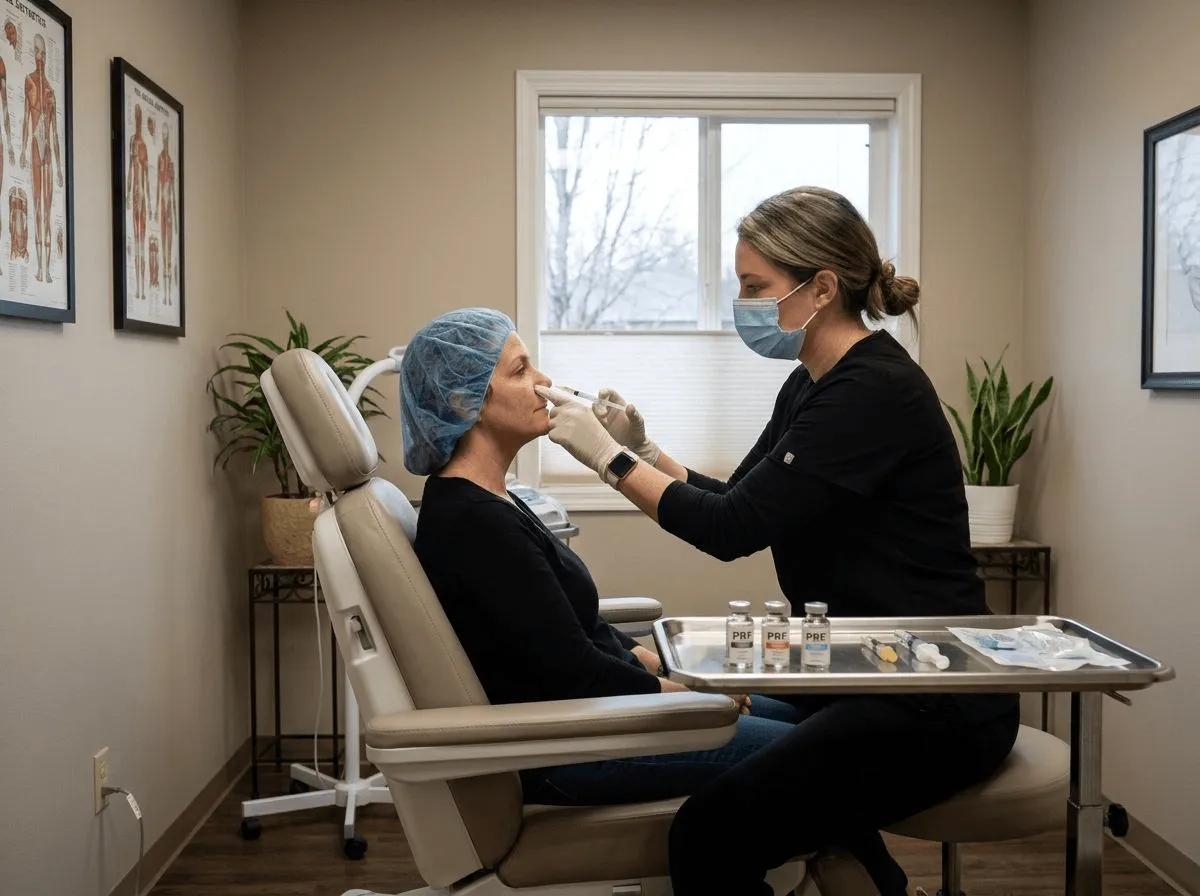
Dermal fillers have long been the gold standard for restoring facial volume, smoothing lines, and enhancing contours. But a growing number of patients are asking the same question: is there a way to get similar results without injecting synthetic materials? The answer is EZ Gel PRF, a next-generation biofiller that uses your own blood to create an injectable gel capable of restoring volume and stimulating your body's natural collagen production.
Unlike hyaluronic acid fillers or calcium hydroxylapatite products, EZ Gel PRF contains no foreign substances. It is created entirely from components drawn from your bloodstream during your appointment. The result is a treatment that can address volume loss, fine lines, and skin quality with virtually zero risk of allergic reaction or granuloma formation.
At Allen Medical Aesthetics, we have seen firsthand how PRF-based treatments are reshaping the way patients think about facial rejuvenation. This guide covers everything you need to know about EZ Gel PRF, from the science behind the technology to what you can expect during and after treatment.
EZ Gel PRF is a natural biofiller made entirely from your own blood. A specialized process separates platelet-rich fibrin and albumin from a simple blood draw, then heats and cools the mixture to create an injectable gel. This gel provides immediate volume while releasing growth factors that stimulate collagen production over the following months.
Because EZ Gel PRF is derived from your own body, there is virtually no risk of allergic reaction, and the results improve over time as your body builds new collagen in the treated areas.
What Is EZ Gel PRF and How Is It Different?
EZ Gel PRF represents the latest evolution in platelet-rich treatments. To understand what makes it unique, it helps to trace the progression from PRP to PRF to EZ Gel.
Platelet-rich plasma (PRP) was the first generation. A blood draw is spun at high speed in a centrifuge, separating red blood cells from plasma rich in platelets and growth factors. PRP is liquid and absorbs quickly, which limits its ability to provide volume. It works well for skin quality improvement but cannot replace the structural support that fillers provide.
Platelet-rich fibrin (PRF) came next. By spinning blood at lower speeds without anticoagulants, the resulting preparation retains a fibrin matrix along with a higher concentration of white blood cells, stem cells, and platelets. This fibrin scaffold releases growth factors more slowly than PRP, typically over 10 to 14 days compared to just a few hours. PRF is thicker than PRP but still not viscous enough to serve as a true filler.
EZ Gel PRF solves this limitation. After the PRF is collected, it is combined with a portion of the patient's albumin (a protein found in the liquid portion of blood). This mixture is then heated and cooled through a precise protocol that transforms the liquid into a gel with a consistency similar to a soft dermal filler. The gel can be injected into areas of volume loss, where it provides immediate structural support while the embedded growth factors stimulate collagen and elastin production over the following weeks and months.
EZ Gel PRF bridges the gap between regenerative medicine and cosmetic fillers. It provides the immediate volume of a filler with the long-term tissue regeneration of PRF, all without any synthetic ingredients.
The Science Behind EZ Gel: How Albumin and PRF Create a Biofiller
The transformation of liquid blood components into an injectable gel relies on a well-understood protein chemistry principle. Albumin is the most abundant protein in human blood plasma, accounting for roughly 55 to 60 percent of total plasma protein content. When albumin is heated to a specific temperature (typically between 70 and 75 degrees Celsius), its protein structure unfolds in a process called denaturation. As the denatured albumin cools, the protein chains cross-link and form a stable gel matrix.
This is the same process that turns a liquid egg white into a solid when you cook it. The difference is precision. In the EZ Gel protocol, the heating and cooling are carefully controlled to produce a gel that is firm enough to provide volume but soft enough to inject through a fine needle or cannula.
When this albumin gel is combined with PRF, the fibrin network and growth factors become embedded within the gel structure. This creates a scaffold that does three things simultaneously. First, it provides immediate volume at the injection site. Second, the fibrin matrix releases growth factors (including PDGF, VEGF, TGF-beta, and EGF) in a sustained manner over 10 to 14 days. Third, these growth factors recruit fibroblasts and stimulate new collagen and elastin production in the surrounding tissue.
The result is a treatment that works in two phases. The initial volume comes from the gel itself. Over the next two to six months, your body replaces some of that gel with newly formed collagen, meaning the tissue improvement becomes increasingly natural and integrated over time.
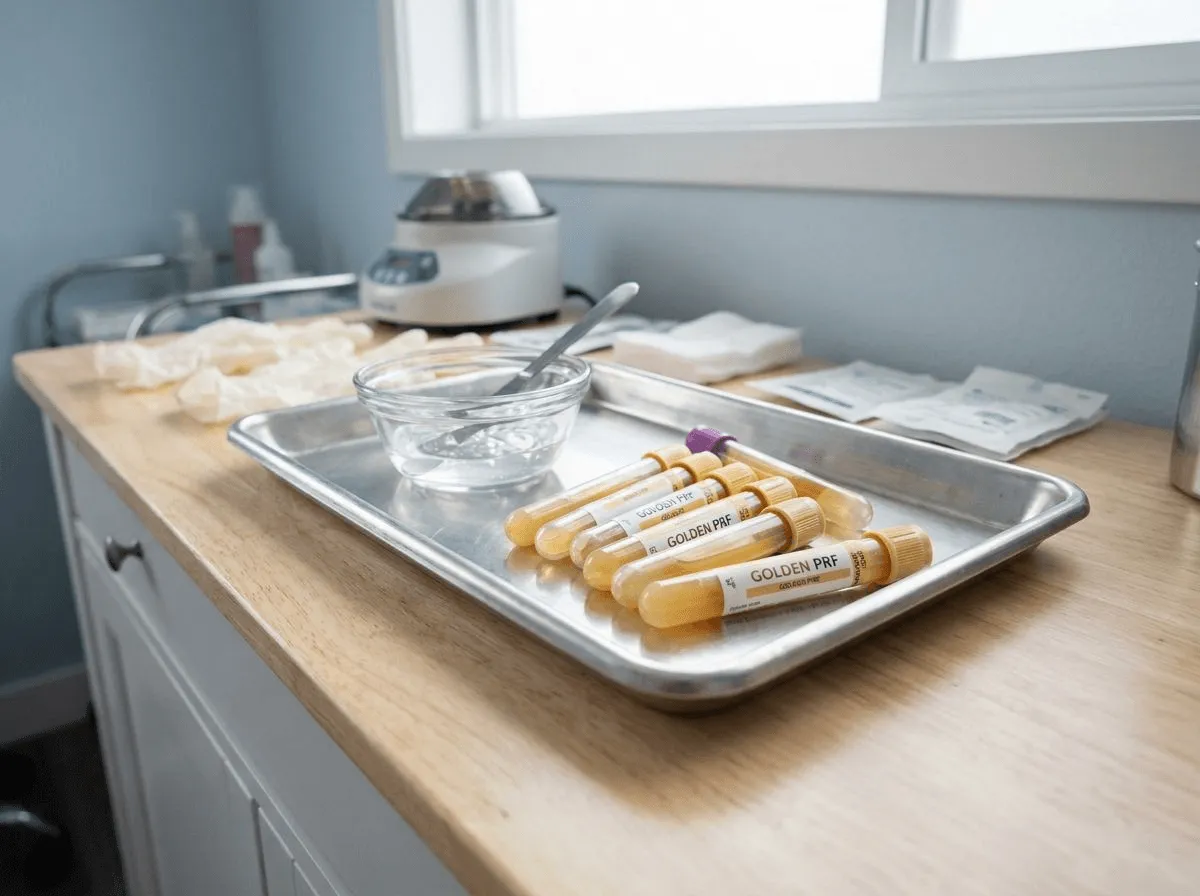
The EZ Gel PRF Treatment Process: Step by Step
Understanding the treatment process can help ease any pre-appointment uncertainty. The entire procedure takes approximately 45 to 60 minutes from start to finish, and most of that time is spent on preparation rather than injection.
- 1. Blood draw: Between 2 and 6 tubes of blood are drawn from your arm, depending on the treatment areas. This is no different from a routine lab draw.
- 2. Centrifugation: The blood tubes are placed in a specialized centrifuge and spun at a low, controlled speed. Unlike PRP processing, no anticoagulants are added, which preserves the natural fibrin network.
- 3. PRF collection: After centrifugation, the PRF layer (a golden-yellow liquid sitting above the red blood cell layer) is carefully extracted.
- 4. Albumin separation: A portion of the plasma albumin is collected from the upper layer of the centrifuged sample.
- 5. Heating and cooling: The albumin is heated in a controlled device to denature the protein, then mixed with the PRF and allowed to cool. This produces the characteristic gel consistency.
- 6. Injection: The EZ Gel is injected into the treatment areas using fine needles or blunt-tip cannulas. Topical numbing cream is typically applied beforehand to minimize discomfort.
- 7. Aftercare instructions: You receive specific post-treatment guidelines, including avoiding intense heat, strenuous exercise, and certain supplements for 24 to 48 hours.
Hydration matters. Drinking plenty of water in the 24 hours before your appointment can improve the quality and yield of your blood draw, which directly affects the volume of EZ Gel that can be produced.
Questions about prf and regenerative?
Our providers offer consultations to discuss your options. The $50 fee is applied toward your first treatment.
Talk to a ProviderEZ Gel PRF vs Dermal Fillers: A Direct Comparison
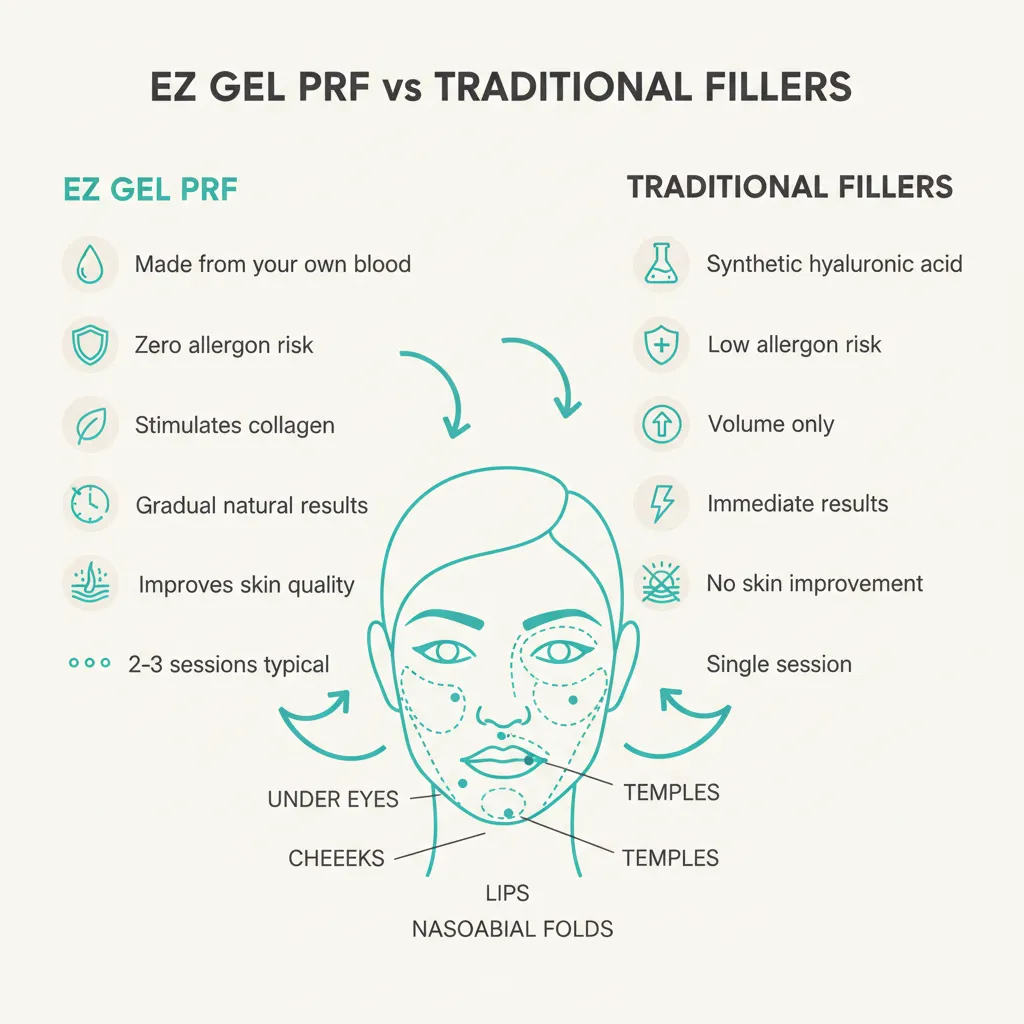
Both EZ Gel PRF and traditional dermal fillers can address volume loss and contour deficiencies. However, they differ significantly in composition, mechanism, and long-term effects. The table below highlights the key differences to help you determine which approach may be right for your goals.
The choice between EZ Gel PRF and dermal fillers is not always either/or. Many patients benefit from a combined approach, using dermal fillers for areas that need precise structural volume (such as the jawline or chin) and EZ Gel PRF for areas where a softer, more natural result is preferred (such as under the eyes or the temples).
| Factor | EZ Gel PRF | Hyaluronic Acid Fillers |
|---|---|---|
| Source material | Your own blood (autologous) | Synthetic or biosynthesized hyaluronic acid |
| Allergen risk | Virtually zero (your own tissue) | Very low, but possible hypersensitivity |
| Collagen stimulation | Yes, significant (growth factor release) | Minimal to none |
| Immediate volume | Moderate (softer, more subtle) | High (precise, predictable) |
| Longevity | Up to 18 months (collagen extends results) | 6 to 18 months (product-dependent) |
| Reversibility | Not reversible (but naturally resorbs) | Reversible with hyaluronidase |
| Risk of granuloma | Extremely rare | Rare but documented |
| Typical cost per session | $600 to $1,200 | $600 to $1,500+ per syringe |
| Best suited for | Under-eye hollows, skin quality, natural enhancement | Lip augmentation, deep folds, structural contouring |
Best Treatment Areas for EZ Gel PRF
EZ Gel PRF can be used across a range of facial and body areas, but certain zones respond particularly well to this biofiller approach. The gel's softer consistency and growth-factor-rich composition make it an especially strong option for delicate areas where synthetic fillers carry higher risk.
Under-Eye Hollows (Tear Troughs)
The under-eye area is one of the most popular applications for EZ Gel PRF, and for good reason. The skin here is among the thinnest on the body, making it prone to visible volume loss, dark circles, and a tired appearance. Traditional hyaluronic acid fillers can work well in this area but carry risks of Tyndall effect (a bluish discoloration under thin skin) and lumpiness. EZ Gel PRF avoids these issues because it is a biologic material that integrates with surrounding tissue. You can read more about this application in our guide to PRF EZ Gel for under-eye rejuvenation.
Cheeks and Midface
Volume loss in the cheeks is one of the earliest visible signs of facial aging. The fat pads that provide youthful fullness begin to descend and diminish as early as the mid-30s. EZ Gel PRF can restore subtle volume to the midface while simultaneously improving skin quality and thickness in the area. For patients who want to address facial volume loss without looking "filled," this is an excellent option.
Temples
Temporal hollowing is a hallmark of facial aging that is often overlooked. As the temporal fat pad shrinks, the area between the eyebrow and hairline becomes concave, giving the face a gaunt or skeletal appearance. EZ Gel PRF provides gentle volumization in this area and encourages tissue thickening over time.
Nasolabial Folds and Marionette Lines
While deeper folds may still benefit from the structural support of hyaluronic acid fillers, mild to moderate nasolabial folds and marionette lines can be effectively softened with EZ Gel PRF. The collagen stimulation helps strengthen the skin in these areas, potentially slowing future fold deepening.
Lips and Hands
For patients seeking subtle lip enhancement with improved texture and hydration rather than dramatic volume, EZ Gel PRF can provide a naturally plump appearance. Learn more about this in our guide to PRF EZ Gel lip enhancement. The hands are another area where EZ Gel excels, replenishing volume over prominent tendons and veins while improving skin quality.
Results Timeline: What to Expect After EZ Gel PRF
One of the most common questions about EZ Gel PRF is how quickly results appear and how long they last. Unlike dermal fillers, which produce their full effect immediately, EZ Gel PRF delivers results in phases.
Day 1 to 3: You will notice immediate volume improvement at the injection sites, along with mild swelling. The treated areas may appear slightly overfilled, which is expected and temporary. Some bruising is possible, particularly in the under-eye area.
Week 1 to 2: Initial swelling subsides. The gel begins to settle into its final position. You may feel that some of the initial volume has diminished, which is normal as the acute swelling resolves.
Week 2 to 4: The inflammatory phase continues as your body responds to the growth factors within the gel. Collagen synthesis begins in earnest. Skin quality improvements may start to become noticeable, including improved hydration and subtle firmness.
Month 2 to 3: Collagen and elastin production accelerates. Many patients report that their results actually look better at this stage than immediately after treatment, as the biologic remodeling creates a more natural and integrated appearance.
Month 3 to 6: Peak results are typically visible between three and six months post-treatment. The initial gel has been partially resorbed and replaced by your own collagen. Skin quality, texture, and volume continue to improve.
Month 6 to 12: Results can persist for up to 18 months, depending on the treatment area, individual biology, and the number of sessions performed. Maintenance treatments every 6 to 9 months can help sustain and build on initial results.
Patience is part of the process with EZ Gel PRF. The full benefit unfolds over months as your body builds new collagen. Many patients find that their results at three months are more natural and more satisfying than what any synthetic filler could achieve.
Who Is a Good Candidate for EZ Gel PRF?
EZ Gel PRF can benefit a broad range of patients, but it is particularly well suited for certain profiles and goals. Understanding who is and who is not an ideal candidate can help set realistic expectations.
Ideal Candidates
Patients who prefer natural, biocompatible treatments and want to avoid synthetic fillers are the most common EZ Gel candidates. This includes individuals with mild to moderate volume loss who want subtle correction rather than dramatic transformation. Patients concerned about long-term filler accumulation or those who have experienced adverse reactions to synthetic products in the past often find EZ Gel PRF to be a welcome alternative. The treatment is also well suited for patients in their late 20s to early 40s who are beginning to notice volume changes and want a proactive, regenerative approach.
Who May Not Be a Good Fit
Patients with bleeding disorders, active skin infections in the treatment area, or certain blood conditions may not be suitable candidates. Those taking blood-thinning medications should discuss timing with their provider. Patients seeking dramatic, same-day volume augmentation (such as significant lip enhancement or deep fold correction) may find that traditional fillers better meet their expectations. Additionally, EZ Gel PRF requires a blood draw, so patients with severe needle phobia should consider this factor.
“When patients ask me whether there is a natural alternative to fillers, EZ Gel is the first thing I recommend. It gives us the ability to restore volume and improve skin quality using nothing but your own biology. I have seen patients who were hesitant about synthetic fillers absolutely love their results with this approach.”
Therese Allen, MSN, RN Lead Aesthetic Nurse Injector
How Many Sessions Do You Need?
Most patients see meaningful improvement after a single EZ Gel PRF session, but optimal results typically require a series of treatments. The reason relates to how the body builds collagen: each session provides a new wave of growth factors and a fresh scaffold for tissue regeneration.
A typical treatment plan includes 2 to 3 sessions spaced 4 to 6 weeks apart. This stacking approach allows each session to build on the collagen production initiated by the previous one. After the initial series, maintenance sessions every 6 to 9 months help sustain the results.
The exact number of sessions depends on the degree of volume loss, the treatment areas, and individual healing capacity. During your consultation at Allen Medical Aesthetics, we assess your goals and anatomy to recommend a personalized treatment plan.
Some patients choose to combine EZ Gel PRF with other regenerative treatments such as microneedling for enhanced collagen induction. When PRF is applied topically during a microneedling session, the micro-channels created by the needles allow growth factors to penetrate deeper into the skin, amplifying both treatments.
Recovery and Aftercare
One of the advantages of EZ Gel PRF is its relatively gentle recovery profile. Because the material is derived from your own blood, the inflammatory response is typically milder than what patients experience with synthetic fillers.
Mild swelling is the most common side effect and typically peaks at 24 to 48 hours before gradually resolving over 3 to 5 days. Bruising is possible, particularly in the under-eye and lip areas, and usually fades within 7 to 10 days. Tenderness at the injection sites is normal for the first 1 to 2 days.
To optimize your recovery and results, follow these aftercare guidelines:
- Avoid touching, massaging, or applying pressure to the treated areas for 24 hours.
- Skip intense exercise, saunas, steam rooms, and hot tubs for 48 hours.
- Sleep with your head slightly elevated the first night to minimize swelling.
- Avoid blood-thinning supplements (fish oil, vitamin E, aspirin) for 48 hours post-treatment if not medically necessary.
- Do not apply makeup to the treated areas for at least 6 hours.
- Stay well hydrated and eat a nutritious diet to support your body's healing response.
- Avoid excessive sun exposure and use SPF 30 or higher for the first week.
Arnica supplements or topical arnica gel can help minimize bruising if started 2 to 3 days before treatment. Ask your provider whether this is appropriate for you.
Why Allen Medical Aesthetics Specializes in PRF Treatments
PRF-based treatments require precision, experience, and a thorough understanding of both the science and the art of facial rejuvenation. At Allen Medical Aesthetics in Des Moines, WA, our team has invested extensively in advanced PRF training and protocols to deliver consistent, high-quality results.
Our team brings years of experience in aesthetic medicine and a deep commitment to natural-looking outcomes. Our approach prioritizes patient safety, individualized treatment planning, and honest communication about what EZ Gel PRF can and cannot achieve.
We believe that the future of aesthetic medicine is moving toward regenerative treatments that work with your body rather than simply filling space. EZ Gel PRF represents this philosophy, and we are proud to offer it as a cornerstone of our PRF biofiller program.
Frequently Asked Questions
How long does EZ Gel PRF last?
Results can last up to 18 months, depending on the treatment area, individual biology, and the number of sessions completed. The collagen stimulation continues to provide benefits even as the original gel is naturally resorbed by the body.
Is EZ Gel PRF painful?
Most patients describe the discomfort as mild. A topical numbing cream is applied before injection, and the blood draw itself is comparable to a standard lab test. Some areas, such as the lips and under-eyes, may be more sensitive, but the procedure is generally well tolerated.
Can EZ Gel PRF be combined with dermal fillers?
Yes. Many patients benefit from a combination approach, using dermal fillers for areas that need precise structural support and EZ Gel PRF for areas where natural volume and skin quality improvement are the primary goals. Your provider can design a plan that uses both strategically.
What is the difference between PRP and EZ Gel PRF?
PRP is a liquid preparation that absorbs quickly and primarily improves skin quality. EZ Gel PRF is a gel formed by combining platelet-rich fibrin with heat-treated albumin, creating a material thick enough to provide volume. EZ Gel also releases growth factors over a longer period than PRP.
Are there any side effects of EZ Gel PRF?
Side effects are typically limited to temporary swelling, mild bruising, and tenderness at the injection sites. Because the material is derived entirely from your own blood, the risk of allergic reaction or foreign body response is virtually eliminated.
How soon can I wear makeup after EZ Gel PRF?
We recommend waiting at least 6 hours before applying makeup to the treated areas. This allows the injection sites to close and reduces the risk of introducing bacteria. Mineral-based makeup is preferable when you do resume application.
Can EZ Gel PRF help with dark circles under the eyes?
Yes. Dark circles caused by volume loss and thin skin in the under-eye area can improve significantly with EZ Gel PRF. The gel restores volume to the tear trough while the growth factors stimulate collagen production, which can thicken the skin and reduce the shadowed appearance.
How many vials of blood are needed for EZ Gel PRF?
Typically 2 to 6 vials, depending on how many areas are being treated. Treating the under-eyes alone may require only 2 to 3 vials, while a full-face session addressing multiple zones may require 4 to 6 vials.
Related Articles
This article supports our Ez Gel Prf Biofiller service page. Learn more about treatment options, candidacy, and what to expect.