
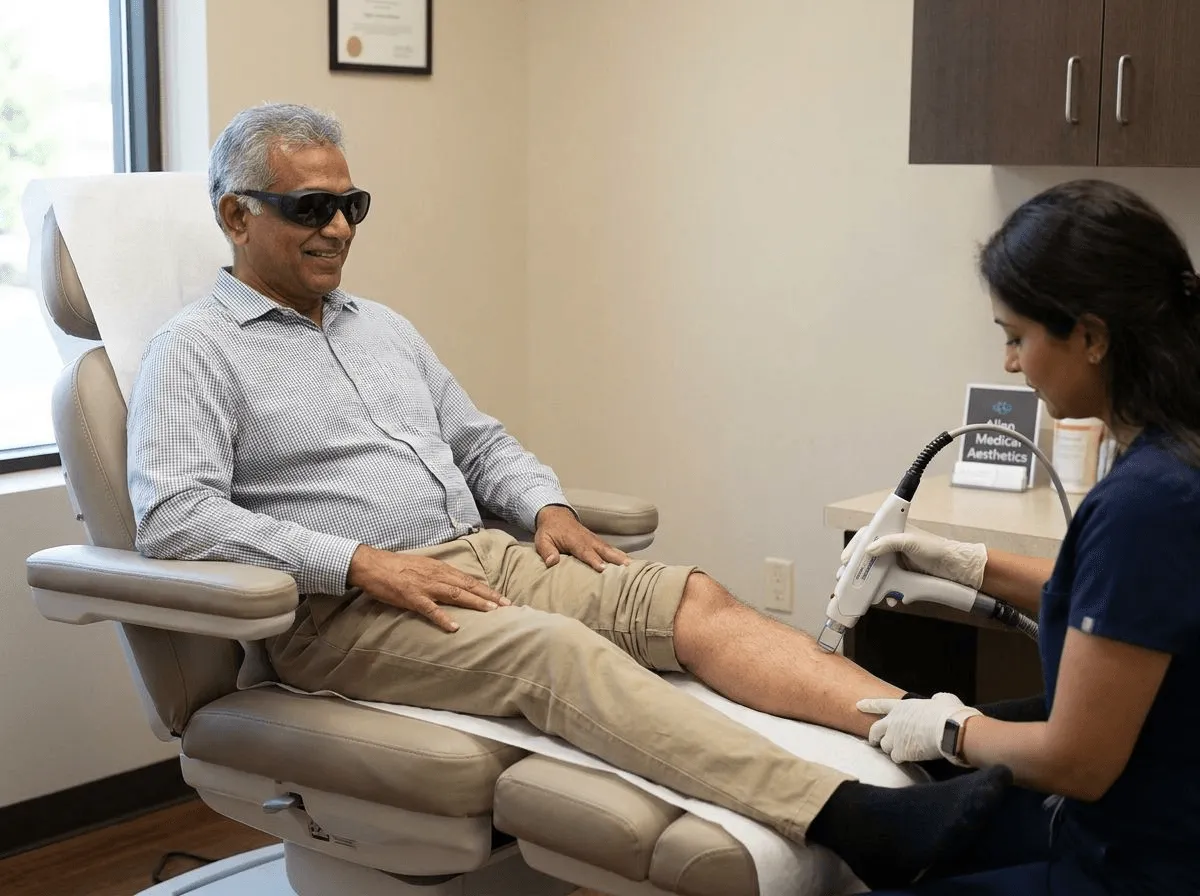
Spider veins are one of the most common cosmetic concerns we see at Allen Medical Aesthetics. These small, visible clusters of red, blue, or purple veins can appear on the face, legs, and chest, often becoming more noticeable with age. While they are rarely a medical concern, spider veins can affect your confidence and make you feel self-conscious about your skin.
Vascular laser treatment is one of the most effective, non-invasive options for eliminating spider veins. This guide covers how the technology works, what facial and leg spider veins have in common (and how they differ), what treatment involves, and how to prevent new spider veins from forming.
Vascular laser treatment uses targeted light energy to heat and collapse spider veins, causing them to fade and be reabsorbed by the body. Most patients need 1 to 3 sessions spaced 4 to 6 weeks apart. Facial spider veins typically respond faster than leg veins. Results become visible within 2 to 6 weeks after each session.
Laser treatment for spider veins is safe, effective, and requires no downtime. Facial veins often clear in 1 to 2 sessions, while leg veins may need 2 to 3 sessions for optimal results.
What Are Spider Veins?
Spider veins (telangiectasias) are small, dilated blood vessels that sit close to the surface of the skin. They typically measure less than 1 mm in diameter and appear as thin, branching lines that can be red, blue, or purple. The name comes from their web-like pattern, which often radiates outward from a central point.
Spider veins form when the tiny valves inside these small blood vessels weaken or malfunction, allowing blood to pool and the vessel walls to stretch. Once a vessel is dilated, it does not return to its normal size on its own. The vessel remains visible through the skin, and the only way to remove it is to destroy the vessel itself so that the body can reabsorb it and reroute blood flow through healthier vessels.
Spider veins are different from varicose veins, which are larger, deeper, ropey veins that often bulge above the skin surface. Varicose veins can cause pain, heaviness, and swelling, and they sometimes require medical treatment. Spider veins are almost always a cosmetic concern rather than a medical one, though they can occasionally cause mild itching or burning.
Common Causes of Spider Veins
Several factors contribute to the development of spider veins. Understanding what causes them can help you manage risk factors and set realistic expectations about prevention.
- Genetics: Family history is the strongest predictor of spider veins. If your parents or grandparents had visible veins, you are more likely to develop them.
- Age: Vein walls and valves weaken naturally over time. Spider veins become more common after age 30 and continue to increase with age.
- Hormonal changes: Pregnancy, birth control pills, and hormone replacement therapy can all contribute to spider vein formation. Estrogen in particular weakens vein walls.
- Sun exposure: UV damage breaks down collagen around small blood vessels, making facial spider veins more visible and more likely to develop.
- Prolonged standing or sitting: Occupations that require long periods in one position increase pressure in the leg veins, contributing to spider vein formation.
- Rosacea: Patients with rosacea frequently develop facial spider veins as part of the condition.
- Skin trauma: Previous injuries, surgeries, or even aggressive skincare treatments can damage small blood vessels.
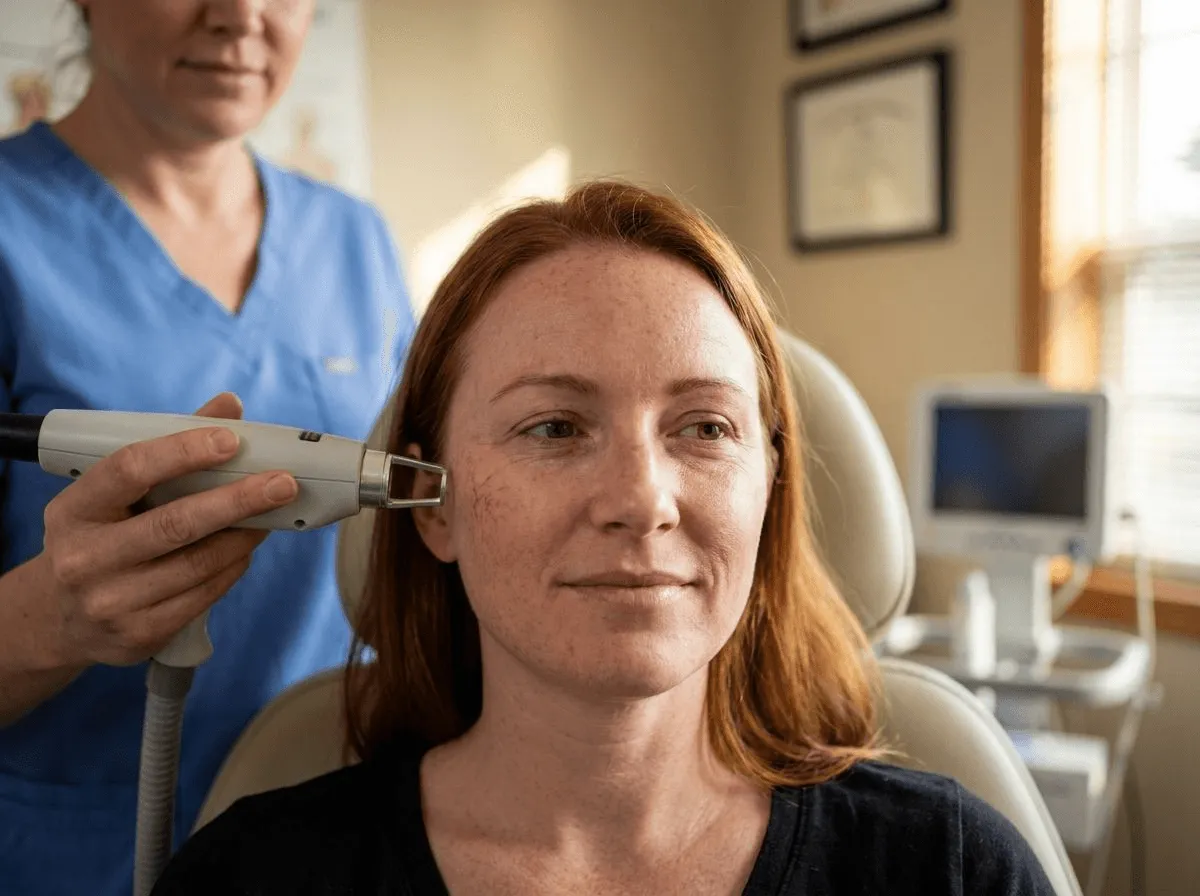
How Vascular Laser Treatment Works
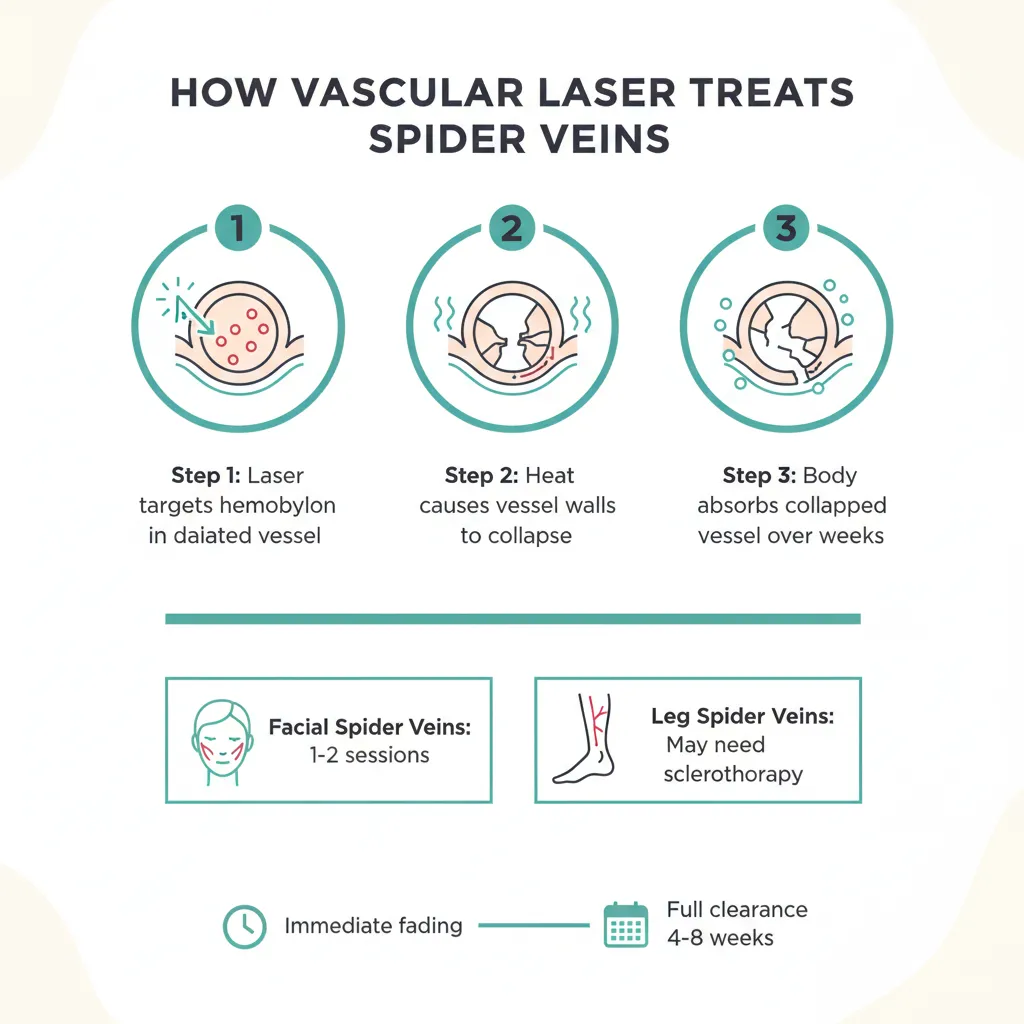
Vascular lasers work through a principle called selective photothermolysis. The laser emits a specific wavelength of light that is preferentially absorbed by hemoglobin, the red pigment in blood. When the laser energy is absorbed by the blood inside a spider vein, it converts to heat, causing the blood to coagulate and the vessel walls to collapse.
Over the following weeks, the body's immune system recognizes the damaged vessel as debris and gradually reabsorbs it. Blood flow redirects through deeper, healthy vessels. The treated spider vein fades from view as it is broken down and cleared away.
Different vascular lasers use different wavelengths to target blood vessels at various depths. The most commonly used vascular lasers include pulsed dye laser (PDL) at 595 nm, which is excellent for superficial red vessels on the face, and Nd:YAG laser at 1064 nm, which penetrates deeper and is better suited for blue or purple veins and leg spider veins. At Allen Medical Aesthetics, we select the appropriate laser wavelength based on the size, depth, color, and location of your spider veins.
Questions about laser and skin?
Our providers offer consultations to discuss your options. The $50 fee is applied toward your first treatment.
Talk to a Provider
“Vascular laser technology allows us to target individual spider veins with remarkable precision. The laser energy is absorbed specifically by the hemoglobin inside the vessel, which means we can collapse the vein without affecting the surrounding tissue. For most facial spider veins, patients can watch the vessel fade during the treatment itself.”
Tod Work, MSN, MPA, ARNP Medical Director & Medical Weight Loss Provider
Facial Spider Veins vs Leg Spider Veins
While the underlying mechanism is the same, facial and leg spider veins differ in several important ways that affect treatment approach and results.
Why Facial Veins Respond Faster
Facial spider veins are typically very superficial and small in diameter, which means the laser energy reaches them easily and the vessel collapses quickly. Many patients see an immediate change during treatment, with the vessel visibly lightening or disappearing as the laser pulse is delivered. Final results appear within 2 to 4 weeks as the body finishes clearing the treated vessel.
Why Leg Veins Take Longer
Leg spider veins tend to be slightly larger and deeper than facial veins. They also face higher hydrostatic pressure because of gravity, which means the vessel walls are under more tension. These factors make leg veins more resistant to treatment. Additionally, leg veins may be connected to deeper feeder veins (reticular veins) that contribute to the spider vein pattern. If feeder veins are present, treating only the surface spider veins may produce incomplete or temporary results.
| Factor | Facial Spider Veins | Leg Spider Veins |
|---|---|---|
| Typical size | Very small (less than 0.5 mm) | Small to medium (0.5 to 1.5 mm) |
| Color | Red to light purple | Blue, purple, or red |
| Depth | Very superficial | Slightly deeper |
| Common locations | Nose, cheeks, chin | Thighs, calves, ankles |
| Sessions needed | 1 to 2 | 2 to 3 |
| Response to laser | Excellent, often immediate | Good, gradual fading over weeks |
| Preferred laser | Pulsed dye laser (595 nm) | Nd:YAG (1064 nm) |
What to Expect During Treatment
A vascular laser treatment session is straightforward and typically takes 15 to 30 minutes depending on the number and size of the areas being treated.
Before treatment begins, the skin is cleansed and protective eyewear is placed. No topical numbing is required for most facial treatments, as the sensation is brief and tolerable. For larger areas on the legs, a topical anesthetic may be applied 20 to 30 minutes before treatment to improve comfort.
During treatment, the laser handpiece is placed against the skin and pulses of light are delivered along each visible vein. Most patients describe the sensation as a quick snap, similar to a rubber band flicking against the skin. Modern vascular lasers include built-in cooling systems that chill the skin before and after each pulse, reducing both discomfort and the risk of thermal injury.
Immediately after treatment, the skin may appear slightly red or swollen around the treated vessels. Facial veins may look darker or slightly bruised for a few days. Leg veins may develop a darkened, reddish-brown appearance that fades over 2 to 6 weeks as the body clears the treated vessel.
Avoid blood-thinning medications (aspirin, ibuprofen, fish oil) for 5 to 7 days before your appointment if your provider approves. This reduces the risk of bruising after treatment.
Number of Sessions and Results Timeline
The number of sessions you need depends on the size, number, and location of your spider veins.
For facial spider veins, most patients see significant improvement after just 1 session, with 1 to 2 sessions total achieving optimal clearance. Each session treats the same area, allowing the laser to address any residual vessels that did not fully respond to the initial treatment.
For leg spider veins, 2 to 3 sessions spaced 4 to 6 weeks apart is typical. Some patients with extensive spider veins or larger vessels may need up to 4 sessions. Results are cumulative, with each treatment clearing additional vessels.
You can expect to see initial fading within 2 to 4 weeks after a facial treatment and 4 to 6 weeks after a leg treatment. The treated veins do not come back. However, new spider veins can develop over time due to the same factors that caused the original ones (genetics, sun exposure, hormonal changes). Many patients return once or twice per year for maintenance treatments to address any new vessels that appear.
Laser vs Sclerotherapy for Leg Spider Veins
For leg spider veins, both laser treatment and sclerotherapy are effective options. Understanding how they compare helps you determine which approach makes the most sense for your situation.
Sclerotherapy involves injecting a chemical solution (sclerosant) directly into the spider vein using a very fine needle. The solution irritates the vessel lining, causing it to swell shut, scar, and eventually be reabsorbed by the body. It has been the gold standard for leg spider veins for decades and is particularly effective for larger spider veins and reticular (feeder) veins.
Laser treatment works externally through the skin without any needles or injections. It is ideal for patients who are needle-averse, for very small spider veins that are too tiny to inject, and for spider veins on the face (where sclerotherapy is not typically performed). Laser also works well for patients who have had allergic reactions to sclerosing agents.
In many cases, the two treatments complement each other. Sclerotherapy may be used first to treat larger feeder veins and more prominent spider veins, followed by laser to clean up the remaining fine vessels. Your provider can recommend the best approach based on the size, location, and extent of your spider veins.
| Factor | Vascular Laser | Sclerotherapy |
|---|---|---|
| Best for | Small, superficial veins; facial veins | Medium spider veins; feeder veins on legs |
| How it works | External light energy heats and collapses vessel | Injected solution irritates and scars vessel shut |
| Needles required | No | Yes (very fine) |
| Sessions needed | 2 to 3 for legs | 1 to 3 for legs |
| Downtime | None | Compression stockings for 1 to 2 weeks |
| Face treatment | Yes, excellent | Not recommended |
Who Is a Good Candidate
Most adults with visible spider veins are good candidates for vascular laser treatment. The ideal candidate has clearly visible spider veins that they would like to reduce or eliminate, is in generally good health, and has realistic expectations about the treatment process.
Vascular laser treatment works on all skin tones, though settings are adjusted based on your complexion. Patients with very dark or heavily tanned skin may need to wait until their tan fades, as excess melanin in the skin can compete with hemoglobin for laser absorption.
Who Should Avoid or Delay Treatment
Certain conditions may make laser treatment for spider veins less appropriate. Patients who are pregnant or breastfeeding should wait until after pregnancy to pursue treatment. Those taking photosensitizing medications should discuss timing with their provider. Patients with active skin infections or open wounds in the treatment area need to heal completely before proceeding. If you have a history of deep vein thrombosis (DVT) or significant venous insufficiency in the legs, a vascular evaluation may be recommended before cosmetic treatment to rule out underlying circulatory issues.
Prevention Tips
While you cannot change your genetics, several habits can reduce your risk of developing new spider veins and help maintain your treatment results.
- 1. Wear sunscreen daily. UV damage weakens the collagen that supports small blood vessels, especially on the face. Broad-spectrum SPF 30 or higher protects against this damage.
- 2. Stay active. Regular exercise, especially walking, cycling, and swimming, promotes healthy circulation and reduces venous pressure in the legs.
- 3. Avoid prolonged standing or sitting. If your job requires long periods in one position, take breaks every 30 to 60 minutes to move and stretch. Elevate your legs when resting.
- 4. Wear compression stockings. If you are prone to leg spider veins, graduated compression stockings support healthy blood flow and reduce the pressure that contributes to vein formation.
- 5. Maintain a healthy weight. Excess weight increases pressure on leg veins, accelerating spider vein formation.
- 6. Protect your skin from extreme temperatures. Very hot baths, saunas, and extreme cold can dilate blood vessels and worsen facial spider veins.
- 7. Manage rosacea. If you have rosacea, consistent treatment and trigger avoidance can reduce the development of associated facial spider veins.
Treated spider veins do not come back. However, new veins can develop over time due to the same underlying factors. Consistent sun protection and healthy circulation habits are the best ways to slow the formation of new spider veins.
Frequently Asked Questions
Does laser treatment for spider veins hurt?
Most patients describe the sensation as a quick, mild snap similar to a rubber band. Modern vascular lasers have built-in cooling systems that protect the skin and reduce discomfort. Topical numbing is available for sensitive areas or larger treatment sessions.
How long does it take for spider veins to disappear after laser treatment?
Facial spider veins typically fade within 2 to 4 weeks. Leg spider veins may take 4 to 6 weeks to fully clear. Some treated veins darken temporarily before fading, which is a normal part of the process.
Can spider veins come back after laser treatment?
Treated spider veins are permanently destroyed and will not return. However, new spider veins can develop over time due to genetics, aging, hormonal changes, or sun exposure. Periodic maintenance sessions can address new veins as they appear.
Is there any downtime after spider vein laser treatment?
There is no downtime. You can return to normal activities immediately. Minor redness or bruising may occur and typically resolves within a few days. You should avoid intense exercise, hot baths, and direct sun exposure for 24 to 48 hours after treatment.
Can IPL treat spider veins?
Yes, IPL (Intense Pulsed Light) can treat superficial spider veins, particularly on the face. However, dedicated vascular lasers are generally more precise and effective for targeting specific vessels. IPL may be a good option when treating spider veins alongside other concerns like sun damage or rosacea.
How much does laser spider vein treatment cost?
Pricing depends on the size and number of areas being treated. A consultation at Allen Medical Aesthetics will provide an accurate estimate based on your specific needs. Many patients treat facial spider veins in a single session, making it a straightforward and affordable procedure.
Related Articles
This article supports our Vascular Laser Treatment service page. Learn more about treatment options, candidacy, and what to expect.