
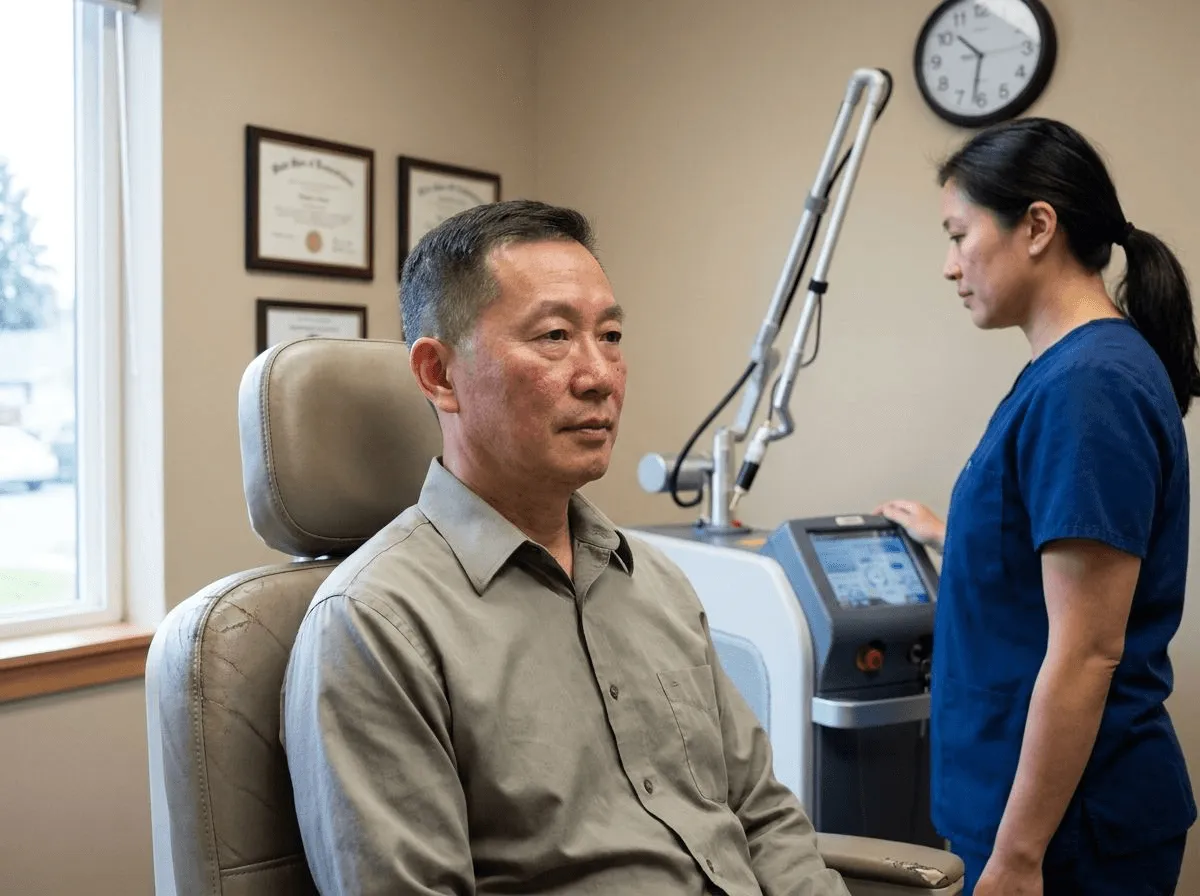
Rosacea is a chronic inflammatory skin condition that affects an estimated 16 million Americans. It causes persistent redness, visible blood vessels, and in some cases, acne-like breakouts on the central face. While there is no cure for rosacea, vascular laser treatment is one of the most effective ways to reduce its visible symptoms and improve quality of life.
If you have tried topical creams and oral medications without getting the results you want, laser treatment may be the next step. This guide explains how different vascular lasers address rosacea, which subtypes respond best, what results you can expect, and how to build a long-term management plan that keeps flare-ups under control.
Vascular lasers (particularly pulsed dye laser) can reduce rosacea-related redness by 50% to 75% and significantly diminish visible blood vessels. Most patients need 2 to 4 sessions spaced 4 to 6 weeks apart. Results are long-lasting but not permanent, as rosacea is a chronic condition. Maintenance sessions every 6 to 12 months help preserve results.
Laser treatment does not cure rosacea, but it can dramatically reduce redness and visible vessels. Combined with trigger avoidance and a gentle skincare routine, laser provides the most effective long-term management for moderate to severe rosacea.
Understanding Rosacea Subtypes
Rosacea is not a single condition. It presents in several distinct subtypes, and understanding which type (or combination of types) you have is critical for choosing the right treatment approach. Many patients have features of more than one subtype.
Subtype 1: Erythematotelangiectatic Rosacea (ETR)
This is the most common subtype and the one that responds best to laser treatment. ETR is characterized by persistent central facial redness (especially on the cheeks, nose, and chin), frequent flushing or blushing episodes, and visible blood vessels (telangiectasia). The skin may also feel sensitive, dry, or slightly rough. Patients with ETR often describe a burning or stinging sensation, particularly when applying skincare products.
Subtype 2: Papulopustular Rosacea
This subtype involves acne-like breakouts (papules and pustules) along with underlying redness. It is sometimes misdiagnosed as adult acne. While laser treatment can address the redness and vascular component of papulopustular rosacea, the inflammatory breakouts typically need to be managed with topical or oral medications first. Once the breakouts are controlled, laser can target the residual redness and vessels.
Subtype 3: Phymatous Rosacea
Phymatous rosacea involves thickening of the skin, most commonly on the nose (rhinophyma). This subtype is more common in men and develops over years. While vascular lasers can treat the redness associated with phymatous rosacea, the tissue thickening requires ablative laser resurfacing or surgical intervention rather than vascular laser alone.
Subtype 4: Ocular Rosacea
Ocular rosacea affects the eyes, causing redness, dryness, burning, and irritation. This subtype requires management by an ophthalmologist and is not treated with skin-directed laser therapy.
Subtype 1 (ETR) responds best to vascular laser treatment. If you have persistent facial redness, frequent flushing, and visible blood vessels, you are likely an excellent candidate for laser therapy.
How Vascular Lasers Treat Rosacea
Vascular lasers treat rosacea through two primary mechanisms. First, they selectively destroy the dilated, abnormal blood vessels that cause visible redness and telangiectasia. The laser energy is absorbed by hemoglobin in the blood, heating and collapsing the vessel walls. Over the following weeks, the body reabsorbs the damaged vessels and redness fades.
Second, vascular lasers reduce the overall vascular reactivity of the skin. By eliminating the most unstable, easily triggered blood vessels, laser treatment reduces the frequency and intensity of flushing episodes. Many patients report that after a series of treatments, their skin is less reactive to triggers that previously caused intense flushing.
This dual action (vessel destruction plus reduced reactivity) is why laser treatment produces more dramatic and lasting results than topical treatments alone. Topical medications like brimonidine or oxymetazoline temporarily constrict blood vessels to reduce redness, but the effect wears off within hours. Laser treatment physically eliminates the problematic vessels.
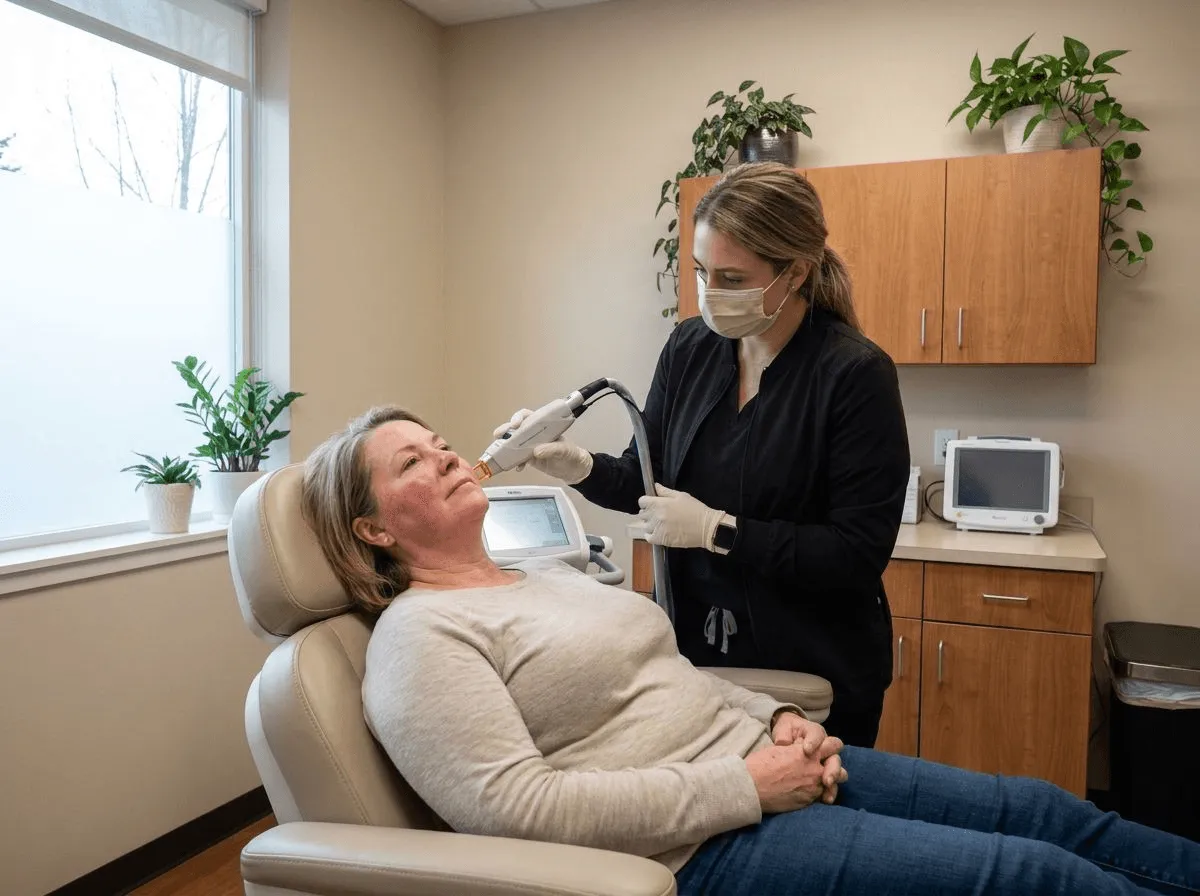
Types of Lasers Used for Rosacea
Several laser and light-based technologies can treat rosacea, each with distinct advantages. The best choice depends on your specific symptoms, skin type, and treatment goals.
Pulsed Dye Laser (PDL)
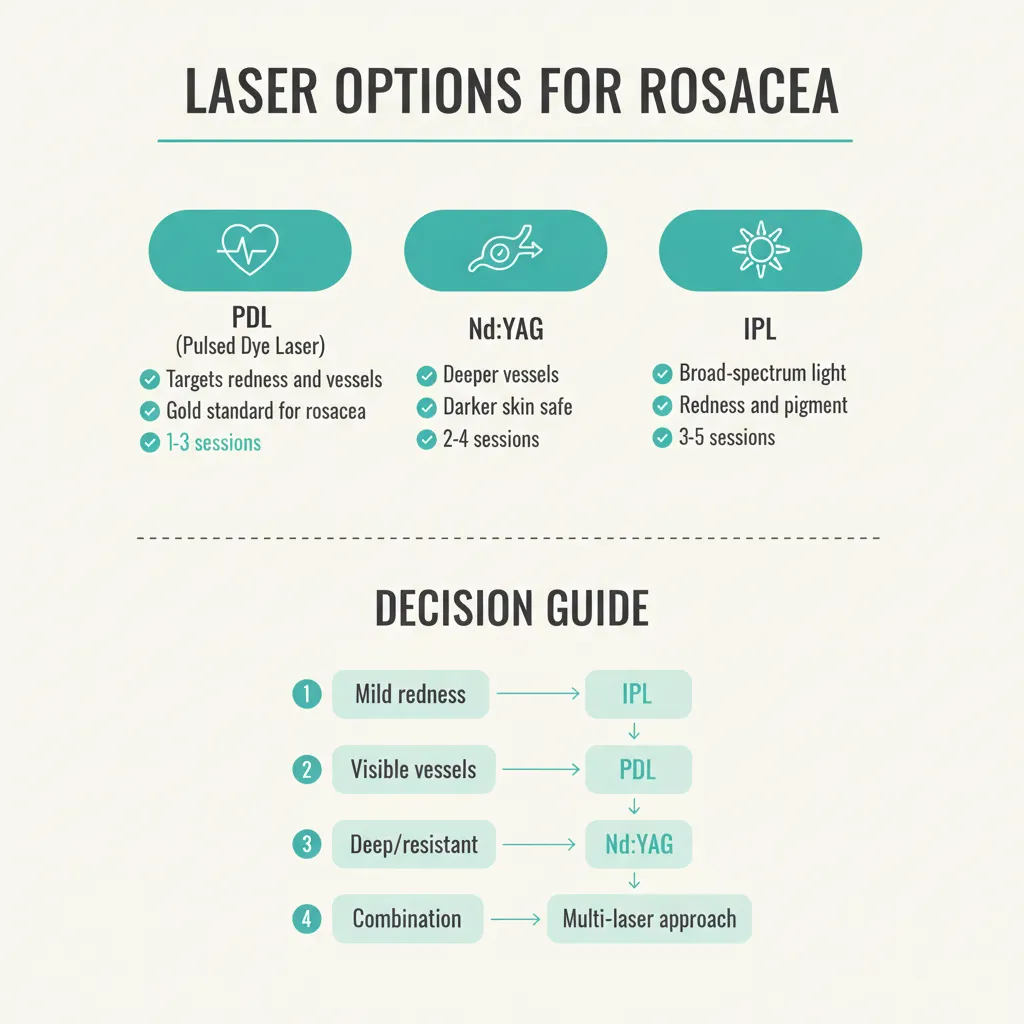
The pulsed dye laser at 595 nm is considered the gold standard for treating rosacea-related redness and telangiectasia. This wavelength is highly absorbed by oxyhemoglobin, making it exceptionally effective at targeting superficial blood vessels. PDL has been studied extensively for rosacea, with clinical trials consistently showing 50% to 75% reduction in redness after a series of treatments.
The main consideration with PDL is the potential for temporary purpura (bruising), which appears as purple discoloration lasting 7 to 10 days. Modern PDL devices allow providers to adjust settings to minimize or eliminate purpura while still achieving good results, though sub-purpuric settings may require additional sessions.
Nd:YAG Laser
The long-pulsed Nd:YAG laser at 1064 nm penetrates deeper than PDL and is effective for treating larger, deeper blood vessels and blue-toned veins. It is particularly useful for patients with darker skin tones (Fitzpatrick types IV and V), as the longer wavelength carries a lower risk of pigment changes. Nd:YAG produces less purpura than PDL but may be slightly less effective for diffuse superficial redness.
Intense Pulsed Light (IPL)
IPL is a broad-spectrum light technology (not technically a laser) that treats rosacea redness, visible vessels, and associated sun damage simultaneously. IPL filters can be adjusted to target the vascular component while also addressing pigmentation irregularities. Many rosacea patients prefer IPL because it treats the overall complexion rather than individual vessels, producing an even-toned result with minimal downtime.
IPL typically requires 3 to 5 sessions for optimal rosacea management and causes less bruising than PDL, making it a good option for patients who cannot tolerate social downtime.
| Technology | Wavelength | Best For | Purpura Risk | Sessions Needed |
|---|---|---|---|---|
| Pulsed Dye Laser (PDL) | 595 nm | Diffuse redness, fine telangiectasia | Moderate (adjustable) | 2 to 4 |
| Nd:YAG | 1064 nm | Larger vessels, deeper veins, darker skin | Low | 2 to 4 |
| IPL | 500 to 1200 nm (filtered) | Overall redness + pigmentation | Low | 3 to 5 |
Questions about laser and skin?
Our providers offer consultations to discuss your options. The $50 fee is applied toward your first treatment.
Talk to a ProviderWhat to Expect During Treatment
A rosacea laser treatment session at Allen Medical Aesthetics is a comfortable, in-office procedure. Sessions typically last 15 to 30 minutes depending on the area being treated.
Before treatment, the skin is cleansed and protective eyewear is placed. No topical numbing is required for most sessions, as the sensation is brief and well-tolerated. Most patients describe it as a gentle snap accompanied by a mild warming sensation. All of our vascular laser systems include integrated cooling to protect the skin surface and improve comfort.
Immediately after treatment, you may notice mild redness and slight swelling in the treated areas. If purpuric (bruise-like) settings are used with PDL, purple discoloration may develop and will last 7 to 10 days. With sub-purpuric settings or IPL, most patients experience only mild pinkness that resolves within a few hours to a day.
There is no true downtime. You can apply mineral makeup immediately after treatment and return to your normal routine. Sun protection is essential in the days following treatment, and you should avoid known rosacea triggers (hot beverages, alcohol, spicy food, intense exercise) for 24 to 48 hours to give the skin time to settle.
Expected Results and Treatment Protocol
Laser treatment for rosacea is cumulative. Each session builds on the previous one, progressively reducing redness and visible vessels.
After the first treatment, most patients notice a 20% to 30% reduction in overall redness. Visible telangiectasias may fade noticeably or disappear entirely depending on their size and depth. By the second or third treatment, patients typically report a 50% to 75% overall improvement in redness, flushing frequency, and visible vessels.
A standard treatment protocol involves 2 to 4 sessions spaced 4 to 6 weeks apart. After the initial series, results are assessed at a follow-up appointment. Some patients achieve their goals in 2 sessions, while others with more extensive vascular changes benefit from the full series of 4.
Results from laser treatment are long-lasting but not permanent. Rosacea is a chronic condition, and new blood vessels can develop over time. Most patients schedule maintenance treatments every 6 to 12 months to keep redness under control and address any new vessels before they become prominent.
Schedule your first laser treatment during a period when your rosacea is relatively calm (not mid-flare). This gives the laser the best baseline to work from and allows your provider to see your true resting redness level for accurate treatment planning.
“From a medical standpoint, vascular laser treatment addresses the root cause of rosacea redness by physically eliminating the dilated blood vessels responsible for it. I typically see a 50% to 75% reduction in redness after a complete series, and patients report that their skin is far less reactive to the triggers that used to cause intense flushing.”
Tod Work, MSN, MPA, ARNP Medical Director & Medical Weight Loss Provider
Combining Laser with Skincare for Rosacea
Laser treatment is most effective when paired with a rosacea-appropriate skincare routine. The right products reduce inflammation, support the skin barrier, and help maintain laser results between sessions.
A solid rosacea skincare routine should include a gentle, fragrance-free cleanser (cream or micellar formulas work well), a barrier-repair moisturizer containing ceramides, niacinamide, or hyaluronic acid, and a broad-spectrum mineral sunscreen with SPF 30 or higher (zinc oxide and titanium dioxide are better tolerated than chemical sunscreens for rosacea-prone skin).
Prescription topicals may also play a role. Azelaic acid (15% to 20%) reduces both redness and papulopustular breakouts. Metronidazole cream has anti-inflammatory properties that calm rosacea flares. Ivermectin cream addresses the Demodex mite overgrowth that contributes to rosacea in some patients.
Products to avoid include anything with alcohol, fragrance, witch hazel, menthol, peppermint, or eucalyptus. Strong chemical exfoliants (glycolic acid, salicylic acid at high concentrations) and retinoids should be introduced cautiously, if at all, and only under provider guidance. Rosacea skin has a compromised barrier, and aggressive products can trigger flares that undo laser results.
The Role of DiamondGlow
Between laser sessions, a DiamondGlow facial with a soothing, hydrating serum can maintain skin health without irritation. DiamondGlow uses gentle exfoliation and serum infusion to keep the skin clear and hydrated without triggering rosacea sensitivity. It is one of the few professional facial treatments that is well-tolerated by rosacea patients.
Common Rosacea Triggers to Avoid
Managing rosacea is not just about treatment. It is equally about minimizing the triggers that cause flare-ups. While triggers vary from person to person, the most commonly reported ones include the following.
- Sun exposure: The number one trigger for the majority of rosacea patients. Daily mineral sunscreen is non-negotiable.
- Emotional stress: Stress-induced flushing is very common. Stress management techniques can reduce flare frequency.
- Hot beverages and spicy foods: These dilate blood vessels and trigger flushing. Letting drinks cool slightly and reducing spice levels can help.
- Alcohol: Red wine is the most commonly reported trigger, but any alcohol can cause flushing.
- Extreme temperatures: Both hot and cold weather can trigger flares. Protecting the face with scarves in cold weather and staying cool in summer helps.
- Hot baths and saunas: Prolonged heat exposure dilates facial blood vessels.
- Aggressive skincare: Over-exfoliation, harsh ingredients, and too many active products destabilize the skin barrier.
- Intense exercise: While exercise is important for health, high-intensity workouts can trigger flushing. Exercising in cool environments and using cold compresses afterward can mitigate this.
Keep a trigger diary for 2 to 4 weeks before your consultation. Identifying your personal triggers helps your provider create a comprehensive management plan that extends beyond the treatment room.
Long-Term Rosacea Management
The most successful rosacea patients approach management as an ongoing commitment rather than a one-time fix. A comprehensive plan includes periodic laser maintenance (typically every 6 to 12 months) to address new vessels and baseline redness before they accumulate. It also includes a consistent, gentle skincare routine built around barrier support and sun protection.
Prescription topicals prescribed by your provider to manage inflammation between laser sessions play an important role. Trigger identification and avoidance based on your personal patterns help prevent flare-ups. Regular follow-up appointments allow your provider to adjust your treatment plan as your skin changes over time.
Many patients find that after their initial laser series, their rosacea becomes significantly easier to manage. The combination of fewer dilated vessels, a better-optimized skincare routine, and a clear understanding of their triggers creates a cycle where flares are less frequent, less severe, and easier to calm when they do occur.
Frequently Asked Questions
Is laser treatment for rosacea painful?
Most patients describe the sensation as a mild snap or warming feeling. Treatment is well-tolerated without numbing cream. Sessions last 15 to 30 minutes, and any discomfort is brief. Integrated cooling on modern laser devices significantly improves comfort.
How many laser sessions do I need for rosacea?
A typical treatment protocol involves 2 to 4 sessions spaced 4 to 6 weeks apart. Some patients see significant improvement in 2 sessions, while others with more extensive redness benefit from the full series. Maintenance sessions every 6 to 12 months help sustain results.
Can laser cure rosacea?
Laser treatment does not cure rosacea, which is a chronic condition. However, it can dramatically reduce visible symptoms including redness, flushing, and telangiectasia. With periodic maintenance treatments and a good skincare routine, most patients maintain a significant and lasting reduction in rosacea visibility.
Will my rosacea redness come back after laser treatment?
Treated blood vessels are permanently destroyed. However, rosacea can cause new vessels to develop over time, which is why maintenance sessions are recommended. Most patients find that redness returns more slowly and is less severe after completing an initial laser series.
Can I use retinol if I have rosacea?
Retinoids can be beneficial for rosacea but must be introduced very carefully. Start with a low-concentration retinaldehyde or encapsulated retinol, apply every 2 to 3 nights, and use only after your skin barrier is stable. Your provider can guide you on timing and product selection.
Is IPL or PDL better for rosacea?
PDL (pulsed dye laser) is the most studied and targeted option for rosacea redness. IPL treats a broader range of concerns simultaneously (redness, pigmentation, texture) and causes less bruising. Both are effective. Your provider will recommend the best option based on your specific symptoms and goals.
Does insurance cover laser treatment for rosacea?
Most insurance plans consider laser treatment for rosacea to be cosmetic and do not cover it. However, some plans may offer partial coverage if rosacea is documented as medically significant. Check with your insurance provider and bring documentation from your dermatologist if applicable.
Related Articles
This article supports our Vascular Laser Treatment service page. Learn more about treatment options, candidacy, and what to expect.