
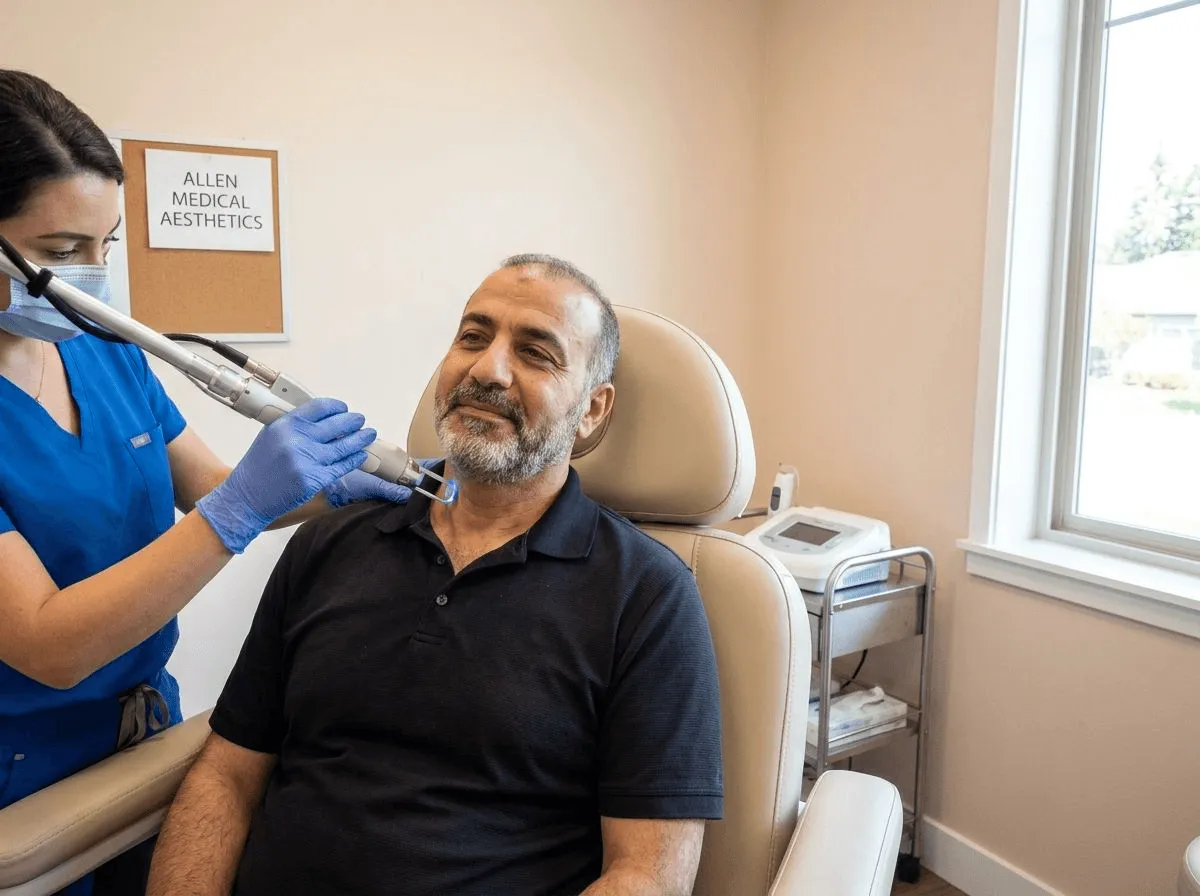
Pain is one of the top concerns for anyone considering laser hair removal. It is a reasonable question, especially when the treatment involves directing concentrated light energy at your skin. The honest answer is that laser hair removal does involve some discomfort, but for most patients, it is far more manageable than they expected.
How much it hurts depends on several factors, including the treatment area, your individual pain tolerance, the type of laser being used, and whether numbing options are applied. This guide breaks down what to expect by body area, what the sensation actually feels like, and how to minimize discomfort during your sessions.
Most patients describe laser hair removal as a series of quick snaps or warm pinpricks against the skin. The sensation is brief (each pulse lasts a fraction of a second) and varies by body area. Sensitive areas like the bikini line and upper lip feel more intense, while areas like the legs and arms are generally mild. Modern cooling technology and topical numbing significantly reduce discomfort.
Laser hair removal is uncomfortable but not unbearable. Most patients rate the pain at 3 to 5 out of 10 on average, and sessions become less uncomfortable as hair thins with each treatment.
What Does Laser Hair Removal Actually Feel Like?
People describe the sensation of laser hair removal in a few common ways. The most frequent comparison is the snap of a rubber band against the skin. Others describe it as a warm pinprick, a hot flick, or a quick zap. Each laser pulse lasts only a fraction of a second, so the discomfort is brief and intermittent rather than continuous.
During treatment, you will feel a series of these quick pulses as the laser handpiece moves across the skin. Most modern laser systems include built-in cooling mechanisms (either a cold air blower, a chilled sapphire tip, or a cryogen spray) that cool the skin immediately before, during, or after each pulse. This cooling dramatically reduces the heat sensation and makes the treatment significantly more comfortable than older laser systems.
The level of discomfort also changes throughout the treatment session. The first few pulses often feel the most intense because you are adjusting to the sensation. After the first minute or two, most patients report that the feeling becomes more predictable and easier to tolerate. By the end of the session, many patients describe the discomfort as background noise rather than sharp pain.
An important factor that patients often do not realize: laser hair removal becomes less painful with each subsequent session. As the hair becomes thinner and less dense with each treatment, there is less melanin for the laser to target, which means less heat generation and less discomfort. Many patients report that their fifth or sixth session is noticeably more comfortable than their first.
Pain Levels by Treatment Area
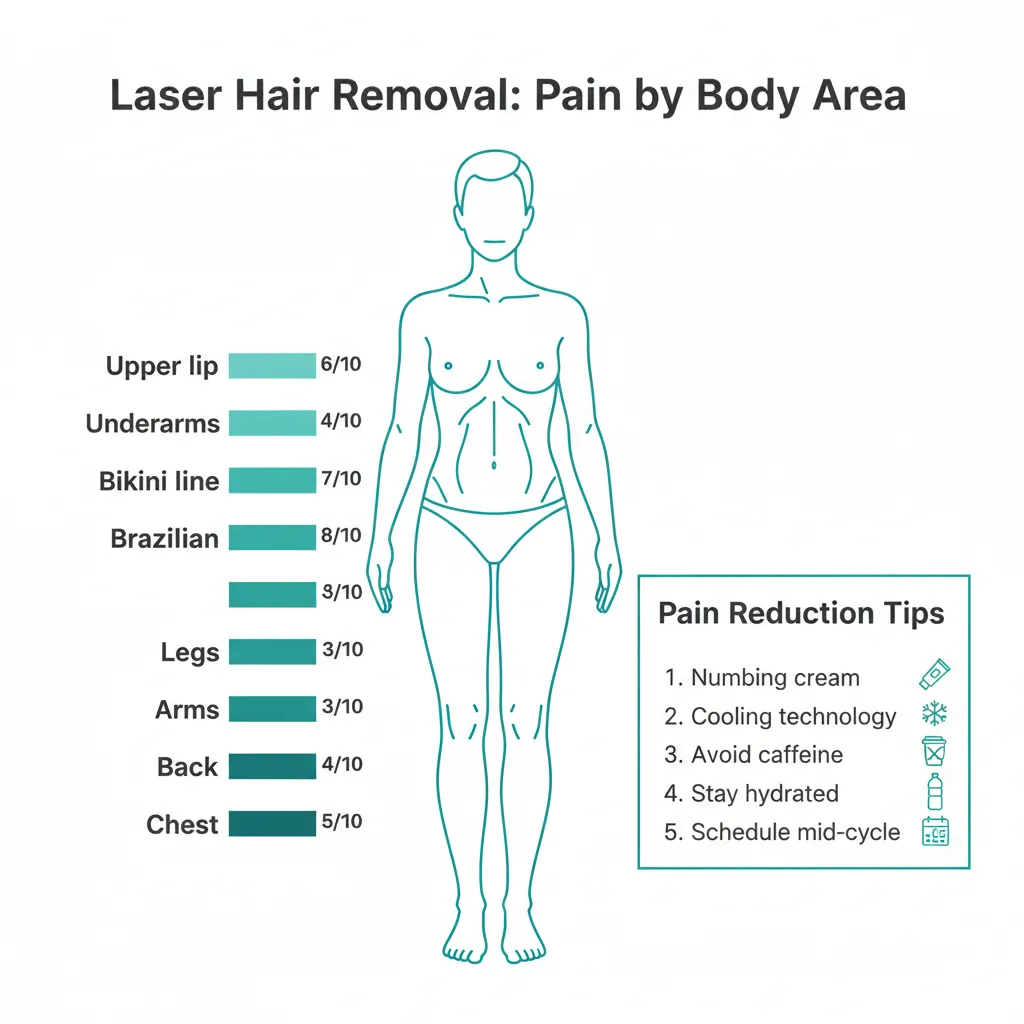
Not all body areas feel the same during laser hair removal. Sensitivity varies based on skin thickness, nerve density, hair density, and proximity to bone. The table below provides a realistic pain rating for each common treatment area, based on patient feedback at our practice.
| Treatment Area | Pain Level (1 to 10) | What It Feels Like | Duration |
|---|---|---|---|
| Upper Lip | 5 to 7 | Sharp snaps; thin skin and proximity to nose make this area more sensitive | 2 to 5 minutes |
| Chin and Jawline | 4 to 6 | Moderate snapping; slightly less sensitive than upper lip | 5 to 10 minutes |
| Bikini Line | 5 to 7 | Sharper snaps due to coarse hair and sensitive skin; manageable with numbing | 10 to 15 minutes |
| Full Brazilian | 6 to 8 | The most sensitive treatment area; sharp stinging in inner areas | 15 to 25 minutes |
| Underarms | 4 to 6 | Moderate snapping; coarse hair means more heat but area is small | 5 to 10 minutes |
| Lower Legs | 2 to 4 | Mild warm prickling; thicker skin reduces sensitivity | 15 to 20 minutes |
| Upper Legs / Thighs | 3 to 5 | Mild to moderate; inner thighs slightly more sensitive | 15 to 25 minutes |
| Arms | 2 to 4 | Mild warm snaps; generally well tolerated | 15 to 20 minutes |
| Back (Men) | 3 to 5 | Moderate; large area means longer session but skin is thick | 25 to 40 minutes |
| Chest (Men) | 3 to 5 | Moderate snapping; nipple area is more sensitive | 15 to 25 minutes |
The bikini and upper lip areas are consistently rated as the most sensitive. The legs, arms, and back are the most comfortable. Keep in mind that each pulse lasts less than a second, and even the most sensitive areas are treated quickly.
Factors That Affect How Much It Hurts
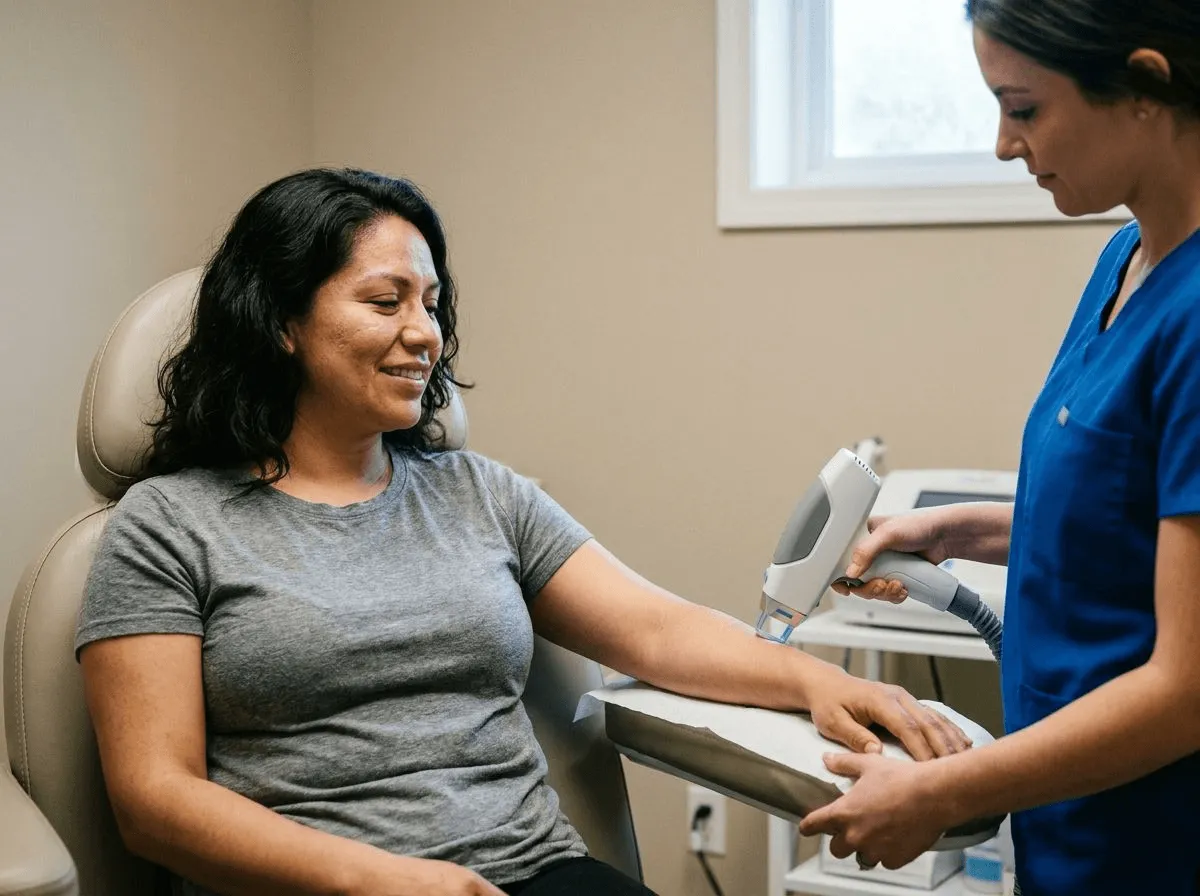
Pain during laser hair removal is not the same for everyone. Several factors influence your individual experience, and understanding them can help you prepare and take steps to reduce discomfort.
Hair Color and Thickness
Thicker, darker hair absorbs more laser energy and generates more heat at the follicle. This means areas with coarse, dark hair (like the bikini area and underarms) tend to feel more intense than areas with finer hair. Paradoxically, this also means these areas respond best to treatment. As the hair thins over subsequent sessions, discomfort decreases proportionally.
Skin Tone
The laser settings are adjusted based on your skin tone to ensure safety and effectiveness. Patients with darker skin tones may require lower energy settings to avoid targeting melanin in the skin, which can slightly reduce discomfort. However, certain laser wavelengths used for darker skin (like Nd:YAG) penetrate deeper, which can feel different from lasers used on lighter skin.
Menstrual Cycle
For women, skin sensitivity fluctuates with the menstrual cycle. Many women report increased pain sensitivity in the days just before and during their period. If possible, scheduling your laser hair removal session for the week after your period ends can result in a noticeably more comfortable experience.
Caffeine and Stimulants
Caffeine can increase skin sensitivity and lower your pain threshold. Avoiding coffee, energy drinks, and other caffeine sources for 2 to 4 hours before your appointment may help reduce discomfort.
Hydration and Skin Condition
Well-hydrated, healthy skin tends to tolerate laser treatment better than dry, irritated, or sun-damaged skin. Staying hydrated in the days leading up to your appointment and avoiding sun exposure, tanning, and harsh skincare products helps create the best conditions for a comfortable treatment.
Questions about laser and skin?
Our providers offer consultations to discuss your options. The $50 fee is applied toward your first treatment.
Talk to a ProviderNumbing and Comfort Options
Several options are available to reduce or manage discomfort during laser hair removal. Your provider can recommend the best approach based on your pain tolerance and the area being treated.
Topical Numbing Cream
The most common comfort measure is topical numbing cream containing lidocaine, applied 20 to 45 minutes before treatment. The cream numbs the surface of the skin, reducing the sharpness of each laser pulse. This is particularly helpful for sensitive areas like the bikini line, upper lip, and underarms. Many patients find that topical numbing makes the treatment feel like mild pressure rather than a snap.
Built-In Cooling Technology
Modern medical-grade laser systems include integrated cooling mechanisms. These may include a chilled sapphire or crystal contact tip that presses against the skin during each pulse, a cold air blower (like the Zimmer Cryo system) that directs a stream of cold air at the treatment area, or cryogen spray that delivers a brief burst of cooling before each laser pulse. These cooling systems work continuously during treatment and make a significant difference in comfort compared to older laser technology.
Over-the-Counter Pain Relief
Taking ibuprofen or acetaminophen 30 to 60 minutes before your appointment can help take the edge off, particularly for sensitive areas. Avoid aspirin, as it can increase the risk of bruising. Check with your provider about which pain relievers are appropriate for you.
Cold Compresses
Applying a cold compress or ice pack to the treatment area before your session can temporarily numb the skin and reduce sensitivity. Some practices also offer cold compresses during treatment for especially sensitive areas.

“Most of my patients are surprised by how manageable the discomfort is, especially with our cooling technology and numbing options. I always recommend starting with topical numbing for your first session so you can ease into the experience. By the third or fourth treatment, many patients skip the numbing entirely because the hair is thinner and the sensation is so much lighter.”
Morgan Selland, LME, LSO, MA Clinic Manager & Laser Safety Officer
How Modern Technology Has Reduced Discomfort
Laser hair removal in 2026 is a very different experience from the early days of the technology. If you had laser hair removal years ago and found it painful, or if your impression of the treatment is based on older accounts, modern systems have made significant advances in comfort.
Early laser hair removal systems used slower pulse rates, larger spot sizes, and limited or no cooling. Each pulse delivered a significant burst of energy without much protection for the surrounding skin. The experience was often described as genuinely painful, particularly in sensitive areas.
Current medical-grade systems use faster pulse rates with shorter pulse durations, meaning each energy delivery is briefer and the heat has less time to spread to surrounding tissue. Integrated cooling systems continuously protect the skin before, during, and after each pulse. Advanced spot size optimization allows providers to cover larger areas more quickly, reducing the total number of pulses needed. Some newer systems also use motion technology that delivers pulses continuously as the handpiece glides across the skin, rather than firing individual shots, which many patients find more comfortable.
The net result is that modern laser hair removal, performed with current medical-grade equipment, is significantly more comfortable than it was even 5 to 10 years ago. Most patients at Allen Medical Aesthetics are surprised by how tolerable the treatment is, especially when topical numbing is used.
How Laser Hair Removal Compares to Waxing Pain
One of the most useful comparisons for patients considering laser hair removal is how the discomfort measures up against waxing, since many patients are transitioning from one to the other.
Waxing involves applying hot wax to the skin and then ripping it off, pulling hairs out by their roots. The pain is sharp, intense, and sustained for the duration of each strip removal. It also causes inflammation, redness, and sometimes bleeding. The discomfort is concentrated in bursts that many people find genuinely painful, particularly in the bikini area.
Laser hair removal discomfort is a series of quick pulses that feel like light snaps or warm pinches. Each pulse lasts a fraction of a second, and there is no pulling, ripping, or tearing sensation. While the cumulative effect of many pulses over a treatment area can be uncomfortable, the sensation is generally lighter and more manageable than waxing.
Most patients who have experienced both describe laser hair removal as less painful than waxing. The sensation is different in quality (heat-based rather than pulling), and the brevity of each pulse makes it easier to tolerate. Additionally, laser hair removal sessions decrease in discomfort over time as hair thins, while waxing remains equally painful at every appointment.
| Factor | Laser Hair Removal | Waxing |
|---|---|---|
| Type of pain | Quick, warm snaps or pulses | Sharp pulling and tearing |
| Duration of discomfort | Fraction of a second per pulse | 1 to 2 seconds per strip |
| Typical pain rating | 3 to 5 out of 10 (most areas) | 5 to 8 out of 10 (most areas) |
| Pain over time | Decreases with each session | Stays the same |
| Post-treatment discomfort | Mild warmth for 1 to 2 hours | Redness and soreness for 1 to 2 days |
| Numbing available | Yes (topical cream, cooling) | Limited |
If you can tolerate waxing, you can almost certainly tolerate laser hair removal. Most patients rate laser as less painful than waxing, and the discomfort decreases with each session as hair becomes finer and less dense.
Tips to Minimize Discomfort During Treatment
While laser hair removal is generally well tolerated, these practical tips can help make your sessions as comfortable as possible.
- 1. Shave the treatment area 12 to 24 hours before your appointment. This allows the laser energy to travel down the hair shaft to the follicle rather than burning surface hair, which reduces unnecessary heat on the skin.
- 2. Avoid sun exposure and tanning for at least 2 weeks before treatment. Tanned skin is more sensitive and requires lower laser settings.
- 3. Skip caffeine on treatment day. Coffee and energy drinks can heighten skin sensitivity.
- 4. Take ibuprofen or acetaminophen 30 to 60 minutes before your session if your provider approves.
- 5. Request topical numbing cream for sensitive areas, especially for your first session.
- 6. Stay well hydrated in the days before your appointment. Hydrated skin tolerates treatment better.
- 7. Avoid retinoids, glycolic acid, and other irritating skincare products for 3 to 5 days before treatment.
- 8. Schedule your session for the week after your period if you notice cyclical changes in pain sensitivity.
- 9. Communicate with your provider during treatment. They can adjust settings, add cooling, or pause if you need a moment.
- 10. Breathe steadily. Deep, slow breathing helps manage discomfort and keeps you relaxed during treatment.
Frequently Asked Questions
Does laser hair removal hurt more than waxing?
Most patients report that laser hair removal is less painful than waxing. The sensation is a series of quick, warm pulses rather than the sharp pulling of wax. Additionally, laser discomfort decreases with each session as hair becomes thinner, while waxing pain remains the same every time.
What is the most painful area for laser hair removal?
The full Brazilian area is generally rated as the most sensitive, followed by the upper lip and bikini line. These areas have thinner skin, higher nerve density, and coarse hair, all of which contribute to increased sensitivity. However, these areas are also small, so treatment is completed quickly.
Can you use numbing cream for laser hair removal?
Yes. Topical numbing cream containing lidocaine can be applied 20 to 45 minutes before treatment to significantly reduce discomfort. This is particularly recommended for sensitive areas like the bikini, Brazilian, and upper lip. Ask your provider about numbing options when you book your appointment.
Does laser hair removal get less painful over time?
Yes. Each session reduces hair density and thickness in the treated area. With less and finer hair to target, the laser generates less heat at each follicle, and subsequent sessions become noticeably more comfortable. Most patients report that their later sessions are significantly less intense than the first.
How long does the pain last after laser hair removal?
Post-treatment discomfort is typically mild and short-lived. Most patients experience a warm, sunburn-like sensation for 1 to 2 hours after treatment. Redness and slight swelling may last a few hours to a day. Cool compresses and aloe vera gel provide quick relief.
Is laser hair removal on the face more painful?
Facial skin is thinner and has more nerve endings, which makes facial laser hair removal (especially the upper lip) more sensitive than most body areas. However, facial treatment areas are small, so sessions last only a few minutes. Topical numbing cream is particularly effective for facial treatments.
Does the type of laser affect how much it hurts?
Yes. Different laser systems have different cooling mechanisms, pulse durations, and energy delivery methods that affect comfort. Modern medical-grade systems with built-in cooling technology are significantly more comfortable than older equipment. The Nd:YAG laser, used for darker skin tones, penetrates deeper and may feel slightly different from alexandrite or diode lasers.
Related Articles
This article supports our Laser Hair Removal service page. Learn more about treatment options, candidacy, and what to expect.