Botox is best known for smoothing forehead lines and crow's feet, but it also has an emerging off-label use: reducing acne by decreasing oil production. If you have oily, acne-prone skin and have struggled to find a lasting solution, you may be curious about this application.
At Allen Medical Aesthetics, we stay current on emerging treatment options so we can offer our patients informed guidance. Below, we review how Botox for acne works differently than cosmetic Botox, who may be a candidate, and what alternatives exist.
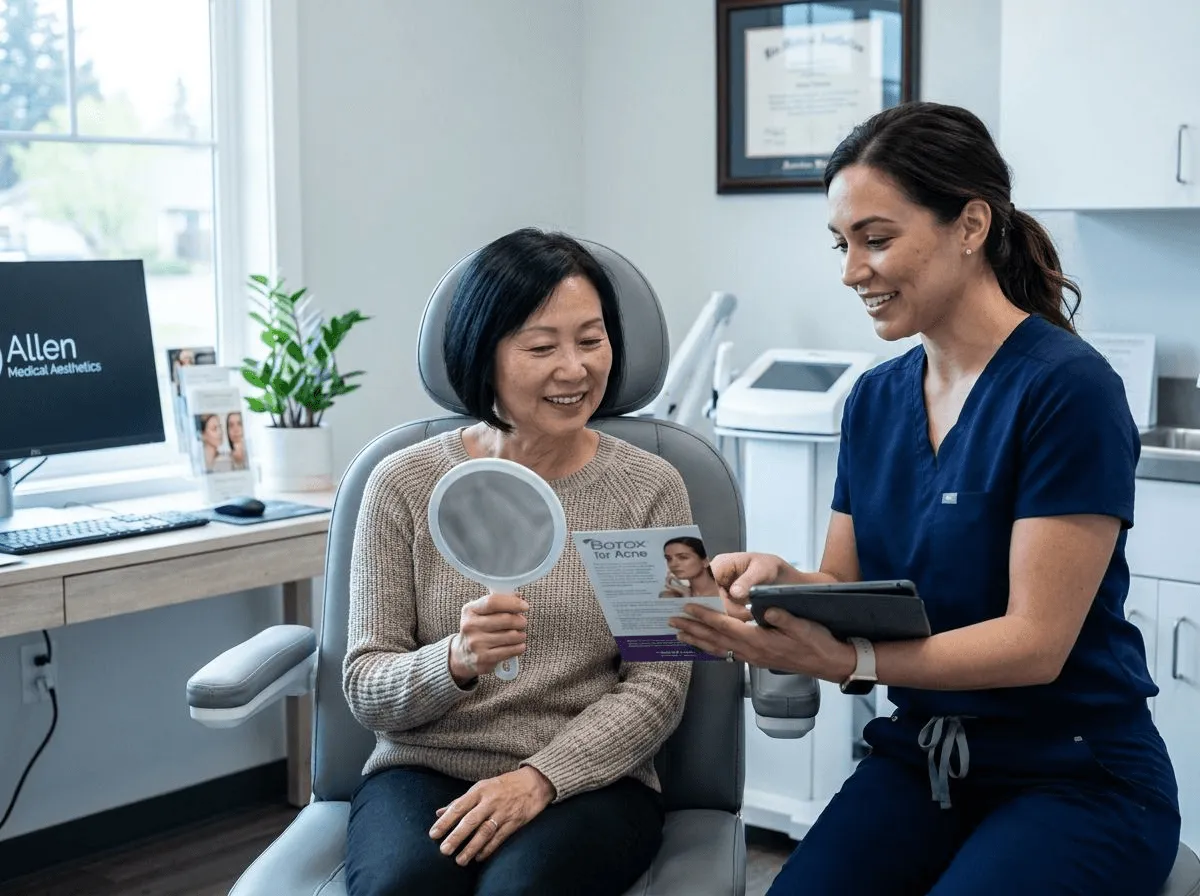
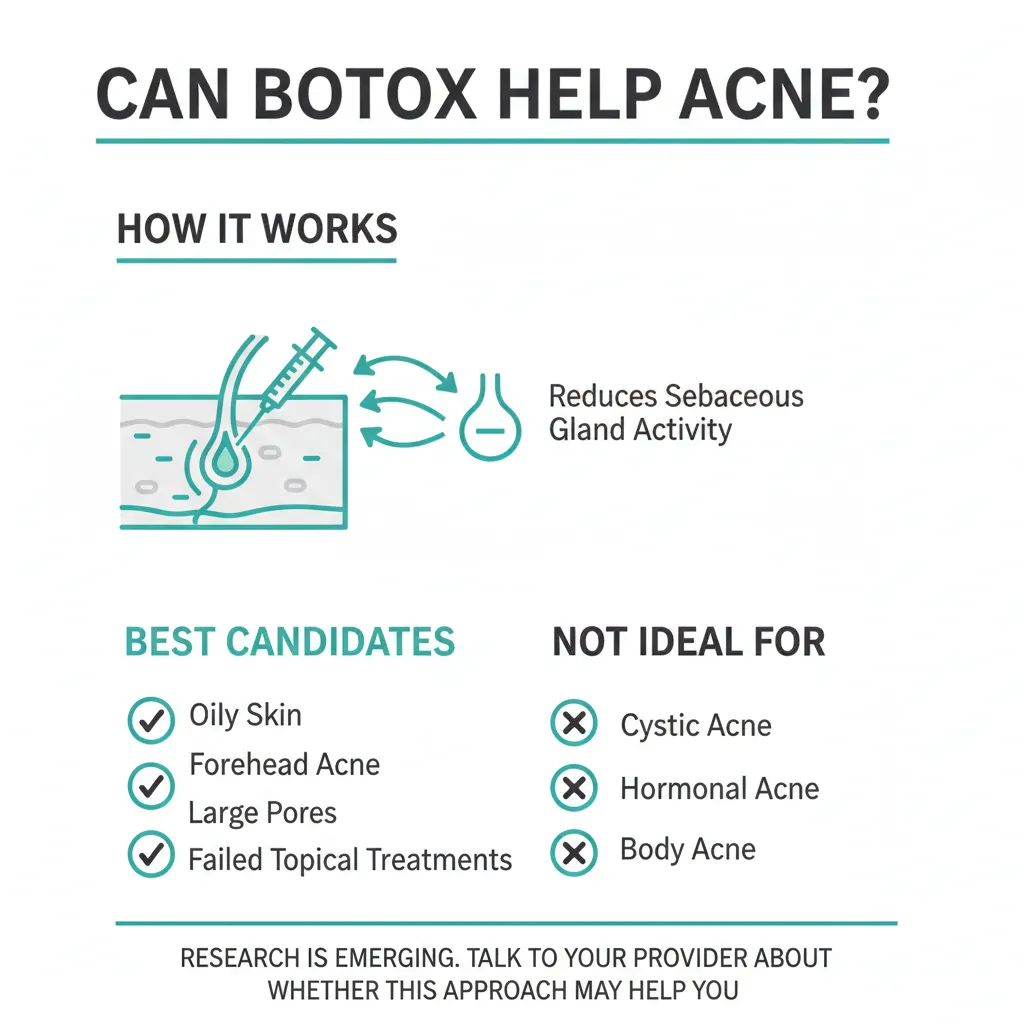
When injected intradermally (into the skin rather than into the muscle), Botox can reduce sebum production and may improve acne in some patients. This use is off-label and considered investigational, with larger clinical trials still needed. It is most promising for oily skin types with acne concentrated on the forehead and T-zone.
Botox for acne is an off-label use that works by reducing oil production when injected into the skin at very low doses. It is not a replacement for standard acne treatments.
How Botox for Acne Works
Cosmetic Botox is injected into facial muscles to block nerve signals that cause contraction. Botox for acne uses a fundamentally different technique called intradermal injection, where very small doses of botulinum toxin are injected into the skin itself rather than the underlying muscle.
Sebaceous glands (oil glands) in the skin are innervated by cholinergic nerve fibers that release acetylcholine. Since Botox blocks acetylcholine release, intradermal injection can reduce the signaling that stimulates oil production. Less oil means fewer clogged pores and, potentially, fewer acne breakouts.
An early pilot study by Shah, published in Dermatologic Surgery, was among the first to document this effect, describing a reduction in sebum production and pore size in patients who received intradermal Botox. Subsequent studies have supported these findings, though the body of research remains relatively small.
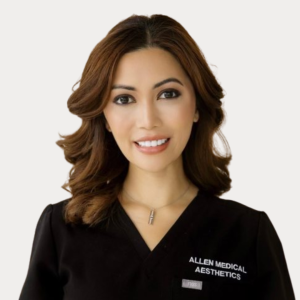
“What makes intradermal Botox interesting for acne is that we are targeting the oil glands directly, not the muscles. By reducing sebum production at the source, we can help patients who have tried everything else for their oily, breakout-prone skin. It is not a standalone cure, but as part of a comprehensive plan, it can make a real difference.”
Therese Allen, MSN, RN Lead Aesthetic Nurse Injector
What the Studies Found
Several small studies and case reports have investigated Botox for oil control and acne. While the evidence is promising, it is important to set realistic expectations.
It is worth noting that none of these studies were large-scale, randomized controlled trials. Using Botox for this purpose falls outside its primary documented use and is considered off-label. Off-label use of Botox is extremely common and well accepted in medical practice.
| Study | Year | Key Finding |
|---|---|---|
| Shah (Dermatologic Surgery) | 2008 | Intradermal Botox significantly reduced forehead sebum production and pore size compared to the untreated side of the face. |
| Rose & Goldberg | 2013 | Micro-Botox (diluted intradermal injections) reduced pore size and oil production in patients with oily skin. |
| Shuo Li et al. | 2019 | Intradermal botulinum toxin reduced sebum secretion rate at 1 month post-treatment. |
| Clinical experience reports | Ongoing | Multiple dermatology and aesthetics practices report anecdotal improvement in acne patients with oily skin types receiving intradermal Botox. |
Who Is a Candidate for Botox for Acne?
Botox for acne is not appropriate for every acne patient. It is best suited for a specific profile.
- Oily skin type: The treatment primarily reduces sebum production, so it is most effective for patients with excess oil.
- Acne concentrated on the forehead and T-zone: These areas have the highest density of sebaceous glands and respond best to intradermal Botox.
- Mild to moderate acne: Patients with severe cystic acne should pursue first-line treatments (retinoids, antibiotics, isotretinoin) before considering Botox.
- Patients already interested in cosmetic Botox: If you are getting Botox for wrinkles and also have oily, acne-prone skin, intradermal treatment can address both concerns in one session.
- Patients who have not responded to topical treatments alone: Botox for acne can complement existing skincare routines.
Botox for acne should be considered a complementary treatment, not a standalone solution. It works best alongside a comprehensive skincare routine that includes proper cleansing, retinoids, and other evidence-based acne treatments.
Questions about injectables?
Our providers offer consultations to discuss your options. The $50 fee is applied toward your first treatment.
Talk to a ProviderLimitations and Considerations
While the concept is compelling, there are several important limitations to understand before pursuing Botox for acne.
Temporary Effects
Like cosmetic Botox, the oil-reducing effects are temporary. Patients typically see improvement for 3 to 4 months before sebum production gradually returns to baseline. Ongoing maintenance treatments would be required to sustain results.
Limited Treatment Areas
Intradermal Botox is most practical for the forehead and T-zone. Acne affecting the cheeks, jawline, or back is less suited to this approach because of the larger surface area and the impracticality of widespread intradermal injections.
Cost
Botox is not covered by insurance for acne treatment. The cost is comparable to cosmetic Botox and would recur every 3 to 4 months. For some patients, this makes standard acne treatments more cost-effective.
Does Not Address All Acne Causes
Acne is multifactorial. Hormonal imbalances, bacterial overgrowth (Cutibacterium acnes), inflammation, and diet all play roles. Reducing oil production with Botox addresses only one piece of the puzzle.
Alternative Treatments for Acne
If Botox for acne is not the right fit, several other treatments offered at Allen Medical Aesthetics can help manage breakouts and improve skin quality.
- Chemical peels: Exfoliate dead skin cells, unclog pores, and reduce acne scarring.
- DiamondGlow facial: Deep cleanses pores and infuses the skin with targeted serums.
- RF microneedling: Stimulates collagen to improve acne scarring and skin texture.
- IPL photofacial: Reduces redness and post-inflammatory hyperpigmentation from acne.
- Medical-grade skincare: Prescription retinoids, niacinamide, and benzoyl peroxide remain the foundation of acne management.
Frequently Asked Questions
Is Botox for acne an off-label treatment?
Yes. Using Botox to treat acne falls outside its primary documented use for smoothing wrinkles. Off-label use of Botox is common and legal in medical practice, and providers use clinical judgment to apply it for other purposes.
How many units of Botox are used for acne treatment?
Intradermal Botox for acne uses significantly lower doses than cosmetic Botox. Typically 10 to 30 units are diluted and distributed across the forehead and T-zone in micro-droplets. The exact dosage depends on the treatment area and the provider's protocol.
Does Botox for acne affect facial expressions?
When performed correctly, intradermal Botox uses very low doses injected into the skin (not the muscle). Most patients retain full facial movement. However, some mild relaxation of the forehead muscles is possible, which many patients view as a bonus.
How quickly does Botox improve acne?
Patients typically notice a reduction in oiliness within 1 to 2 weeks. Improvement in acne breakouts follows as oil production decreases and fewer pores become clogged. Full results are usually evident within 3 to 4 weeks.
Can teenagers get Botox for acne?
Botox for acne is generally reserved for adults who have tried conventional acne treatments without sufficient improvement. It is not a first-line treatment for teenage acne, which typically responds well to topical and oral medications.
Will Botox help with acne scars?
Botox does not directly treat acne scars. However, by reducing breakouts, it may prevent new scars from forming. For existing acne scars, treatments like RF microneedling, chemical peels, and CO2 laser resurfacing are more effective.
Related Articles
This article supports our Botox Wrinkle Relaxers service page. Learn more about treatment options, candidacy, and what to expect.