

You have a Botox appointment on the calendar, but you just started a course of antibiotics. Should you keep the appointment or reschedule? It is a question we hear regularly at Allen Medical Aesthetics, and the answer depends on which antibiotic you are taking.
Most antibiotics are perfectly compatible with botulinum toxin injections. However, a small group of medications can interfere with the way Botox works at the neuromuscular junction, potentially increasing the risk of side effects. Below, we break down exactly which antibiotics are safe, which ones require caution, and when you should call your provider to reschedule.
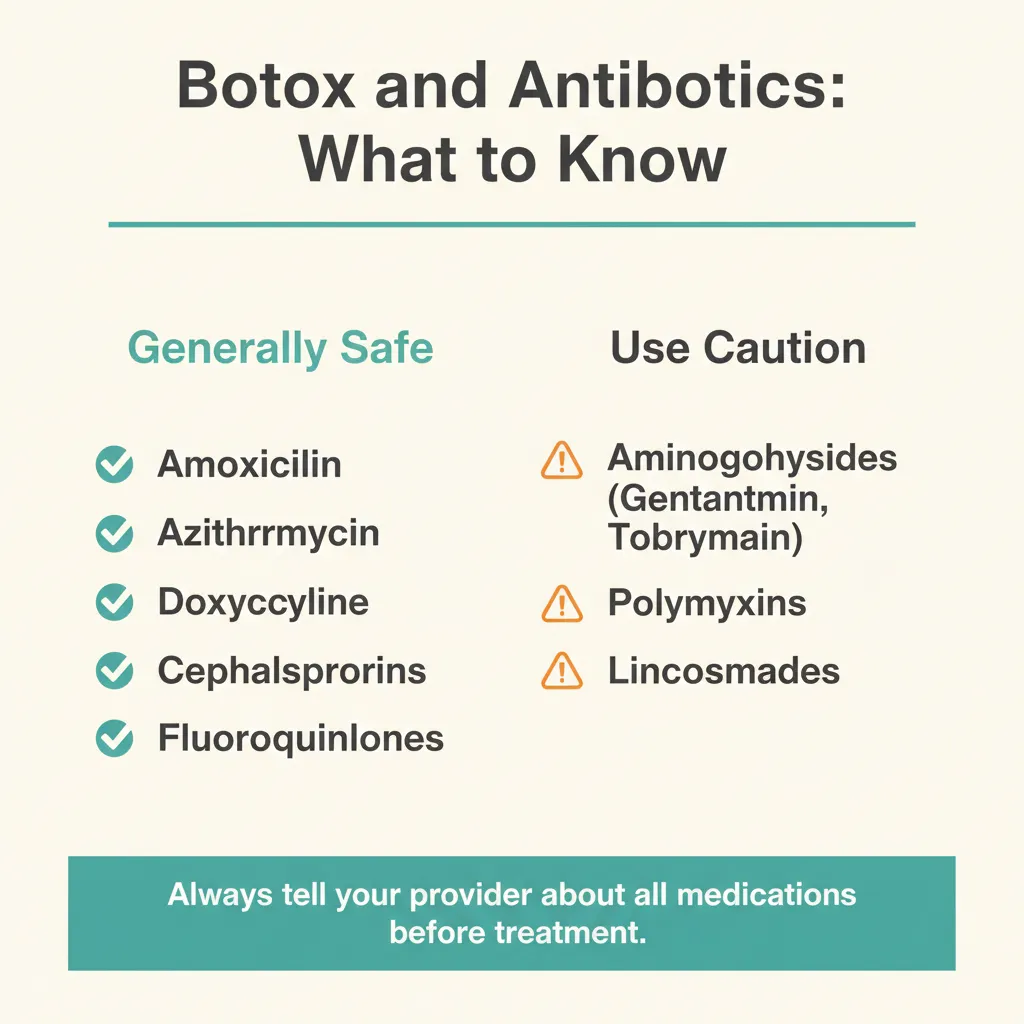
Most common antibiotics, including amoxicillin, azithromycin, and cephalosporins, are safe to take before or after Botox. Aminoglycoside antibiotics such as gentamicin and tobramycin should be avoided because they can amplify the muscle-relaxing effects of botulinum toxin.
If you are on a standard oral antibiotic for a sinus infection, UTI, or dental issue, your Botox appointment can usually proceed as planned. Always disclose your full medication list to your injector.
How Botox Works at the Neuromuscular Junction
Botox (onabotulinumtoxinA) works by temporarily blocking the release of acetylcholine at the neuromuscular junction. Acetylcholine is the chemical messenger that tells muscles to contract. When Botox prevents its release, the targeted muscle relaxes, smoothing overlying wrinkles and fine lines.
This mechanism is important to understand because certain medications also affect neuromuscular transmission. When these drugs are combined with Botox, the muscle-relaxing effect can become stronger or less predictable than intended.
At Allen Medical Aesthetics, we review every patient's medication list before treatment to ensure safety and optimal results.
Antibiotics That Are Generally Safe with Botox
The vast majority of antibiotics prescribed for common infections do not interact with botulinum toxin. If you are taking any of the following classes, your Botox appointment can typically proceed without changes.
- Penicillins (amoxicillin, ampicillin): commonly prescribed for ear infections, strep throat, and dental infections.
- Macrolides (azithromycin, clarithromycin): frequently used for respiratory and sinus infections.
- Cephalosporins (cephalexin, ceftriaxone): prescribed for skin infections, UTIs, and more.
- Fluoroquinolones (ciprofloxacin, levofloxacin): used for UTIs and certain respiratory infections. While generally safe with Botox, some studies note a theoretical interaction, so disclosure is still important.
- Tetracyclines (doxycycline, minocycline): often prescribed for acne or tick-borne infections.
- Sulfonamides (trimethoprim-sulfamethoxazole): commonly used for UTIs and skin infections.
Even if your antibiotic is on the safe list, let your injector know. A full medication disclosure helps us tailor your treatment and monitor appropriately.

Antibiotics That May Interact with Botox
A specific class of antibiotics called aminoglycosides can potentiate the neuromuscular blocking effects of botulinum toxin. This means the combination may cause more pronounced or widespread muscle weakness than expected.
Why Aminoglycosides Are a Concern
Aminoglycosides work by inhibiting bacterial protein synthesis, but they also have a secondary effect on the neuromuscular junction. They reduce the presynaptic release of acetylcholine and decrease postsynaptic sensitivity to it. Since Botox also blocks acetylcholine release, combining the two can result in additive muscle weakness.
In clinical settings, this combination has been associated with reports of enhanced or prolonged paralysis. While aminoglycosides are more commonly administered intravenously in hospital settings, topical forms (such as neomycin in wound care) are worth mentioning to your provider as well.
| Antibiotic Class | Examples | Risk Level | Recommendation |
|---|---|---|---|
| Aminoglycosides | Gentamicin, tobramycin, amikacin, neomycin, streptomycin | High | Reschedule Botox until course is complete |
| Lincosamides | Clindamycin | Low to moderate | Discuss with provider; may proceed with caution |
| Polymyxins | Colistin, polymyxin B | Moderate | Reschedule Botox until course is complete |
Questions about injectables?
Our providers offer consultations to discuss your options. The $50 fee is applied toward your first treatment.
Talk to a Provider
“Most of the antibiotics patients are taking for common infections like sinus issues or UTIs are completely compatible with Botox. I always review your full medication list before we begin, and if there is any concern, we simply reschedule to a safer window. Your safety is never something we rush.”
Anna Yi, MSN, ARNP Aesthetic & Functional Wellness Nurse Practitioner
When to Reschedule Your Botox Appointment
Beyond specific drug interactions, there are other antibiotic-related situations where rescheduling makes sense.
- Active infection with fever: If you are actively fighting an infection, your body is under stress. Injection-site infections, though rare, are a consideration. Waiting until you feel better is prudent.
- Facial skin infection: If the infection involves the face, forehead, or injection area, treatment should be delayed until the skin has fully healed.
- Aminoglycoside or polymyxin course: Wait at least 7 days after your last dose before scheduling Botox.
- Feeling generally unwell: Illness can alter how your body processes treatments. You will get better results when you are feeling your best.
If you are unsure whether your medication is compatible, call us at (206) 414-9979 before your appointment. We would rather answer a quick question than have you make an unnecessary trip.
What to Tell Your Provider Before Botox
Transparency with your injector is the single most important step you can take to ensure a safe and effective Botox treatment. Before every session, let your provider know about the following.
At Allen Medical Aesthetics, we conduct a thorough intake review at every visit. If anything in your medical history suggests a potential interaction, we will work with you to find the safest timing for treatment.
- 1. All prescription medications you are currently taking, including antibiotics, muscle relaxants, and blood thinners.
- 2. Over-the-counter supplements, especially those that thin the blood (fish oil, vitamin E, ginkgo biloba).
- 3. Any recent illnesses, surgeries, or dental procedures.
- 4. Whether you have had Botox or any other neurotoxin within the last 3 months.
- 5. Any history of neuromuscular disorders such as myasthenia gravis or Lambert-Eaton syndrome.
Frequently Asked Questions
Can I take amoxicillin and get Botox the same day?
Yes. Amoxicillin is a penicillin-class antibiotic and does not interact with botulinum toxin. You can safely proceed with your Botox appointment while taking amoxicillin.
How long after finishing antibiotics should I wait for Botox?
For most antibiotics, no waiting period is needed. If you were taking an aminoglycoside (gentamicin, tobramycin, amikacin), wait at least 7 days after completing your course before getting Botox.
Can antibiotics make Botox wear off faster?
There is no evidence that antibiotics cause Botox to wear off more quickly. If anything, aminoglycoside antibiotics may temporarily enhance the effects of Botox, not reduce them.
What happens if I got Botox while on gentamicin?
If you received Botox while taking an aminoglycoside, monitor for any unusual muscle weakness, difficulty swallowing, or drooping beyond the treatment area. Contact your provider immediately if you notice any of these symptoms.
Is it safe to get Botox while on doxycycline for acne?
Yes. Doxycycline is a tetracycline antibiotic and is not known to interact with Botox. Many patients receiving Botox for cosmetic purposes are also on long-term doxycycline for acne without issue.
Should I stop antibiotics before Botox?
Never stop a prescribed antibiotic course without consulting the prescribing doctor. If your antibiotic is on the safe list, continue taking it as directed. If it is an aminoglycoside, reschedule your Botox rather than stopping the antibiotic early.
Related Articles
This article supports our Botox Wrinkle Relaxers service page. Learn more about treatment options, candidacy, and what to expect.