
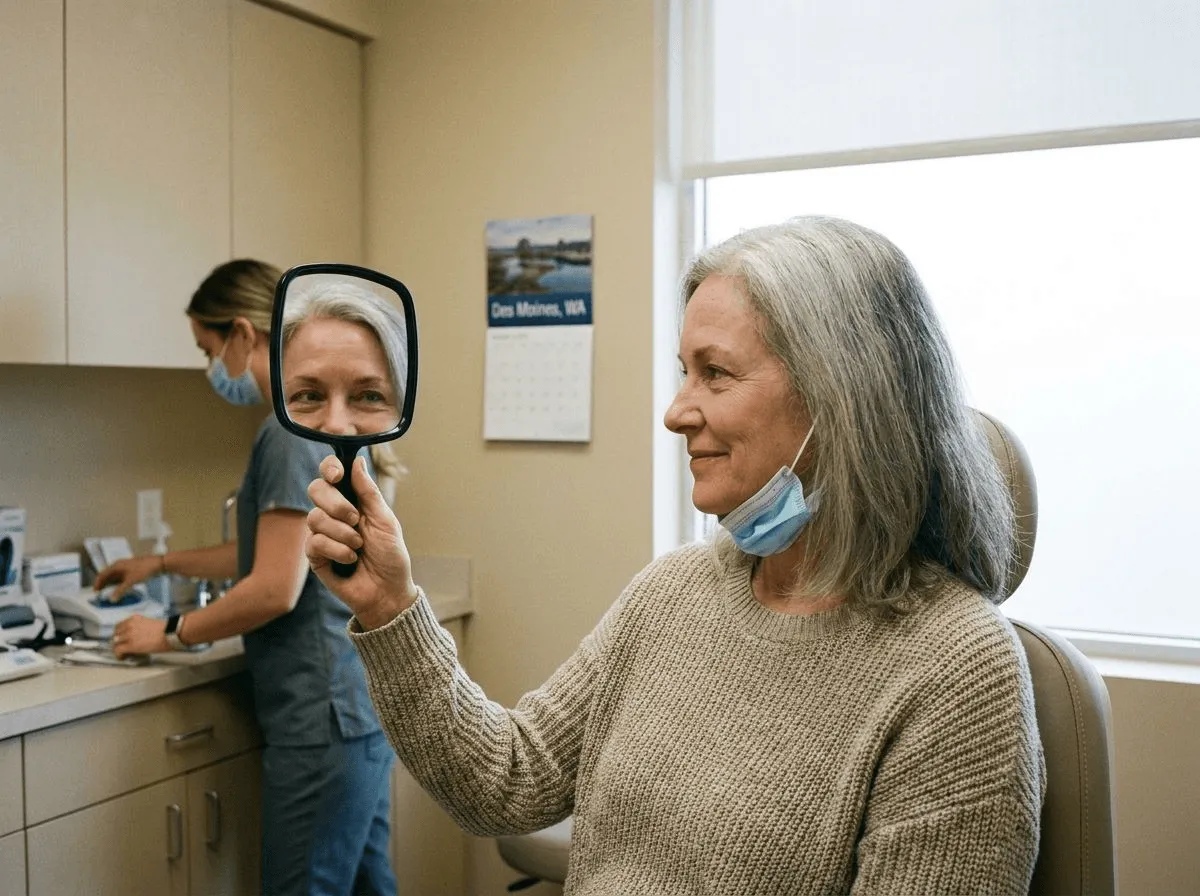
You just got Botox and you are checking the mirror every hour. Is it working? When will you see results? This is one of the most common questions we get at Allen Medical Aesthetics, and the answer involves a bit of patience.
Botox does not work instantly. The neurotoxin needs time to bind to nerve endings, block acetylcholine release, and allow the targeted muscles to relax. Most patients start noticing changes within 2 to 3 days, with full results visible at the 10- to 14-day mark. Below, we break down exactly what to expect each day after your Botox treatment.
Botox typically begins working within 2 to 3 days, with noticeable smoothing by day 5 to 7. Full results are usually visible by day 10 to 14. Some patients notice early effects within 24 hours, while others may take a full 2 weeks to see the complete outcome.
Do not judge your Botox results until at least 14 days after treatment. If you are not satisfied at that point, contact your provider about a possible touch-up.
Day-by-Day Botox Results Timeline
Every patient is different, but the following timeline represents a typical progression based on clinical experience and patient feedback.
| Day | What You May Notice |
|---|---|
| Day 0 (treatment day) | Small bumps at injection sites (resolve within 30 to 60 minutes). Possible mild redness. No change in muscle movement. |
| Day 1 | Injection sites have healed. No visible results yet. Continue normal activities (avoid heavy exercise and lying flat). |
| Day 2 to 3 | First signs of muscle relaxation. You may notice it is slightly harder to furrow your brow or raise your forehead. Some patients feel a subtle heaviness. |
| Day 4 to 5 | Visible smoothing begins. Dynamic lines (those that appear with expression) start to soften. Results are partial. |
| Day 7 | Significant improvement for most patients. The treated area looks noticeably smoother, especially at rest and during expression. |
| Day 10 to 14 | Full results. Maximum muscle relaxation is achieved. This is the time to evaluate your outcome and schedule a follow-up if needed. |

“I always tell my patients not to judge their results until the full two weeks have passed. It is completely normal to see one side respond before the other, and that early asymmetry almost always evens out by day 14. Patience is genuinely the hardest part of getting Botox for the first time.”
Anna Yi, MSN, ARNP Aesthetic & Functional Wellness Nurse Practitioner
Factors That Affect How Quickly Botox Works
Several variables influence whether you are on the faster or slower end of the timeline.
Muscle Size and Strength
Larger, stronger muscles (such as the frontalis in the forehead) may take slightly longer to fully relax compared to smaller muscles (such as the orbicularis oculi around the eyes). First-time Botox patients with very active muscles often notice onset on the later end of the spectrum.
Dosage
Higher unit counts for a given area tend to produce faster and more complete results. Under-dosing may lead to a slower onset and less dramatic smoothing. An experienced injector calibrates the dose to your individual anatomy.
Individual Metabolism
People with faster metabolisms may process the neurotoxin differently. While metabolism primarily affects how long Botox lasts rather than how quickly it kicks in, it plays a role in the overall timeline.
Treatment History
Patients who have been getting Botox consistently over time often report faster onset with each subsequent session. This is likely because the muscles are already partially weakened and require less time to respond to the neurotoxin.
Product Choice
Different botulinum toxin products have slightly different onset profiles. Dysport is often reported to kick in 1 to 2 days faster than Botox, while Xeomin has a similar timeline to Botox. Your provider can recommend the best product for your goals.
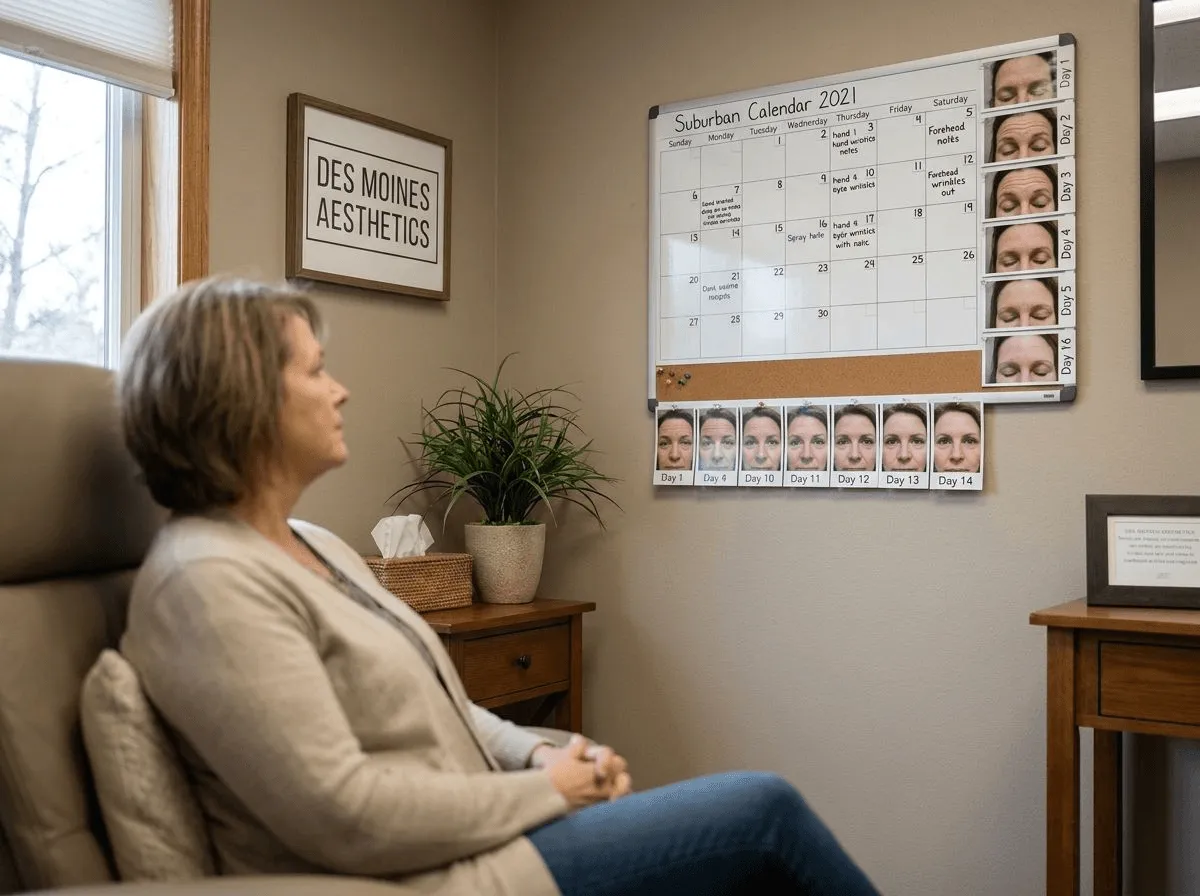
When to Schedule Your Follow-Up
Most providers, including our team at Allen Medical Aesthetics, recommend scheduling a follow-up appointment 2 weeks after your initial treatment. This allows time for the full effect to develop and gives your provider the opportunity to assess the results.
During the follow-up, your provider will evaluate symmetry, check for any areas that may benefit from a small touch-up, and discuss whether the dosage was appropriate for your goals. Touch-ups are common, especially for first-time patients, and are a normal part of dialing in your ideal result.
If you are a returning patient with a well-established treatment plan, a follow-up may not be necessary unless you notice something unexpected.
Questions about injectables?
Our providers offer consultations to discuss your options. The $50 fee is applied toward your first treatment.
Talk to a ProviderWhat If Botox Is Not Working After 2 Weeks?
While rare, some patients do not see the expected results after 14 days. Several factors could be at play.
Contact your provider if you are dissatisfied after 2 weeks. A brief assessment can determine whether a touch-up or alternative approach would be helpful.
- Under-dosing: The most common reason. A touch-up with additional units often resolves the issue.
- Resistance: In very rare cases, patients develop antibodies to botulinum toxin, particularly those who have received frequent, high-dose treatments. Switching to a different neurotoxin product may help.
- Technique: Placement matters. If the product was not injected into the optimal location within the muscle, results may be incomplete.
- Expectations: Botox smooths dynamic wrinkles (those caused by muscle movement) but does not eliminate static wrinkles (deep lines visible at rest). If your lines are deeply etched, Botox will soften them but may not erase them entirely.
Frequently Asked Questions
Can Botox work in 24 hours?
Some patients report very early effects within 24 hours, particularly a subtle tightness or reduced ability to contract the treated muscles. However, visible smoothing of wrinkles typically takes at least 2 to 3 days to begin.
Why does Botox take 2 weeks for full results?
Botox must bind to the nerve endings at the neuromuscular junction and fully block acetylcholine release. This biochemical process takes time. While most of the binding occurs in the first few days, the muscles need up to 2 weeks to fully relax and the overlying skin to smooth.
Does Dysport work faster than Botox?
Many patients and providers report that Dysport takes effect 1 to 2 days faster than Botox, likely due to its slightly different molecular structure, which allows it to spread and bind more quickly. The final results and duration are generally comparable.
Should I move my face after Botox to make it work faster?
Some providers recommend gently contracting the treated muscles (such as frowning or raising your eyebrows) for the first hour after injection. The theory is that muscle movement helps the neurotoxin bind to the nerve endings more quickly. While evidence is limited, this practice is not harmful.
Can I get a touch-up if Botox is not working after one week?
It is best to wait the full 14 days before considering a touch-up. Botox results are not fully established until this point, and adding more product too early could lead to over-correction.
How long does Botox last once it fully kicks in?
Once full results are established (around day 14), Botox typically lasts 3 to 4 months. Some patients experience results lasting up to 5 or 6 months with consistent treatment. For tips on extending longevity, see our guide on how to make Botox last longer.
Related Articles
This article supports our Botox Wrinkle Relaxers service page. Learn more about treatment options, candidacy, and what to expect.