
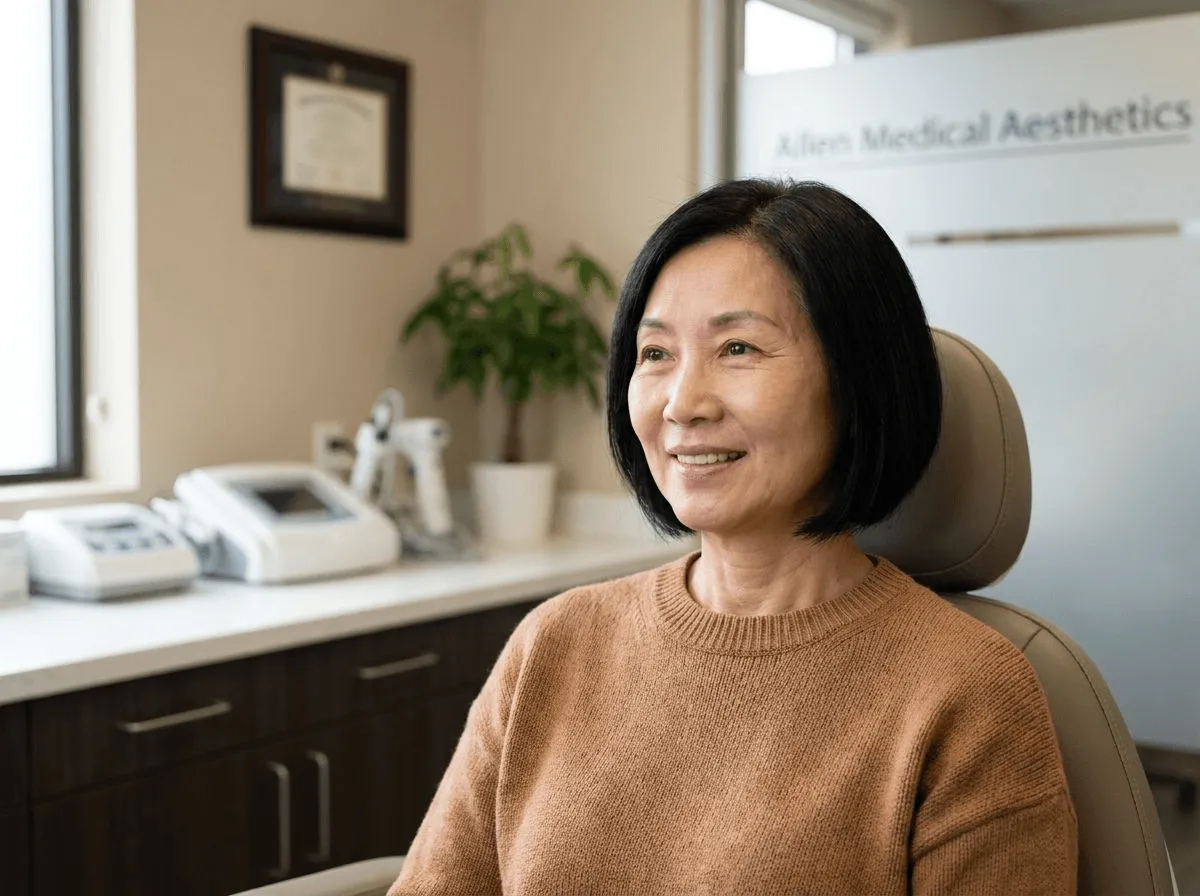
Botox typically lasts 3 to 4 months, but many patients notice their results fading sooner than they would like. The good news is that several evidence-based strategies can help you get the most out of every treatment session.
At Allen Medical Aesthetics, we want every patient to enjoy their results for as long as possible. Below are eight practical tips, backed by clinical experience and published research, that can help extend the longevity of your Botox.
The most effective ways to make Botox last longer include maintaining a consistent treatment schedule, protecting your skin from UV damage, avoiding excessive heat and strenuous exercise in the first 24 hours, supplementing with zinc, and investing in a quality skincare routine.
Consistency is the single biggest factor. Patients who maintain regular Botox appointments every 3 to 4 months often find that their results begin to last longer over time as the muscles gradually weaken.
Why Botox Results Vary from Person to Person
Before diving into tips, it helps to understand why Botox duration varies. Several biological and lifestyle factors influence how quickly your body metabolizes botulinum toxin.
| Factor | Effect on Duration | What You Can Control |
|---|---|---|
| Metabolism | Faster metabolism breaks down Botox sooner | Limit intense cardio in the days following treatment |
| Muscle strength | Stronger, more active muscles may overpower Botox faster | Consistent treatments weaken muscles over time |
| Dosage | Underdosing leads to shorter results | Work with an experienced injector who doses appropriately |
| Treatment area | High-movement areas (forehead) may metabolize faster | Targeted placement by a skilled provider helps |
| Sun exposure | UV damage accelerates skin aging and may reduce longevity | Daily SPF 30+ and sun avoidance |
8 Tips to Extend Your Botox Results
These strategies address the factors above from multiple angles. Some are things to do right after your appointment; others are long-term habits that compound over time.
1. Stay on a Consistent Treatment Schedule
This is the single most impactful tip. When you maintain regular Botox appointments every 3 to 4 months, the targeted muscles gradually atrophy from reduced use. Over time, many patients find they need fewer units or can extend the interval between sessions.
Waiting too long between treatments allows the muscles to fully regain their strength, which means you are essentially starting from scratch each time. Think of consistent Botox like consistent exercise: the cumulative effect matters more than any single session.
2. Protect Your Skin from the Sun
Ultraviolet radiation breaks down collagen and elastin, accelerates skin aging, and may contribute to faster Botox metabolism. Wearing a broad-spectrum SPF 30 or higher every single day is one of the best investments you can make in the longevity of all your aesthetic treatments.
Pair sunscreen with a wide-brimmed hat and sunglasses when spending extended time outdoors. This reduces the repetitive squinting that deepens crow's feet and forehead lines.
3. Avoid Strenuous Exercise for the First 24 Hours
Vigorous physical activity increases blood flow and body temperature, which can theoretically cause Botox to disperse from the injection site before it has fully bound to the nerve endings. Most providers recommend avoiding heavy workouts, hot yoga, saunas, and steam rooms for 24 to 48 hours after treatment.
Light walking and normal daily activities are fine. For a detailed breakdown of when you can resume specific activities, see our guide on working out after Botox.
4. Consider Zinc Supplementation
A 2012 study published in the Journal of Drugs in Dermatology found that patients who took a zinc and phytase supplement (called Zytaze) experienced longer-lasting Botox results. Botulinum toxin is a zinc-dependent enzyme, and adequate zinc levels may support its activity at the neuromuscular junction.
Discuss zinc supplementation with your provider before starting. A typical recommendation is 50 mg of zinc with phytase, taken daily for four days before your Botox appointment.
5. Do Not Touch or Massage the Treatment Area
For the first 4 to 6 hours after injection, avoid touching, rubbing, or massaging the treated areas. Pressure can cause the product to migrate away from the targeted muscles, reducing effectiveness in the intended area and potentially causing unwanted effects nearby.
This includes avoiding facials, microdermabrasion, and even lying face-down for the first 4 hours.
6. Invest in a Quality Skincare Routine
Botox relaxes muscles, but it does not address skin quality. A strong skincare routine with retinoids, peptides, hyaluronic acid, and antioxidants (particularly vitamin C) supports the skin from the surface while Botox works beneath it. Healthier, more hydrated skin tends to look smoother and more youthful, amplifying the visual effects of your treatment.
Ask your provider about medical-grade skincare options. Products available through a medical office often contain higher concentrations of active ingredients than over-the-counter alternatives.
7. Manage Stress
Chronic stress increases cortisol, which can accelerate the breakdown of proteins in the body. While no study has directly measured the effect of cortisol on Botox longevity, the connection between stress, inflammation, and accelerated aging is well documented. Stress also causes repetitive facial expressions, including furrowing the brow and clenching the jaw, that work against your Botox.
Mindfulness, adequate sleep, and regular moderate exercise all contribute to lower stress levels and better treatment outcomes.
8. Choose an Experienced Injector
Proper technique, accurate dosing, and precise placement all affect how long your results last. An experienced injector understands facial anatomy deeply and can tailor your treatment to your unique muscle patterns. Under-dosing to save cost often leads to shorter results and more frequent visits, which costs more in the long run.
At Allen Medical Aesthetics, every Botox treatment is administered by a licensed nurse practitioner with extensive training in facial anatomy and injection technique.

“The number one thing I tell my patients is to stay consistent with their appointments. When you come in every three to four months instead of waiting until everything has fully worn off, the muscles stay relaxed and your results genuinely last longer over time. Consistency is the best investment you can make.”
Anna Yi, MSN, ARNP Aesthetic & Functional Wellness Nurse Practitioner
How Long Should Botox Last?
For most patients, Botox results become visible within 3 to 7 days and reach full effect by day 14. The smoothing effect typically lasts 3 to 4 months, though some patients report results lasting up to 6 months with consistent treatment over time.
If your Botox is consistently wearing off in less than 2 months, talk to your provider. The dosage may need to be adjusted, or an alternative neurotoxin such as Dysport or Xeomin may be a better fit for your biology. For a detailed look at the timeline, visit our post on how long Botox takes to work.
Questions about injectables?
Our providers offer consultations to discuss your options. The $50 fee is applied toward your first treatment.
Talk to a ProviderWhat to Avoid After Botox: Quick Reference
Here is a concise list of things to avoid in the hours and days following your Botox appointment.
| Timeframe | What to Avoid | Why |
|---|---|---|
| First 4 hours | Touching, rubbing, or lying face-down | Prevents product migration |
| First 24 hours | Strenuous exercise, saunas, hot tubs | Reduces blood flow and heat at injection site |
| First 24 hours | Alcohol consumption | Alcohol increases bruising risk |
| First 48 hours | Facials, chemical peels, microdermabrasion | Pressure and manipulation can displace Botox |
| First 2 weeks | Extended sun or heat exposure | Heat may accelerate metabolism of the product |
Frequently Asked Questions
Does Botox last longer the more you get it?
Yes, for many patients. With consistent treatment, the targeted muscles gradually weaken from disuse. This means Botox may last longer over time, and some patients eventually need fewer units or less frequent appointments.
Can zinc really make Botox last longer?
A published study found that zinc supplementation with phytase extended Botox duration in a majority of participants. Botulinum toxin is a zinc-dependent enzyme, so adequate zinc levels may support its effectiveness. Consult your provider before starting any supplement.
Does exercise make Botox wear off faster?
Intense exercise increases metabolism and blood flow, which may cause your body to process Botox more quickly over time. Moderate exercise is fine, but very high-intensity athletes sometimes report shorter Botox duration.
How many units of Botox do I need for longer-lasting results?
The right number of units depends on your facial anatomy, muscle strength, and treatment goals. Under-dosing is a common reason for shorter results. Your injector should recommend units based on your individual assessment, not a one-size-fits-all number.
Will switching from Botox to Dysport make results last longer?
Some patients who feel their Botox results are fading faster than expected find that switching to Dysport or Xeomin provides longer-lasting effects. Each neurotoxin has a slightly different formulation, and individual biology plays a role. Your provider can help determine if a switch makes sense.
Does drinking water help Botox last longer?
Staying well hydrated supports overall skin health and may indirectly help your results look better, but there is no direct evidence that water intake affects how long Botox lasts at the neuromuscular level.
Related Articles
This article supports our Botox Wrinkle Relaxers service page. Learn more about treatment options, candidacy, and what to expect.