

Tirzepatide works well for many patients, but not everyone experiences steady, linear progress. If your scale has stalled or you are losing weight more slowly than expected, you are not alone.
Weight loss plateaus on tirzepatide are common and usually have an identifiable cause. Below, we walk through the seven most frequent reasons patients stop losing weight on tirzepatide and what you can do about each one. If you are currently enrolled in our medical weight loss program, bring these topics up at your next check-in.
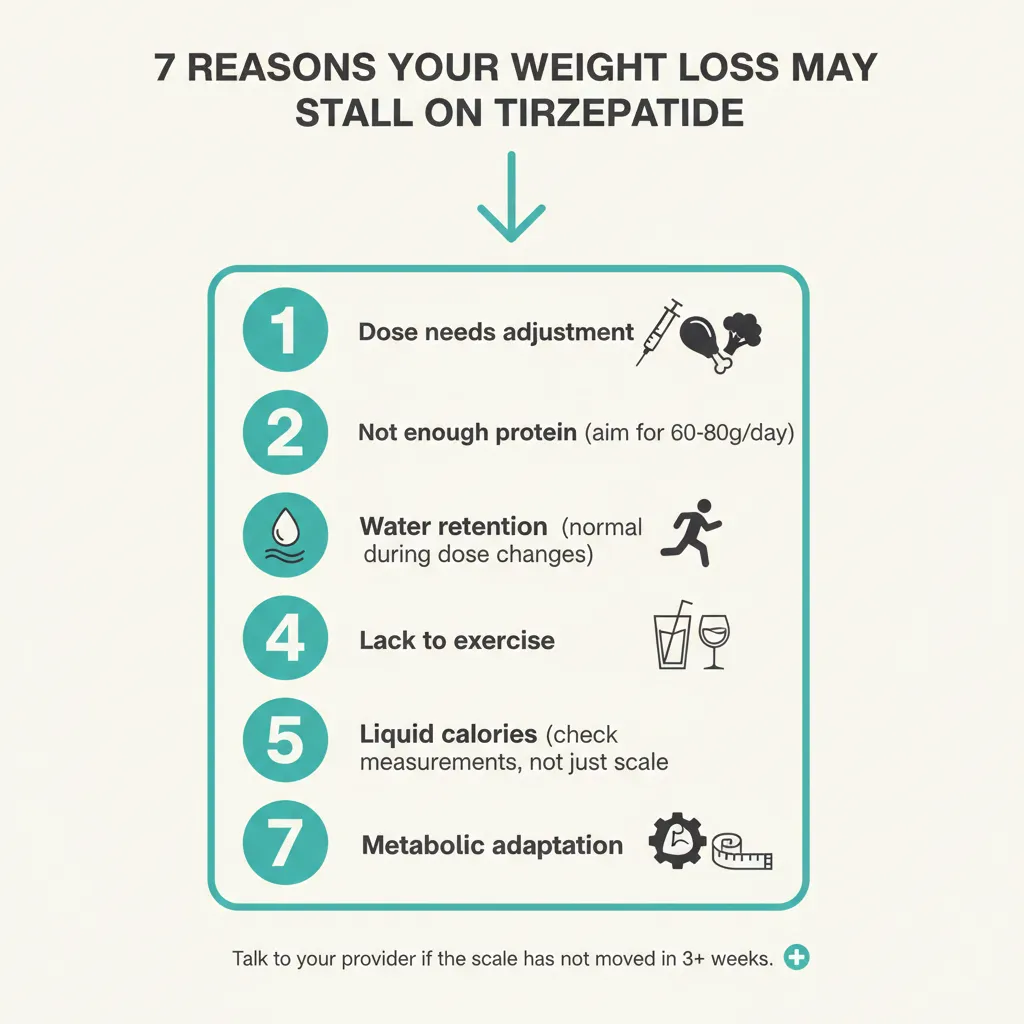
The most common reasons for stalled weight loss on tirzepatide include being on a dose that is too low, inadequate protein intake, unintentional calorie creep, water retention, gaining lean muscle, certain medication interactions, and metabolic adaptation. Most of these can be addressed with adjustments from your provider.
A weight loss plateau does not mean tirzepatide has stopped working. It usually signals that a dose adjustment, dietary change, or lifestyle modification is needed.
Common Causes and Solutions
The table below provides a quick overview of each common cause and the recommended solution. We cover each in more detail in the sections that follow.
| Cause | Why It Happens | Solution |
|---|---|---|
| Dose too low | Titration schedule has not reached your effective dose yet | Discuss dose escalation with your provider |
| Inadequate protein | Reduced appetite leads to eating less protein overall | Aim for 60-100g protein daily; prioritize it at every meal |
| Calorie creep | Liquid calories, sauces, snacking add up unnoticed | Track intake for 1-2 weeks to identify hidden calories |
| Water retention | Hormonal shifts, sodium intake, or new exercise routine | Increase water intake; reduce sodium; give it time |
| Muscle gain | Strength training builds lean tissue that weighs more than fat | Track measurements and body composition, not just the scale |
| Medication interactions | Some medications promote weight gain or fluid retention | Review all medications with your provider |
| Metabolic adaptation | Body adjusts metabolic rate downward after sustained weight loss | Dose adjustment, diet cycling, or increased activity |
Your Dose May Not Be High Enough Yet
Tirzepatide follows a structured dose escalation schedule that starts at 2.5 mg per week and can increase up to 15 mg per week. The starting dose is designed for tolerability, not maximum weight loss. Many patients do not see significant results until they reach 5 mg, 7.5 mg, or higher.
If you are still in the early weeks of treatment, patience is important. Your provider will increase your dose at appropriate intervals based on how you are tolerating the medication and the results you are seeing. Rushing to a higher dose can increase side effects without improving outcomes.
However, if you have been on the same dose for several months and your weight loss has clearly stalled, it may be time to discuss a dose increase with your provider.
Diet and Protein Intake
Tirzepatide significantly reduces appetite, which is one of its primary mechanisms for weight loss. The challenge is that when you eat less overall, you may also eat less protein without realizing it. Inadequate protein intake leads to muscle loss, which lowers your basal metabolic rate and makes further weight loss harder.
We recommend that patients on tirzepatide aim for 60 to 100 grams of protein per day. Starting each meal with a protein source helps ensure you reach this target even if your appetite prevents you from finishing the rest of your plate.
Calorie creep is another common issue. Liquid calories from coffee drinks, juices, and alcohol, along with cooking oils, dressings, and casual snacking, can add several hundred untracked calories per day. If your weight loss has stalled, tracking your food intake for one to two weeks can reveal patterns you may not have noticed.
For a detailed nutritional guide, see our post on what to eat on tirzepatide.
Protein is the most important macronutrient during medicated weight loss. Low protein intake leads to muscle loss, which slows metabolism and makes further weight loss more difficult.
Questions about weight loss?
Our providers offer consultations to discuss your options. The $50 fee is applied toward your first treatment.
Talk to a ProviderWater Retention and Body Composition Changes
The number on the scale does not always reflect fat loss. Water retention can temporarily mask your progress, especially during the first few weeks of a new exercise routine, around hormonal fluctuations, or when sodium intake is higher than usual.
If you have started strength training since beginning tirzepatide, you may be building lean muscle while losing fat simultaneously. Muscle is denser than fat, so your body can change shape and size even when the scale does not move. Taking body measurements (waist, hips, arms, thighs) and tracking how your clothes fit can provide a more accurate picture of your progress.
Staying well hydrated (at least 64 ounces of water per day) helps your body release excess water and supports the metabolic processes involved in fat breakdown.
When to Talk to Your Provider
A weight loss plateau lasting two to three weeks is normal and usually resolves on its own or with minor dietary adjustments. If your weight has been flat for four weeks or more despite consistent effort, schedule a check-in with your provider.
Topics to discuss include whether a dose adjustment is appropriate, whether any of your other medications could be contributing to the plateau, whether lab work (thyroid function, metabolic panel) should be updated, and whether your current caloric intake and exercise plan need modification.
At Allen Medical Aesthetics, we monitor each patient individually and adjust treatment plans as needed. Weight loss is rarely a straight line, and having a provider who understands the medication and can guide you through plateaus is one of the key advantages of a medically supervised program.
Never adjust your tirzepatide dose on your own. Dose changes should always be made in consultation with your prescribing provider.

“When a patient tells me they have hit a plateau, the first thing we do is look at the full picture: their current dose, protein intake, sleep, and any medications that might be working against them. In most cases, we can identify a specific factor and make a targeted adjustment that gets things moving again.”
Brittanie Lane, MSN, ARNP Functional Wellness Nurse Practitioner
Frequently Asked Questions
How long do weight loss plateaus last on tirzepatide?
Most plateaus last two to four weeks. If your weight has been stalled for more than four weeks despite consistent adherence to diet and exercise, contact your provider to discuss potential adjustments.
Should I eat less if I stop losing weight on tirzepatide?
Not necessarily. Eating too little can backfire by slowing your metabolism and causing muscle loss. Focus on food quality, especially adequate protein, rather than simply cutting more calories.
Can exercise cause a weight loss plateau?
Starting a new exercise routine, particularly strength training, can cause temporary water retention in the muscles and may lead to muscle gain that offsets fat loss on the scale. This is actually a positive change for your body composition.
Will increasing my tirzepatide dose break a plateau?
It can, but dose increases should always be made by your provider based on your overall progress, tolerability, and current dose level. There are maximum recommended doses, and not every plateau requires a dose change.
Is it normal to not lose weight the first few weeks on tirzepatide?
Yes. The starting dose of 2.5 mg is primarily for tolerability. Many patients do not see meaningful weight loss until they reach 5 mg or higher. Some also experience initial water retention that can mask early fat loss.
Related Articles
This article supports our Medical Weight Loss service page. Learn more about treatment options, candidacy, and what to expect.