

Semaglutide has become one of the most widely prescribed medications for weight loss, and for good reason. It has been studied extensively, and many patients see meaningful results, particularly when the medication is combined with dietary changes and exercise.
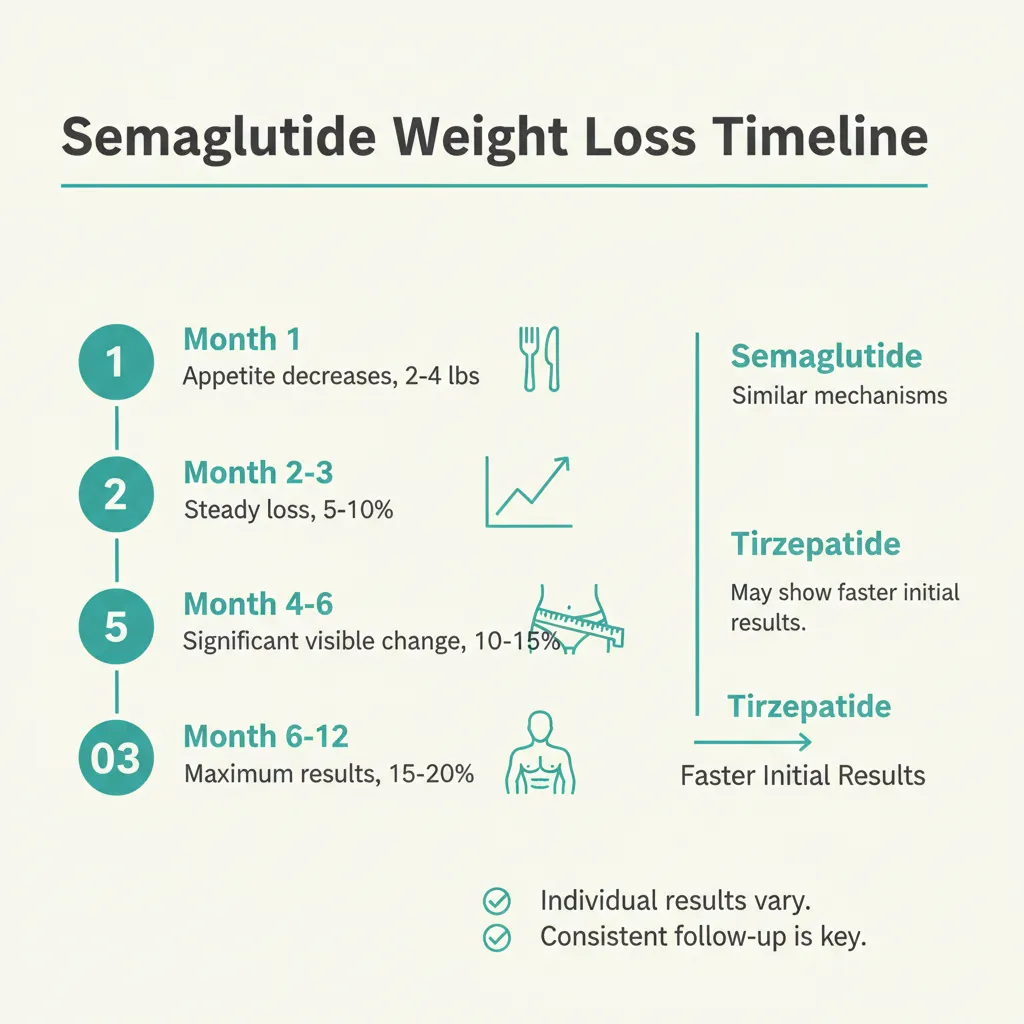
But results do not happen overnight. Understanding the realistic timeline for semaglutide helps set appropriate expectations and keeps you motivated through the early stages of treatment. Below is a month-by-month breakdown of what most patients experience at Allen Medical Aesthetics.
Most patients notice appetite suppression within the first 1 to 2 weeks on semaglutide. Weight loss typically becomes measurable within the first month and builds gradually as the dose increases over the following months, though the pace and total amount varies significantly from person to person.
Semaglutide works gradually. Appetite changes come first, followed by weight loss that tends to build as the dose increases over several months. We do not promise a specific number, since individual response varies.
How Semaglutide Works
Semaglutide is a GLP-1 receptor agonist that mimics the naturally occurring hormone glucagon-like peptide-1. It works through several mechanisms: it slows gastric emptying (so food stays in your stomach longer and you feel full sooner), it reduces appetite signals in the brain, and it improves insulin sensitivity.
The medication is injected once weekly and follows a dose escalation schedule that starts low and gradually increases over 16 to 20 weeks. This titration period is necessary to minimize GI side effects and allow your body to adjust to the medication.
Because the dose starts conservatively, most patients do not experience maximum weight loss effects until they reach the target dose of 2.4 mg per week, which typically happens around month 4 to 5.
Month-by-Month Results Timeline
The following timeline reflects the general pattern our providers observe as patients move through dose escalation. Individual results will vary based on starting weight, diet, exercise, and metabolic factors, and we do not promise a specific outcome at any stage.
| Timeframe | Typical Dose | What Tends to Change |
|---|---|---|
| Weeks 1-4 | 0.25 mg | Reduced appetite and less food noise for many patients; some experience nausea |
| Weeks 5-8 | 0.5 mg | Stronger appetite suppression; eating habits start to shift for many patients |
| Months 2-3 | 1.0 mg | Clothes may fit differently for some patients; energy levels often improve |
| Months 3-4 | 1.7 mg | Visible body changes for many patients; others may begin to notice |
| Months 4-6 | 2.4 mg (target) | Continued progress toward the full therapeutic dose for most patients |
| Months 6-12 | 2.4 mg (maintenance) | Continued progress for many patients as the body adjusts to maintenance dosing |
| Month 12+ | 2.4 mg or adjusted | Focus shifts toward maintenance and sustainable lifestyle habits |
The dose escalation period (months 1 through 4) is when your body is adjusting. Many patients see their pace of progress change once they reach the full therapeutic dose, though the timing and amount varies by individual.


“In the first few weeks on semaglutide, I ask patients to focus on how their relationship with food is changing rather than fixating on the scale. The appetite shift usually comes before the weight loss, and recognizing that early change helps patients trust the process.”
Brittanie Lane, MSN, ARNP Functional Wellness Nurse Practitioner
How Dose Escalation Affects Your Timeline
Semaglutide is prescribed in a stepwise dosing schedule: 0.25 mg, 0.5 mg, 1.0 mg, 1.7 mg, and 2.4 mg. Each dose level is maintained for at least 4 weeks before the next increase. This means it takes a minimum of 16 to 20 weeks just to reach the full therapeutic dose.
During the escalation phase, weight loss tends to be more gradual. Some patients feel frustrated by this pace, but the gradual approach is essential. Jumping to a high dose too quickly increases the risk of severe nausea, vomiting, and other GI side effects that can make the medication intolerable.
Not every patient needs to reach 2.4 mg. Some patients achieve excellent results at 1.0 mg or 1.7 mg with manageable side effects. Your provider will work with you to find the dose that balances effectiveness with tolerability.
Questions about weight loss?
Our providers offer consultations to discuss your options. The $50 fee is applied toward your first treatment.
Talk to a ProviderSemaglutide vs Tirzepatide: Timeline Comparison
Both semaglutide and tirzepatide are effective GLP-1 based medications for weight loss, but their timelines and total results differ somewhat.
Tirzepatide is a dual GIP and GLP-1 receptor agonist, which gives it a slightly different mechanism of action than semaglutide's single-target approach. The two medications are not interchangeable, and we do not generalize one as producing greater results than the other, since individual response varies considerably.
In terms of onset, both medications follow a similar early pattern: appetite reduction in the first 1 to 2 weeks, followed by gradual weight loss during dose escalation. Both medications require patience during the titration period regardless of which one you and your provider choose.
The best medication for you depends on your individual health profile, insurance coverage, cost considerations, and how your body responds. Our providers at Allen Medical Aesthetics can help you evaluate both options during a consultation. You can also read more about tirzepatide in our post on how long tirzepatide takes to work.
Factors That Influence Your Results
While semaglutide provides a powerful metabolic advantage, several lifestyle factors influence how quickly and how much weight you lose.
- Protein intake: Consuming adequate protein (60 to 100 grams daily) preserves muscle mass and supports metabolism. Muscle loss during weight loss slows your progress.
- Physical activity: Exercise is not required for semaglutide to work, but it accelerates results and improves body composition. Even 150 minutes of moderate activity per week makes a difference.
- Hydration: Drinking at least 64 ounces of water daily supports metabolic function and helps manage side effects.
- Sleep quality: Poor sleep raises cortisol levels and can slow weight loss. Aim for 7 to 9 hours per night.
- Consistency: Taking your injection on the same day each week and maintaining consistent eating habits produces the best outcomes.
Frequently Asked Questions
How much weight can I lose in the first month on semaglutide?
Most patients lose 2 to 4 pounds in the first month on semaglutide. The starting dose of 0.25 mg is designed for tolerability, and more significant weight loss typically begins after the first dose increase.
Why does semaglutide take so long to work?
Semaglutide requires a gradual dose escalation over 16 to 20 weeks to minimize side effects. The medication works from the first injection, but the full therapeutic effect is not reached until you are at your target dose.
Is semaglutide faster or slower than tirzepatide?
Both medications follow a similar early timeline, with appetite reduction typically beginning in weeks 1 to 2. Tirzepatide works through an additional metabolic pathway (GIP, alongside GLP-1), but we do not generalize one medication as faster, since individual response varies. Your provider can help you weigh the options for your situation.
What if semaglutide is not working after 3 months?
If you have not seen meaningful weight loss after 3 months, review your diet, protein intake, and activity level with your provider. A dose adjustment or switch to a different medication may be appropriate.
How long do I need to take semaglutide?
Semaglutide is typically taken for 12 to 18 months during the active weight loss phase. After reaching your goal, your provider may recommend a maintenance dose or a structured taper plan to sustain your results.
Will I gain weight back if I stop semaglutide?
Weight regain is a recognized concern after stopping semaglutide without a maintenance strategy in place. A structured plan that includes dietary habits, exercise, and possibly a maintenance dose helps preserve results long-term.
Related Articles
This article supports our Medical Weight Loss service page. Learn more about treatment options, candidacy, and what to expect.