

Tirzepatide is a powerful tool for weight loss, but what you eat while taking it plays a significant role in the results you achieve. The medication works by reducing appetite and slowing gastric emptying, which means your body handles food differently than it did before treatment.
Choosing the right foods can help you maintain energy, preserve lean muscle mass, minimize common side effects like nausea, and get the most out of every dose. This guide covers the nutritional strategies we recommend to our medical weight loss patients at Allen Medical Aesthetics.
Focus on lean protein at every meal (aim for 60 to 100 grams per day), stay hydrated with at least 64 ounces of water daily, eat smaller meals more frequently, and avoid high-fat, fried, and overly sugary foods that can worsen nausea and GI side effects.
Protein is the single most important macronutrient while on tirzepatide. It preserves muscle mass during weight loss and helps you feel satisfied with smaller portions.
Why Nutrition Matters More on Tirzepatide
Tirzepatide suppresses appetite through its dual GIP and GLP-1 receptor agonist activity. Most patients eat significantly less without feeling deprived. While that reduced caloric intake drives weight loss, it also means every calorie you consume carries more importance. If your smaller meals lack adequate protein, vitamins, and minerals, you risk losing muscle mass, experiencing fatigue, and developing nutrient deficiencies.
The medication also slows gastric emptying, meaning food stays in your stomach longer. This is part of what reduces hunger, but it can also cause nausea, bloating, and discomfort if you eat the wrong foods or eat too much at once. Strategic food choices help your body work with the medication rather than against it.
Foods to Prioritize
Building your meals around the right macronutrients will support your weight loss while keeping you energized and nourished.
High-Protein Foods
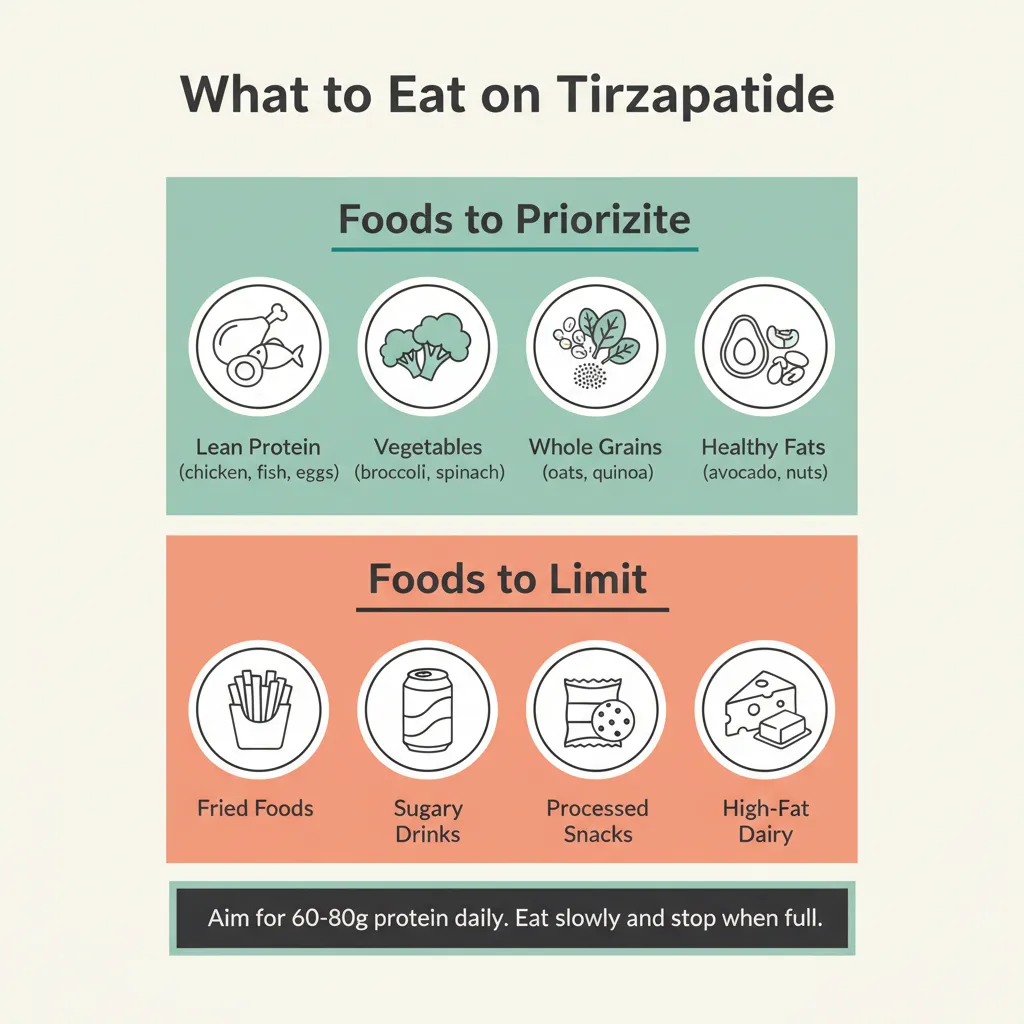
Protein should be the foundation of every meal. It preserves lean muscle mass during caloric restriction, supports metabolism, and provides lasting satiety. Aim for 60 to 100 grams of protein per day, depending on your body weight and activity level. Good sources include chicken breast, turkey, fish, eggs, Greek yogurt, cottage cheese, tofu, and lean cuts of beef or pork.
Non-Starchy Vegetables
Vegetables provide fiber, vitamins, and volume without many calories. They also support healthy digestion, which is especially important when gastric motility is slowed. Focus on leafy greens, broccoli, cauliflower, bell peppers, zucchini, asparagus, and green beans.
Complex Carbohydrates (in Moderation)
You do not need to eliminate carbohydrates entirely, but choose complex, fiber-rich options in moderate portions. Brown rice, quinoa, sweet potatoes, oats, and whole grain bread provide sustained energy without blood sugar spikes.

“I tell my patients that tirzepatide handles the appetite side of the equation, but what you choose to eat determines how good you feel and how much muscle you preserve. Prioritizing protein at every meal and staying hydrated are the two changes that make the biggest difference in my patients' outcomes.”
Brittanie Lane, MSN, ARNP Functional Wellness Nurse Practitioner
Foods to Avoid or Limit
Certain foods are more likely to trigger nausea, bloating, and discomfort while on tirzepatide. Limiting these can make a meaningful difference in how you feel day to day.
- Fried and greasy foods: High-fat meals take longer to digest and can intensify nausea when gastric emptying is already slowed.
- Sugary foods and drinks: Candy, pastries, soda, and fruit juice cause rapid blood sugar fluctuations and add empty calories.
- Large portions: Your stomach capacity is effectively reduced. Eating too much at once is one of the most common causes of nausea.
- Carbonated beverages: Sparkling water and soda can increase bloating and abdominal discomfort.
- Highly processed foods: These tend to be calorie-dense but nutrient-poor, which works against your goals.
- Alcohol: Alcohol adds empty calories, impairs judgment around food choices, and can increase GI side effects.
Questions about weight loss?
Our providers offer consultations to discuss your options. The $50 fee is applied toward your first treatment.
Talk to a ProviderMeal Timing and Sample Meal Ideas
Eating smaller meals more frequently (4 to 5 times per day) tends to work better than 3 large meals while on tirzepatide. This approach keeps nausea at bay and ensures steady nutrient intake throughout the day.
Below is a sample day of eating that aligns with tirzepatide nutrition guidelines.
| Meal | Sample Option | Protein (approx.) |
|---|---|---|
| Breakfast | 2 scrambled eggs with spinach and whole grain toast | 18g |
| Mid-Morning Snack | Greek yogurt with a handful of almonds | 18g |
| Lunch | Grilled chicken salad with mixed greens, cucumber, and olive oil dressing | 30g |
| Afternoon Snack | Cottage cheese with sliced cucumber or celery | 14g |
| Dinner | Baked salmon with roasted broccoli and quinoa | 28g |
Managing Nausea Through Diet
Nausea is the most commonly reported side effect of tirzepatide, and dietary adjustments are often the most effective way to manage it. In addition to avoiding trigger foods, the following strategies can help.
- Eat slowly and chew thoroughly. Rushing meals increases the chance of overeating and worsens GI symptoms.
- Stay upright for at least 30 minutes after eating. Lying down too soon can increase nausea.
- Sip ginger tea or chew ginger chews. Ginger has well-documented anti-nausea properties.
- Keep bland, easy-to-digest foods on hand (crackers, plain rice, bananas) for days when nausea is stronger.
- Drink water between meals rather than during meals to avoid excessive stomach fullness.
If nausea is persistent or severe enough to prevent you from eating, contact your provider. Dose adjustments or anti-nausea medications may be appropriate.
Frequently Asked Questions
How much protein should I eat on tirzepatide?
Most providers recommend 60 to 100 grams of protein per day while on tirzepatide. A general guideline is 0.7 to 1 gram of protein per pound of ideal body weight. Prioritize protein at every meal and snack.
Can I drink alcohol while taking tirzepatide?
Alcohol is not strictly prohibited, but it is best to limit or avoid it. Alcohol adds empty calories, can worsen GI side effects like nausea, and may impair your food choices. If you do drink, keep it to a small amount and avoid sugary cocktails.
Why do I feel nauseous after eating on tirzepatide?
Tirzepatide slows gastric emptying, meaning food sits in your stomach longer. Eating too much, eating too quickly, or choosing high-fat or greasy foods can intensify this effect and trigger nausea. Smaller, more frequent meals typically help.
Should I take vitamins while on tirzepatide?
A daily multivitamin is a good idea since you are consuming fewer calories overall. Many providers also recommend supplementing with B12, iron, and vitamin D depending on your lab results. Discuss supplementation with your provider.
Can I eat carbs on tirzepatide?
Yes, but focus on complex carbohydrates in moderate portions. Whole grains, sweet potatoes, oats, and quinoa provide fiber and sustained energy. Avoid simple sugars and refined carbohydrates that offer minimal nutritional value.
Related Articles
This article supports our Medical Weight Loss service page. Learn more about treatment options, candidacy, and what to expect.