

Recovery is where results are built. Whether you are an athlete pushing through a demanding training block, a patient healing after an aesthetic procedure, someone fighting off a cold, or a traveler crossing time zones, your body's ability to recover determines how quickly you return to baseline and how effectively you adapt to the demands placed on it.
The challenge is that recovery depends on having the right raw materials available at the right time: fluids for cellular function, electrolytes for nerve and muscle signaling, vitamins for enzymatic reactions, minerals for tissue repair, and antioxidants for managing the oxidative stress that any significant physical demand creates.
IV therapy delivers these recovery essentials directly into the bloodstream, bypassing the digestive system and making them immediately available where they are needed most. At Allen Medical Aesthetics, we use targeted IV formulations to support recovery across a range of scenarios, from post-workout replenishment to immune support during illness.
IV therapy supports recovery by delivering fluids, electrolytes, vitamins, minerals, amino acids, and antioxidants directly into the bloodstream, where absorption is not limited by digestion. This accelerates rehydration, reduces oxidative stress, supports tissue repair, and replenishes nutrients depleted by exercise, illness, travel, or medical procedures. Most recovery IV sessions take 30 to 60 minutes.
The speed of IV nutrient delivery is what makes it valuable for recovery. When your body is under repair demands, waiting for oral supplements to be digested and absorbed means losing time during the critical recovery window.
IV Therapy for Athletic Recovery
Intense exercise creates a cascade of physiological demands that must be addressed for effective recovery. Fluid and electrolyte losses through sweat, microtrauma to muscle fibers, oxidative stress from increased metabolic activity, and glycogen depletion all need to be resolved before the body can adapt and grow stronger.
Traditional oral recovery strategies (drinking water, eating protein, taking supplements) work, but they are limited by the speed and completeness of gastrointestinal absorption. During and after intense exercise, blood flow is redirected away from the digestive system toward working muscles, which can further impair oral nutrient absorption during the critical post-exercise window.
IV recovery formulations address these limitations by delivering key recovery nutrients directly into the bloodstream.
Electrolytes (sodium, potassium, magnesium, calcium): Replace what was lost through sweat and restore the electrical gradients that muscles and nerves need to function properly. Magnesium, in particular, is involved in over 300 enzymatic reactions and is commonly depleted by intense physical activity.
B vitamins: Essential cofactors in energy production pathways (the citric acid cycle and electron transport chain) that are heavily utilized during exercise. Replenishing B vitamins supports energy restoration and reduces the fatigue that follows demanding training sessions.
Amino acids: Building blocks for muscle protein synthesis. While protein-rich meals are essential, IV-delivered amino acids are available immediately for repair without the 2 to 4 hour digestion delay of oral protein.
Vitamin C and glutathione: Powerful antioxidants that neutralize the free radicals generated during intense exercise. Managing oxidative stress reduces muscle soreness and supports faster tissue repair.

“Recovery is when the body does its most important work, and it needs the right building blocks to do it well. I see athletes who cut their recovery time significantly with a post-training IV session, and patients recovering from illness who feel a noticeable shift within hours of their infusion. The key is delivering those nutrients when the body's demand is highest, not hours later through the digestive system.”
Brittanie Lane, MSN, ARNP Functional Wellness Nurse Practitioner
Post-Procedure Recovery
Aesthetic treatments that create controlled tissue injury, such as laser resurfacing, chemical peels, microneedling, and surgical procedures, initiate a healing cascade that depends heavily on adequate hydration and nutrient availability. Supporting this healing process from the inside can complement your topical post-procedure care and potentially improve outcomes.
When the body is healing from a procedure, several nutritional demands increase simultaneously. Fluid requirements increase because the inflammatory response draws water into treated tissues. Vitamin C demand rises because it is essential for collagen synthesis, the primary repair mechanism for skin and soft tissue. Zinc is required for cell division and immune function during wound healing. B vitamins support the increased metabolic activity of repair processes.
IV therapy before or after aesthetic procedures can provide a concentrated delivery of these healing-supportive nutrients. Some patients choose to schedule an IV session the day before a procedure to ensure optimal nutrient levels going into treatment, while others prefer a post-procedure session to support the early healing phase.
At Allen Medical Aesthetics, patients undergoing procedures like CO2 laser resurfacing or RF microneedling sometimes combine their treatment with IV therapy to support the healing process. The goal is not to speed healing beyond its natural pace but to ensure that nutrient deficiencies do not slow it down.
Hangover Recovery
While not the most medically serious application, hangover recovery is one of the most immediately noticeable benefits of IV therapy. The symptoms of a hangover, including headache, nausea, fatigue, and brain fog, are largely driven by dehydration, electrolyte imbalance, and the metabolic burden of processing alcohol.
Alcohol is a potent diuretic that inhibits antidiuretic hormone (ADH), causing the kidneys to excrete more water than you are consuming. A night of heavy drinking can result in significant fluid and electrolyte losses that persist into the following day. Additionally, alcohol metabolism consumes B vitamins, produces inflammatory byproducts (acetaldehyde), and disrupts sleep architecture.
IV hangover recovery formulations typically include normal saline for rapid rehydration, electrolytes to restore balance, B vitamins to replenish depleted stores, anti-nausea medication (ondansetron) when indicated, and anti-inflammatory medication to address headache.
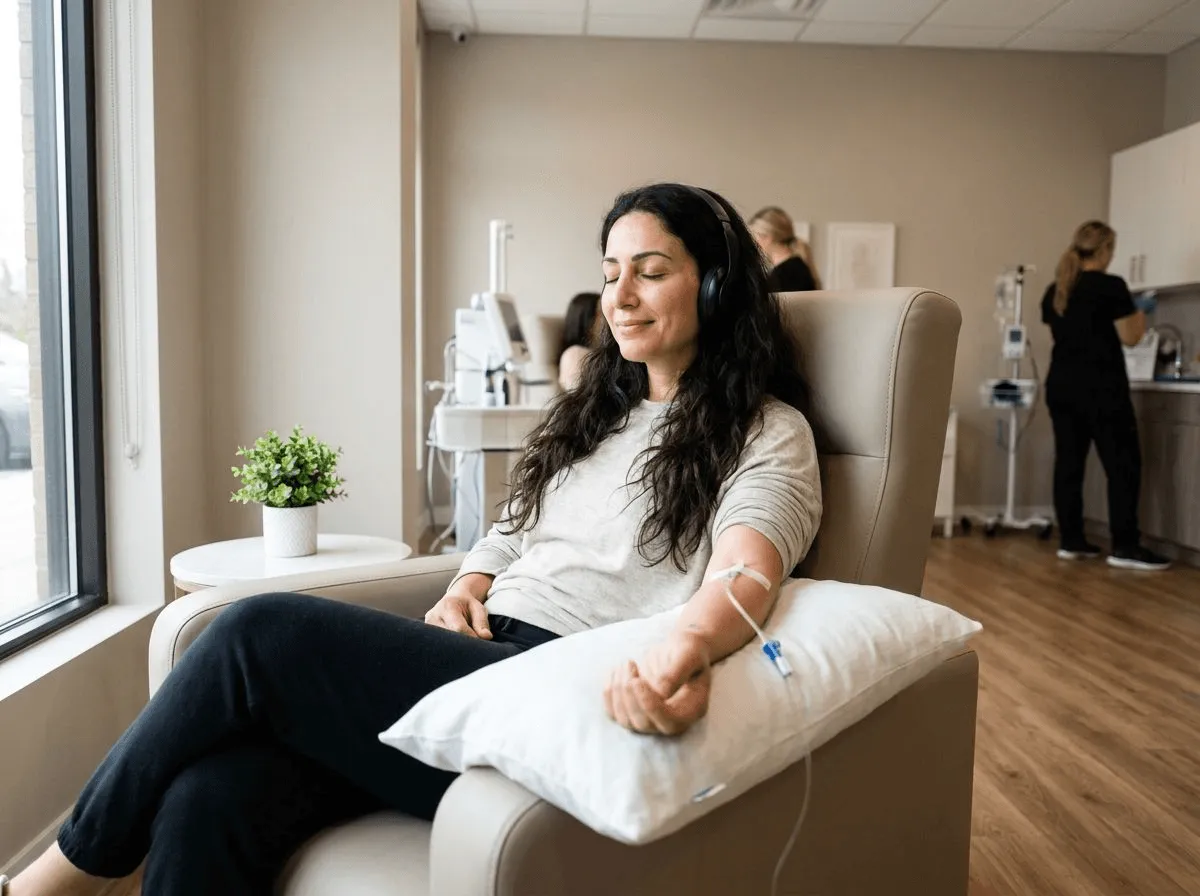
Most patients report substantial symptom improvement within 30 to 60 minutes of starting the infusion. The rapid rehydration and electrolyte restoration address the primary drivers of hangover symptoms more effectively than oral fluids, which take hours to absorb and may be poorly tolerated when nausea is present.
Questions about hormone health?
Our providers offer consultations to discuss your options. The $50 fee is applied toward your first treatment.
Talk to a ProviderImmune Support During Illness
When your immune system is actively fighting an infection, its demand for specific nutrients increases dramatically. Immune cells (particularly white blood cells like lymphocytes and neutrophils) are metabolically active and require substantial amounts of vitamin C, zinc, B vitamins, and glutathione to function effectively.
During illness, oral nutrient intake is often compromised. Appetite decreases, nausea may be present, and gastrointestinal inflammation can reduce absorption efficiency. This creates a situation where nutrient demand is highest precisely when the body's ability to obtain nutrients through normal channels is most impaired.
IV immune support formulations bridge this gap by delivering high concentrations of immune-supportive nutrients directly into the bloodstream. High-dose vitamin C (typically 5 to 15 grams, well above what is achievable orally) supports immune cell function and antioxidant defense. Zinc supports T-cell function and viral defense. Glutathione supports the detoxification processes that become more active during immune responses.
It is important to be clear about what IV therapy can and cannot do during illness. It can provide nutritional support that enhances immune function and supports recovery. It cannot cure infections, replace antibiotics when they are needed, or prevent all illness. IV therapy is a supportive measure, not a standalone treatment for serious infections.
IV immune support is most effective when used at the first sign of illness or as a preventive measure during high-exposure periods. Waiting until symptoms are severe means the immune system has already been fighting with depleted resources.
Travel Fatigue and Jet Lag
Air travel creates a unique combination of stressors that collectively drain the body. Airplane cabins are pressurized to the equivalent of 6,000 to 8,000 feet elevation, which reduces blood oxygen levels. Cabin humidity is typically 10 to 20 percent (compared to 30 to 65 percent at ground level), causing significant fluid loss through respiration and skin. Crossing time zones disrupts circadian rhythms, impairing sleep, digestion, and immune function.
The cumulative effect is what travelers recognize as jet lag and travel fatigue: exhaustion, brain fog, headache, dry skin, digestive disruption, and increased susceptibility to illness. These symptoms can take days to fully resolve through normal recovery processes.
IV therapy before or after travel addresses the hydration deficit directly and provides nutrients that support circadian rhythm recovery (B vitamins for energy production, magnesium for sleep quality) and immune function (vitamin C and zinc to counter the immune suppression that travel stress causes).
Frequent travelers, including business travelers and flight crews, often incorporate regular IV therapy sessions into their routine to mitigate the cumulative effects of repeated air travel.
How IV Delivery Differs from Oral Supplements
Understanding why IV delivery offers advantages over oral supplementation in recovery contexts helps explain when each approach is most appropriate.
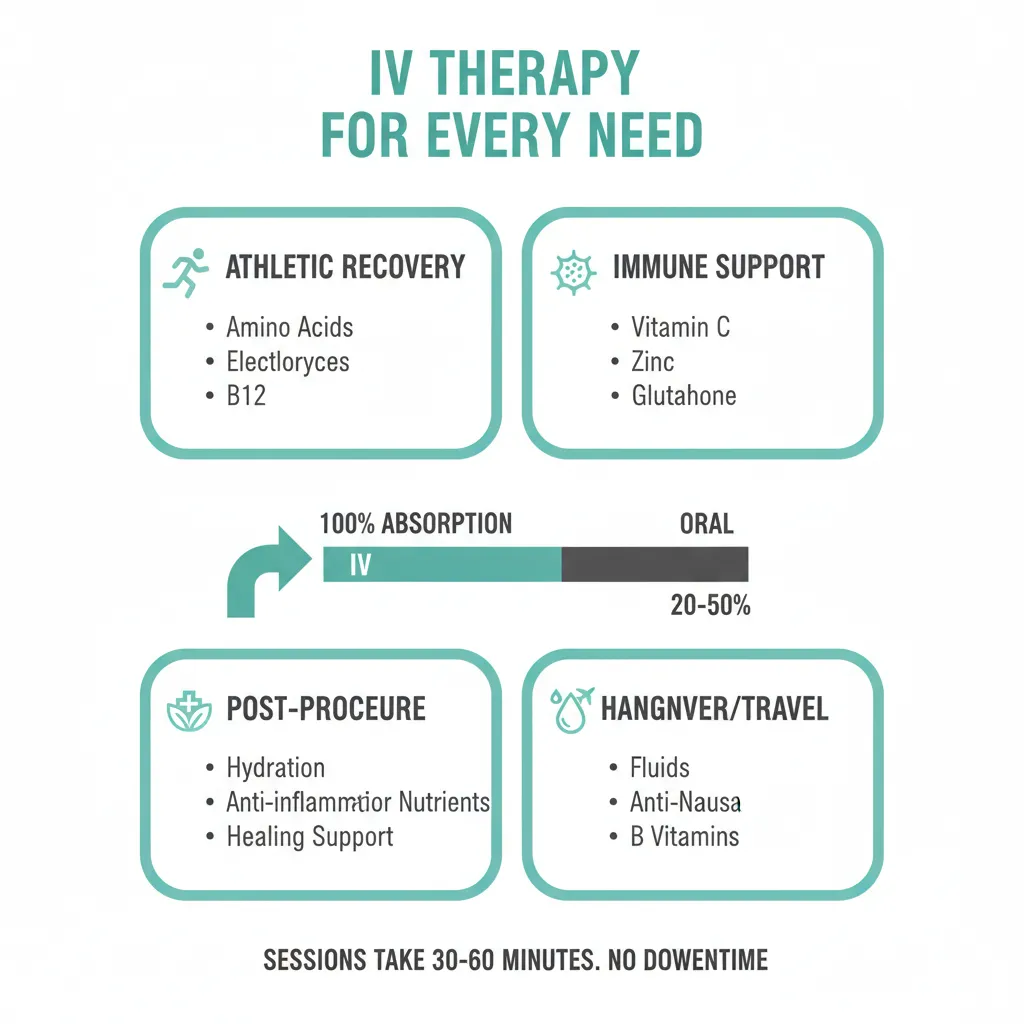
Absorption: Oral supplements must survive stomach acid, be absorbed through the intestinal lining, and pass through the liver (first-pass metabolism) before reaching systemic circulation. This process reduces the amount of active nutrient that actually reaches your cells, and absorption varies depending on the nutrient, formulation, and individual factors. IV delivery is not limited by digestion, since nutrients enter the bloodstream directly.
Achievable concentrations: There is a ceiling on how much of certain nutrients you can absorb orally in a single dose because the intestinal transporters become saturated at higher doses. IV delivery can achieve plasma concentrations of nutrients like vitamin C that are not achievable through oral supplementation.
Speed of delivery: Oral supplements take 30 minutes to 2 hours to begin absorbing, and complete absorption may take several hours. IV nutrients are available to cells within minutes of entering the bloodstream. In recovery situations where timing matters, this speed difference is significant.
Gastrointestinal tolerance: High oral doses of certain nutrients (magnesium, vitamin C, iron) cause gastrointestinal side effects including nausea, cramping, and diarrhea. IV delivery avoids the GI tract entirely, allowing higher doses to be administered without digestive discomfort.
This does not mean oral supplements are inferior for all purposes. For daily maintenance nutrition, oral supplements are practical, affordable, and effective. IV therapy is most valuable in situations where speed, concentration, or bypassing the digestive system provides a meaningful advantage.
Common Recovery Nutrients and Their Roles
Understanding what each nutrient does helps you appreciate why specific formulations are designed the way they are.
| Nutrient | Role in Recovery | Common IV Dose Range |
|---|---|---|
| Vitamin C | Collagen synthesis, antioxidant protection, immune cell function | 1,000 to 15,000 mg |
| B-Complex (B1, B2, B3, B5, B6) | Energy production, nervous system function, cellular metabolism | 100 mg composite |
| Vitamin B12 | Energy, red blood cell production, neurological function | 1,000 to 2,000 mcg |
| Magnesium | Muscle relaxation, nerve function, sleep quality, enzyme activation | 500 to 2,000 mg |
| Zinc | Immune function, wound healing, cell division | 5 to 10 mg |
| Glutathione | Master antioxidant, detoxification, immune support | 600 to 2,000 mg |
| Amino acids | Muscle repair, tissue building, enzyme production | Varies by formulation |
Combining IV Therapy with Other Wellness Treatments
IV therapy works well as a standalone treatment, but it can also complement other wellness and medical services for a synergistic effect.
IV therapy and hormone optimization: Patients undergoing hormone replacement therapy may benefit from IV support to ensure that the cofactors needed for hormone metabolism (B vitamins, magnesium, zinc) are available in optimal amounts. Hormones require these nutrients to be synthesized, converted, and utilized effectively.
IV therapy and weight management: Patients in a medical weight loss program may experience nutrient depletion from caloric restriction or increased metabolic demands. IV therapy can help maintain energy and nutrient status during active weight loss phases.
IV therapy and aesthetic procedures: As discussed, supporting the healing process after skin treatments with IV-delivered nutrients can optimize recovery. This is particularly relevant for patients undergoing more intensive procedures with longer healing timelines.
The key is to view IV therapy as one component of a broader wellness strategy rather than a standalone solution. Adequate sleep, balanced nutrition, regular exercise, stress management, and appropriate medical care form the foundation. IV therapy enhances and supports that foundation by ensuring that nutrient availability is not a limiting factor in your health and recovery.
Frequently Asked Questions
How soon after a workout should I get an IV for recovery?
For optimal benefit, schedule your IV session within 2 hours of completing intense exercise. This aligns with the body's peak recovery window when repair processes are most active. However, IV therapy is still beneficial even if administered later in the day.
Can IV therapy help me recover from surgery?
IV therapy can support post-surgical recovery by providing hydration and nutrients important for wound healing (vitamin C, zinc, B vitamins). However, it should be coordinated with your surgical team and is a supportive measure, not a replacement for standard post-operative care.
Is IV therapy safe to get before a flight?
Yes. Pre-travel IV hydration is safe and can help counteract the dehydrating effects of air travel. Many frequent travelers schedule a session 1 to 2 days before departure. Post-travel sessions are also beneficial for addressing jet lag and fatigue after arrival.
How often should I get IV therapy for ongoing wellness?
For general wellness maintenance, monthly sessions are common. Athletes may benefit from weekly or biweekly sessions during training. During cold and flu season, biweekly immune support sessions can be helpful. Your provider can recommend a frequency based on your specific goals and health status.
Can IV therapy replace my daily supplements?
IV therapy complements but does not replace daily oral supplementation. IV sessions provide periodic concentrated nutrient delivery, while daily supplements maintain baseline levels between sessions. The two approaches work best together.
Will I feel different immediately after an IV session?
Many patients report feeling more energized, hydrated, and mentally clear within 30 to 60 minutes of completing their session. The degree of immediate improvement often depends on how depleted you were before treatment. Patients who are significantly dehydrated or nutrient-depleted tend to notice the most dramatic immediate effects.
Related Articles
This article supports our Iv Hydration Therapy service page. Learn more about treatment options, candidacy, and what to expect.