
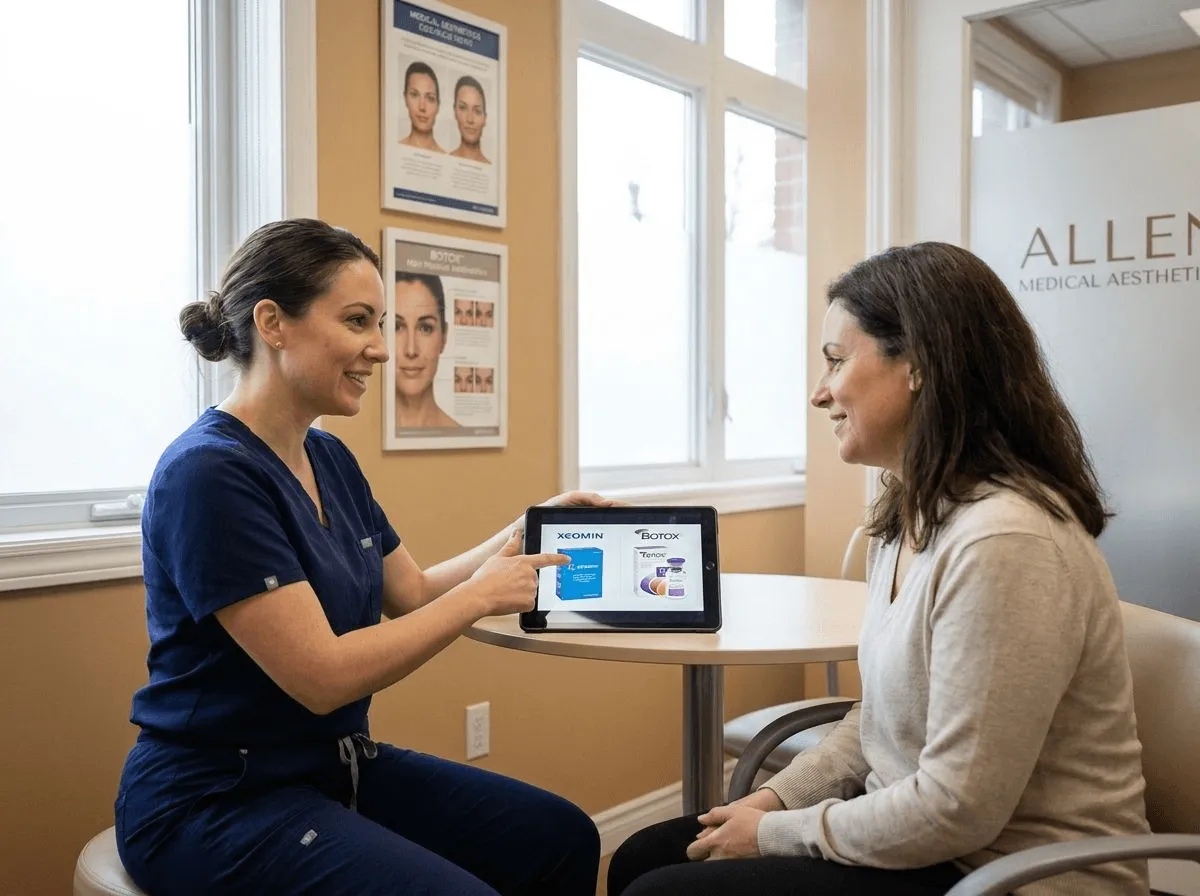
If you are researching wrinkle relaxers, you have probably come across both Xeomin and Botox. Both are botulinum toxin type A products that temporarily smooth dynamic wrinkles by blocking nerve signals to targeted muscles. The results can look nearly identical, yet the two products are not exactly the same.
Understanding the differences between Xeomin and Botox can help you have a more productive conversation with your provider and feel confident in the product you choose. Below, we break down how each product works, compare them across the categories that matter most, and explain when one may be a better fit than the other.
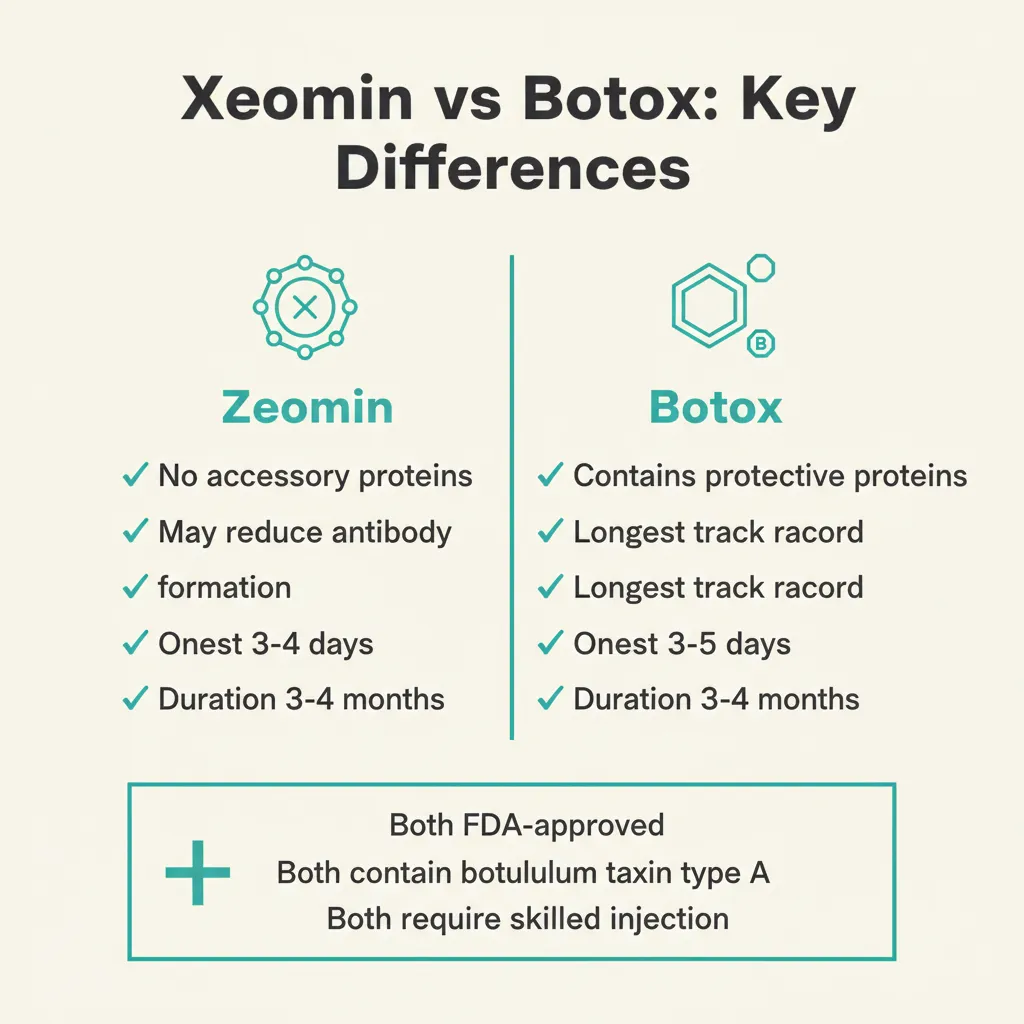
Xeomin and Botox both contain botulinum toxin type A and produce similar wrinkle-smoothing results. The main difference is that Xeomin is a "naked" neurotoxin with no accessory proteins, which may lower the risk of developing antibody resistance over time. Botox has a longer track record and is used across a slightly broader range of treatment areas.
Both products deliver comparable results. Xeomin may be preferable for patients who have developed resistance to Botox or want a purer formulation.
How Xeomin and Botox Work
Both Xeomin (incobotulinumtoxinA) and Botox (onabotulinumtoxinA) are injectable neurotoxins derived from the bacterium Clostridium botulinum. When injected into a facial muscle, each product blocks the release of acetylcholine at the neuromuscular junction. This temporarily prevents the muscle from contracting, which softens the wrinkles and lines that form during repetitive facial expressions.
The core mechanism is the same for both products. The meaningful distinction lies in their molecular composition. Botox contains the active neurotoxin plus a cluster of accessory (complexing) proteins. Xeomin, by contrast, undergoes an additional purification step that strips away those accessory proteins, leaving only the active 150 kDa neurotoxin molecule. This is why Xeomin is sometimes called the "naked" neurotoxin.
From a practical standpoint, the purification difference means Xeomin does not require refrigeration before it is opened, while Botox does. More importantly, some researchers believe the absence of accessory proteins may reduce the likelihood of the body forming neutralizing antibodies, which is a topic we cover in more detail below.
Side-by-Side Comparison
The table below summarizes the key differences between Xeomin and Botox across the factors patients ask about most frequently.
| Factor | Xeomin | Botox |
|---|---|---|
| Active Ingredient | IncobotulinumtoxinA | OnabotulinumtoxinA |
| Accessory Proteins | None (naked neurotoxin) | Yes (complexing proteins present) |
| Onset of Results | 3-5 days | 3-5 days |
| Peak Results | ~14 days | ~14 days |
| Duration | 3-4 months | 3-4 months |
| Spread Pattern | Moderate (similar to Botox) | Moderate |
| Unit Equivalence | 1:1 with Botox | 1:1 with Xeomin |
| Storage | Room temperature (unopened) | Refrigerated |
| Antibody Resistance Risk | Potentially lower | Standard |

The Antibody Resistance Factor
One of the most discussed advantages of Xeomin is its potential to reduce the risk of antibody resistance. Over time, a small percentage of patients who receive repeated injections of botulinum toxin can develop neutralizing antibodies. When this happens, the body essentially learns to block the neurotoxin before it reaches the nerve endings, and treatments stop working as well.
Because Xeomin contains no accessory proteins, the theory is that the immune system has fewer foreign molecules to react to, reducing the chance of antibody formation. While large-scale clinical data confirming this advantage is still limited, some providers recommend Xeomin for patients who have noticed diminishing results from Botox after many years of use.
At Allen Medical Aesthetics, we carry Botox, Xeomin, Dysport, and Daxxify. If you suspect your current neurotoxin is becoming less effective, your provider can evaluate whether switching products might restore your results.
Questions about injectables?
Our providers offer consultations to discuss your options. The $50 fee is applied toward your first treatment.
Talk to a Provider
“I like to describe Xeomin as the "clean" neurotoxin because it contains only the active molecule with no extra proteins attached. For patients who have been getting Botox for years and feel like their results are not lasting as long, Xeomin can be a great option to try. The purer formulation may help reset the body's response.”
Anna Yi, MSN, ARNP Aesthetic & Functional Wellness Nurse Practitioner
Which Product Is Better for Each Treatment Area?
Because Xeomin and Botox share a 1:1 unit equivalence and a similar spread pattern, they perform comparably across most treatment areas. Both are commonly used for glabellar lines (the "11s" between the eyebrows), as well as forehead lines, crow's feet, bunny lines, lip lines, and other areas.
Some providers observe subtle differences in clinical practice. For example, certain injectors prefer Xeomin for smaller, more precise treatment areas because it stays relatively localized. Others continue to favor Botox for larger muscle groups where predictability matters. These preferences are based on individual clinical experience rather than significant pharmacological differences.
The most important factor in achieving a great result with either product is the skill and experience of the injector. Precise placement, correct dosing, and an understanding of facial anatomy matter far more than the brand name on the vial.
Cost Considerations
Xeomin and Botox are typically priced within the same range, though the exact cost per unit varies by clinic and geographic region. Because Xeomin and Botox use a 1:1 unit ratio, you can expect a similar total cost for the same treatment area.
Some patients find that Xeomin is priced slightly lower per unit, though this is not universal. Both products require the same frequency of maintenance treatments, usually every three to four months, so the ongoing cost over a year tends to be comparable.
If you are curious about the specific pricing at our clinic, we encourage you to visit our wrinkle relaxers page or contact us directly for a consultation.
Frequently Asked Questions
Is Xeomin as effective as Botox?
Yes. Xeomin and Botox generally produce comparable results for the treatment of glabellar lines, with similar onset times and durations.
Can I switch from Botox to Xeomin?
Absolutely. Many patients switch between neurotoxin brands without any issues. Your provider can use the same unit count since Xeomin and Botox have a 1:1 conversion ratio.
Does Xeomin last as long as Botox?
Both Xeomin and Botox typically last three to four months. Individual results vary based on metabolism, muscle strength, dosing, and treatment frequency.
Why would my provider recommend Xeomin over Botox?
Your provider may suggest Xeomin if you have noticed diminishing results from Botox over time (possible antibody resistance), if you prefer a product without accessory proteins, or if Xeomin is more cost-effective at the time of your appointment.
Does Xeomin hurt more than Botox?
No. Both products are injected using the same ultra-fine needles, and the injection experience is virtually identical. Most patients describe the sensation as a brief pinch.
Is Xeomin safer than Botox?
Both products have excellent safety profiles when administered by a trained provider. The theoretical advantage of Xeomin is a lower risk of antibody formation, but both products are considered safe and well-tolerated.
Related Articles
This article supports our Botox Wrinkle Relaxers service page. Learn more about treatment options, candidacy, and what to expect.