
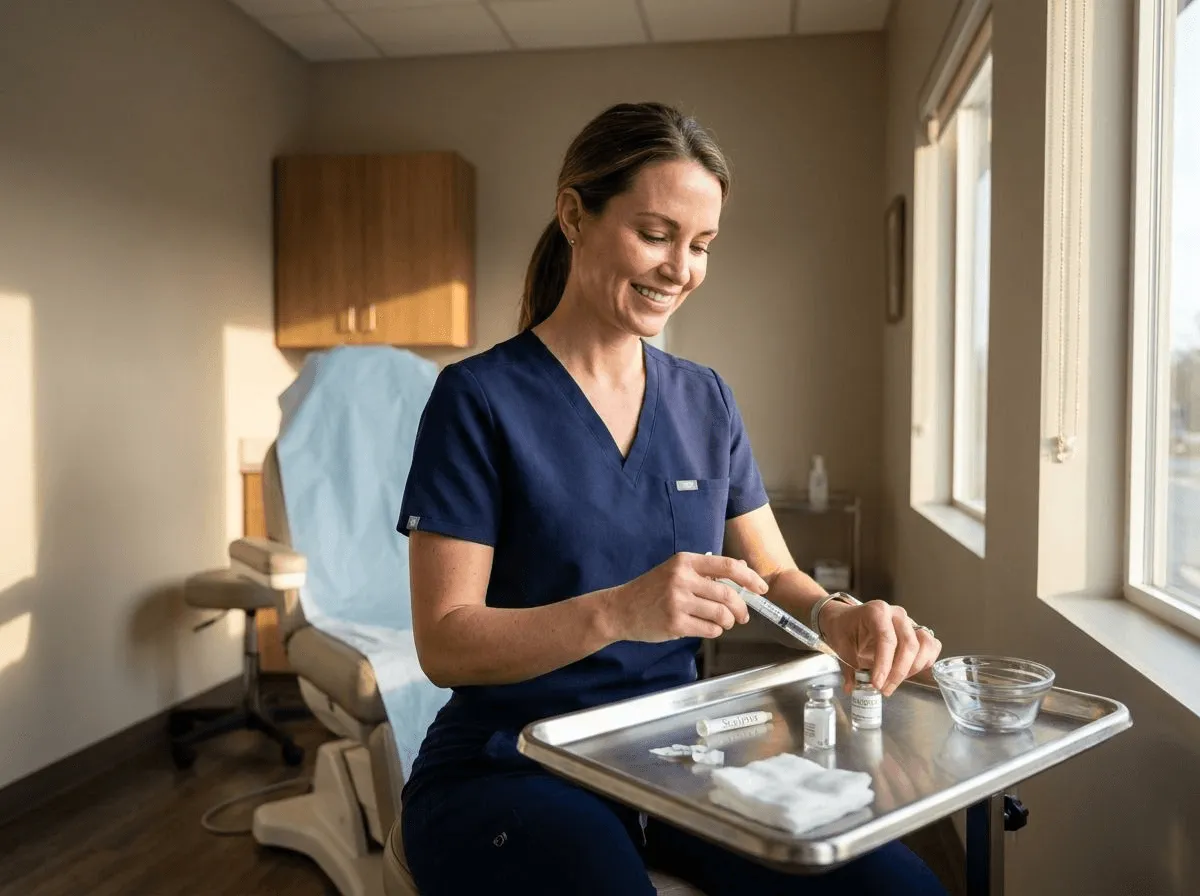
If you have been researching facial rejuvenation, you have probably come across the term "biostimulatory fillers" and wondered what makes them different from the hyaluronic acid fillers you already know about. The short answer: instead of simply adding volume, biostimulatory fillers trigger your body to rebuild its own collagen, producing results that develop gradually and last significantly longer than traditional options.
At Allen Medical Aesthetics in Des Moines, WA, we offer both Sculptra and Radiesse as part of our biostimulatory filler program. These treatments are ideal for patients who want natural-looking volume restoration without the "just filled" appearance that can accompany traditional fillers.
This guide covers how biostimulatory fillers work, what makes Sculptra and Radiesse unique, who is the best candidate, and what to expect throughout the treatment process.
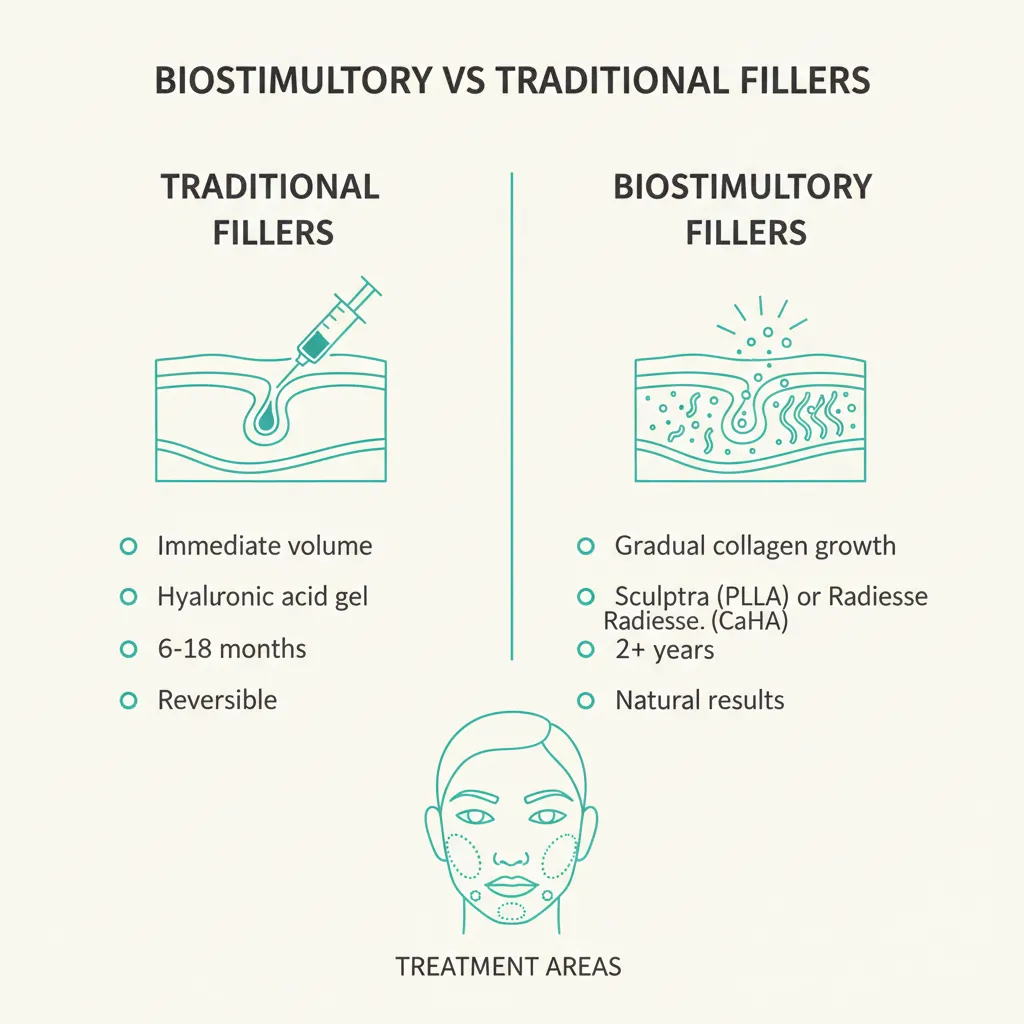
Biostimulatory fillers are injectable treatments that stimulate your body to produce new collagen rather than simply adding volume with a gel. Sculptra uses poly-L-lactic acid (PLLA) and Radiesse uses calcium hydroxylapatite (CaHA) to trigger collagen synthesis. Results develop gradually over weeks to months and can last two years or longer.
Unlike traditional fillers that provide instant volume, biostimulatory fillers work with your biology to rebuild lost collagen, producing results that look natural and improve over time.
How Biostimulatory Fillers Differ from Traditional Fillers
Traditional dermal fillers, such as those made from hyaluronic acid (HA), work by physically occupying space beneath the skin. When injected, the gel immediately plumps the treated area, smoothing wrinkles or restoring volume. The results are visible right away, and the filler is gradually absorbed by the body over 6 to 18 months depending on the product and treatment area.
Biostimulatory fillers take a fundamentally different approach. While they do provide some initial volume at the injection site, their primary mechanism is biological rather than mechanical. The injectable material acts as a scaffold that triggers your body's wound-healing response, recruiting fibroblasts to the area. These fibroblasts produce new collagen, elastin, and extracellular matrix components that gradually replace the injected material with your own tissue.
This distinction matters for several reasons. Because the volume comes from your own collagen rather than an external gel, the results integrate seamlessly with your natural facial structure. The improvement develops gradually, which means the change is subtle enough that friends and colleagues notice you look refreshed without being able to pinpoint exactly what changed. And because collagen is a structural protein your body maintains on its own, the results tend to last considerably longer than HA fillers.
| Feature | Traditional HA Fillers | Biostimulatory Fillers |
|---|---|---|
| Primary mechanism | Volume replacement | Collagen stimulation |
| Results timeline | Immediate | Gradual (weeks to months) |
| Duration | 6 to 18 months | 2+ years |
| Reversible | Yes (hyaluronidase) | No |
| Number of sessions | Typically 1 | 2 to 3 sessions |
| Best for | Targeted volume, lip enhancement | Global volume loss, skin quality |

“The biggest difference between biostimulatory fillers and traditional HA fillers is what you are left with after treatment. With hyaluronic acid, you are left with a gel that eventually dissolves. With Sculptra or Radiesse, you are left with your own collagen, tissue your body built in response to the treatment. That is why the results look so natural and why they last so much longer.”
Anna Yi, MSN, ARNP Aesthetic & Functional Wellness Nurse Practitioner
Sculptra: Poly-L-Lactic Acid (PLLA)
Sculptra was FDA-approved in 2004 for the treatment of lipoatrophy (facial fat loss) in HIV patients and received broader cosmetic approval in 2009 for the correction of shallow to deep nasolabial folds and other facial wrinkles. Its active ingredient, poly-L-lactic acid, is a biocompatible synthetic polymer that has been used in dissolvable sutures for decades.
When Sculptra is injected, the PLLA microparticles are suspended in sterile water and distributed evenly throughout the treatment area. Over the following days, the water carrier is absorbed, which is why patients sometimes notice their initial volume diminish within a week of treatment. This is expected and does not indicate the treatment has failed.
The real work begins at the cellular level. The PLLA particles trigger a controlled, low-grade inflammatory response that activates fibroblasts. These cells begin producing type I and type III collagen around each PLLA microparticle, gradually encapsulating and eventually replacing the foreign material entirely. This process unfolds over approximately 6 to 12 weeks per treatment session.
Because collagen production is cumulative, Sculptra is administered as a series of treatments, typically 2 to 3 sessions spaced 4 to 6 weeks apart. Each session builds on the collagen foundation laid by the previous one. Most patients see their optimal results 3 to 6 months after their final session, with improvements lasting 2 years or longer.
Best Treatment Areas for Sculptra
Sculptra excels in areas of broad, diffuse volume loss rather than precise contouring. The most common treatment areas include the temples (where hollowing creates a gaunt, aged appearance), the midface and cheeks (where fat pad descent leaves the face looking flat or deflated), the pre-jowl sulcus (the indentations on either side of the chin), the jawline (for improving definition and addressing early jowling), and the nasolabial folds (the lines running from the nose to the corners of the mouth).
Sculptra is not recommended for the lips, under-eye area, or any area requiring pinpoint precision. These areas are better served by hyaluronic acid fillers or EZ Gel PRF.
After each Sculptra session, your provider will instruct you to massage the treated areas using the "5-5-5 rule": massage 5 times per day, for 5 minutes each time, for 5 days. This helps distribute the product evenly and reduces the risk of nodule formation.
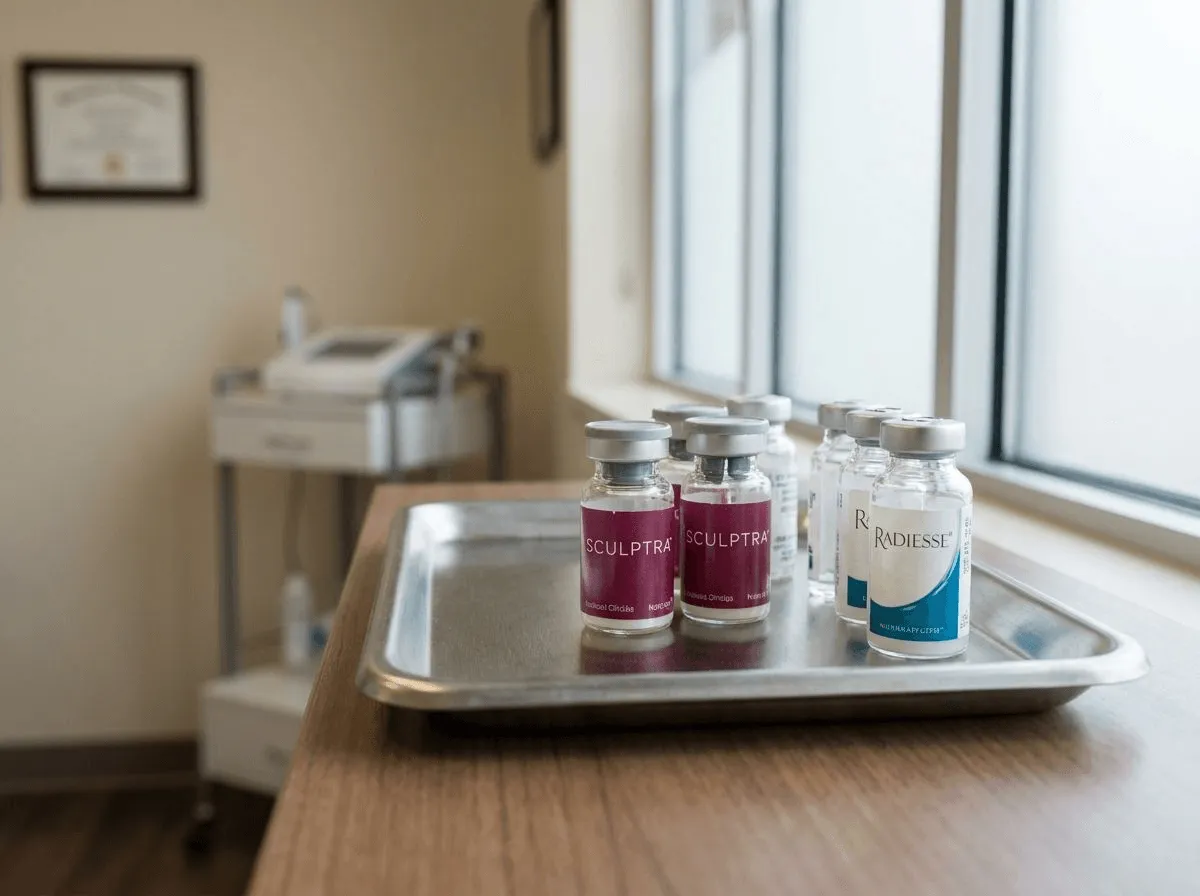
Radiesse: Calcium Hydroxylapatite (CaHA)
Radiesse takes a slightly different approach to biostimulation. Its active ingredient, calcium hydroxylapatite, is a mineral compound naturally found in human bones and teeth. The CaHA microspheres are suspended in a carboxymethylcellulose gel carrier, giving Radiesse a dual mechanism: the gel provides immediate volume upon injection, while the CaHA microspheres stimulate collagen production over the following months.
This immediate-plus-delayed mechanism makes Radiesse a hybrid product. You see visible improvement on the day of treatment (from the gel carrier), and then additional improvement develops over weeks as new collagen forms around the CaHA particles. The calcium hydroxylapatite is gradually metabolized into calcium and phosphate ions, which are naturally eliminated by the body.
Radiesse received FDA approval in 2006 for moderate to severe facial wrinkles and folds and in 2015 for hand rejuvenation. It is the only injectable filler FDA-approved for the backs of the hands, an area where volume loss can be particularly aging.
Radiesse Hyperdilute Protocol
One of the most significant recent advances in biostimulatory treatment is the hyperdilute Radiesse protocol. In this approach, Radiesse is diluted with saline and lidocaine to create a thinner mixture that can be spread over larger surface areas. Rather than providing volumetric correction, hyperdilute Radiesse is designed to improve skin quality, thickness, and elasticity across broad regions.
Common hyperdilute treatment areas include the neck, decolletage, upper arms, inner thighs, abdomen, and buttocks. By spreading a thin layer of CaHA across these areas, the treatment stimulates a diffuse collagen response that tightens and firms loose or crepey skin without adding significant volume.
This technique has expanded the role of Radiesse well beyond facial volumization, making it a versatile tool for addressing skin laxity across the body.
Best Treatment Areas for Radiesse
Radiesse is well-suited for the cheeks and midface, nasolabial folds, marionette lines, jawline definition, chin augmentation, pre-jowl area, and the backs of the hands. In its hyperdilute form, it can also treat the neck, chest, and other areas of skin laxity. Like Sculptra, Radiesse is not recommended for the lips or the tear trough area beneath the eyes.
Questions about injectables?
Our providers offer consultations to discuss your options. The $50 fee is applied toward your first treatment.
Talk to a ProviderSculptra vs Radiesse: Choosing the Right Biostimulator
Both Sculptra and Radiesse are excellent biostimulatory fillers, but they serve slightly different clinical purposes. Understanding the distinctions can help you and your provider determine which product best matches your goals.
Sculptra is generally preferred when the primary goal is gradual, progressive volume restoration across broad areas. Patients who want a very subtle, "no one can tell" transformation often gravitate toward Sculptra because the results build slowly over multiple sessions. It is also the better choice when treating very large areas of volume loss, as its liquid consistency allows for even distribution.
Radiesse tends to be preferred when patients want some immediate visible improvement alongside the long-term collagen stimulation. Because the gel carrier provides instant volume, Radiesse can deliver same-day results that Sculptra cannot. The hyperdilute protocol also gives Radiesse a unique advantage for treating skin laxity on the body.
In many cases, the best approach involves using both products strategically. Sculptra might be used for global midface volume restoration while Radiesse addresses the jawline and hands. Your provider will recommend the combination that aligns with your anatomy and aesthetic goals.
| Factor | Sculptra | Radiesse |
|---|---|---|
| Active ingredient | Poly-L-lactic acid | Calcium hydroxylapatite |
| Immediate volume | Minimal | Yes (gel carrier) |
| Sessions needed | 2 to 3 | 1 to 2 |
| Results timeline | 3 to 6 months | Immediate + 2 to 3 months |
| Duration of results | 2+ years | 12 to 18 months |
| Body treatment | Off-label (buttocks) | FDA-approved hyperdilute |
| Hand rejuvenation | Off-label | FDA-approved |
Who Is a Good Candidate for Biostimulatory Fillers?
Biostimulatory fillers work well for a broad range of patients, but certain profiles tend to see the most dramatic improvements. The best candidates typically share several characteristics.
- Age-related volume loss: Patients in their late 30s through 60s who have lost facial volume due to fat pad descent, bone resorption, or collagen decline
- Desire for gradual improvement: Patients who prefer subtle, progressive change rather than an overnight transformation
- Interest in long-term value: Patients who want results lasting 2 years or more without frequent maintenance appointments
- Skin laxity concerns: Patients with mild to moderate loose skin who are not yet candidates for surgical intervention
- Previous filler users seeking a new approach: Patients who have used HA fillers for years and want to transition to a treatment that builds their own collagen
- Body skin quality concerns: Patients with crepey skin on the neck, chest, arms, or hands (Radiesse hyperdilute)
Biostimulatory fillers are not appropriate for patients with active autoimmune conditions, skin infections in the treatment area, or a history of hypertrophic scarring or keloids. Pregnant and breastfeeding patients should postpone treatment. A thorough consultation ensures your candidacy before any treatment is performed.
What to Expect During Treatment
Understanding the treatment process from start to finish can help you feel prepared and confident on the day of your appointment.
Before Your Appointment
During your initial consultation, your provider will assess your facial anatomy, skin quality, and volume loss patterns. Photographs are taken for treatment planning and to track your progress over time. You will discuss your aesthetic goals, timeline expectations, and budget to determine whether Sculptra, Radiesse, or a combination approach is most appropriate.
In the days leading up to treatment, you should avoid blood-thinning medications and supplements (aspirin, ibuprofen, fish oil, vitamin E) unless medically necessary. This reduces the likelihood of bruising at injection sites.
During the Procedure
A typical biostimulatory filler appointment takes 30 to 60 minutes. Your provider cleanses the treatment area and applies a topical numbing cream, which takes about 15 to 20 minutes to take effect. Both Sculptra and Radiesse also contain lidocaine in their formulations, providing additional comfort during injection.
The product is injected using a combination of needles and cannulas, depending on the treatment area. Your provider massages the area during and after injection to ensure even distribution. For Sculptra, this massage is especially important to prevent the formation of small nodules.
After Treatment
Mild swelling, redness, and tenderness at the injection sites are normal and typically resolve within 2 to 5 days. Bruising may occur but is usually minor. Most patients return to normal activities the same day, although strenuous exercise and excessive heat exposure should be avoided for 24 to 48 hours.
For Sculptra patients, the 5-5-5 massage protocol (5 times daily, 5 minutes each, for 5 days) is a critical part of aftercare. Your provider will demonstrate the proper technique before you leave the office.
Combining Biostimulatory Fillers with Other Treatments
Biostimulatory fillers are frequently combined with other treatments to achieve comprehensive facial rejuvenation. Because they address volume loss and skin quality at a structural level, they serve as an excellent foundation for a multi-treatment plan.
Common combination approaches include pairing biostimulatory fillers with hyaluronic acid fillers for targeted areas like the lips, tear troughs, or nasolabial folds where precision matters. Neurotoxins (Botox, Dysport, or Xeomin) are frequently used alongside biostimulators to address dynamic wrinkles in the upper face while the biostimulator restores volume in the midface and lower face.
Microneedling or radiofrequency treatments can be scheduled between biostimulatory filler sessions to further accelerate collagen production and improve skin texture. EZ Gel PRF is another complementary option, using your own blood-derived growth factors to enhance the regenerative effects.
Your provider will design a treatment plan that sequences these treatments appropriately, allowing adequate healing time between procedures while maximizing the synergistic benefits of each modality.
Biostimulatory fillers build the structural foundation. Traditional fillers, neurotoxins, and skin treatments can then refine and enhance the results. This layered approach often produces the most natural and long-lasting outcomes.
Results Timeline and Longevity
One of the most common questions about biostimulatory fillers concerns the timeline. Because these products work by stimulating your body's own collagen production, the results unfold differently than traditional fillers.
With Sculptra, you may notice some initial fullness from the water carrier immediately after injection. This subsides within a few days as the water is absorbed. Over the next 4 to 6 weeks, new collagen begins forming around the PLLA microparticles. After your full series of 2 to 3 treatments, optimal results typically appear at the 3 to 6 month mark. These results can last 2 years or longer.
With Radiesse, you see immediate improvement from the gel carrier on the day of treatment. Additional collagen-driven improvement develops over the following 2 to 3 months. Results typically last 12 to 18 months, although some patients report sustained improvement beyond that window.
Maintenance treatments are recommended once your collagen production begins to slow. Because you are maintaining a collagen foundation rather than starting from scratch, maintenance sessions typically require less product than the initial series.
Frequently Asked Questions
Are biostimulatory fillers painful?
Most patients describe the discomfort as mild. A topical numbing cream is applied before treatment, and both Sculptra and Radiesse contain lidocaine in their formulations. You may feel pressure and a slight stinging sensation during injection, but the procedure is well-tolerated by most patients.
Can biostimulatory fillers replace traditional fillers entirely?
For some patients, yes. For others, the best approach is a combination. Biostimulatory fillers excel at restoring broad volume and improving skin quality, while traditional HA fillers remain the better choice for precise augmentation (lips, tear troughs) and areas where reversibility is important.
How many vials of Sculptra will I need?
The number of vials depends on your degree of volume loss and treatment goals. Most patients require 2 to 4 vials per session, spread across 2 to 3 sessions. During your consultation, your provider will recommend a treatment plan tailored to your anatomy.
What happens when biostimulatory fillers wear off?
Both Sculptra and Radiesse are fully biocompatible and are absorbed by the body over time. The PLLA in Sculptra breaks down into lactic acid, and the CaHA in Radiesse metabolizes into calcium and phosphate. The collagen your body produced remains, although it will gradually diminish without maintenance treatments, just as it would with natural aging.
Can I get Sculptra or Radiesse if I already have HA fillers?
Yes. Biostimulatory fillers can be layered with existing hyaluronic acid fillers. In fact, many patients use HA fillers for targeted areas (lips, under-eyes) and biostimulators for global volume restoration. Your provider will assess your current filler placement during the consultation.
Is there any downtime after biostimulatory filler treatment?
There is no significant downtime. You may experience mild swelling, redness, or bruising for 2 to 5 days. Most patients return to work and normal activities the same day. Strenuous exercise should be avoided for 24 to 48 hours.
Related Articles
This article supports our Biostimulatory Fillers service page. Learn more about treatment options, candidacy, and what to expect.