
CO2 laser resurfacing is one of the most powerful skin rejuvenation treatments available in aesthetic medicine. It delivers results that other treatments simply cannot match for deep wrinkles, surgical or acne scarring, sun damage, and overall skin texture. But powerful results come with a real recovery period, and patients deserve to know exactly what to expect before, during, and after treatment.
At Allen Medical Aesthetics, we use both CO2 fractional laser and Erbium YAG laser technology to customize every resurfacing treatment. This guide walks you through what CO2 laser results actually look like, how recovery unfolds day by day, and how to determine whether you are a strong candidate for this transformative procedure.
CO2 laser resurfacing can produce a visible change in skin texture, acne scarring, wrinkles, and sun damage, often in a single treatment. Recovery involves 7 to 14 days of visible healing, with full results developing over 3 to 6 months as collagen remodeling continues.
CO2 laser is the gold standard for skin resurfacing, but it requires a real commitment to recovery. Plan for 7 to 14 days of social downtime and 3 to 6 months for full collagen remodeling to complete.
What CO2 Laser Resurfacing Does to the Skin
CO2 (carbon dioxide) laser resurfacing works by delivering concentrated beams of light energy at a 10,600 nm wavelength. This wavelength is absorbed intensely by water in the skin cells, causing controlled vaporization of damaged tissue. The thermal energy also penetrates deeper layers of the dermis, stimulating a robust wound-healing response that produces new collagen and elastin over the following months.
There are two primary approaches to CO2 laser treatment. Fully ablative CO2 laser removes the entire surface layer of skin in the treatment area, producing the most dramatic results but also the most significant recovery. Fractional CO2 laser delivers the energy in a pixelated pattern, treating roughly 20% to 40% of the skin surface while leaving healthy tissue intact between treatment zones. This fractional approach reduces downtime while still producing meaningful results.
Most cosmetic CO2 treatments today use the fractional approach. It offers an excellent balance between dramatic improvement and manageable recovery. At Allen Medical Aesthetics, we can adjust the density, depth, and energy of the fractional pattern to customize your treatment based on your specific concerns, skin type, and tolerance for downtime.
The collagen remodeling triggered by CO2 laser treatment continues for 3 to 6 months after the procedure. This means that while you will see initial improvements as the skin heals, your results continue to improve well after the visible recovery period is complete. Many patients report that their skin looks its best at the 3- to 4-month mark.
Expected Results by Concern
CO2 laser resurfacing addresses multiple skin concerns simultaneously, but the degree of change varies depending on the specific issue being treated and your individual skin. The table below reflects what to generally expect from a single fractional CO2 treatment, and your provider will set expectations specific to your skin at consultation.
| Concern | What to Expect (Single Treatment) | Sessions for Optimal Results | Notes |
|---|---|---|---|
| Acne Scars (Atrophic) | Noticeable smoothing | 1 to 3 | Deep icepick scars may need multiple sessions; rolling and boxcar scars respond best |
| Sun Damage / Photodamage | Significant clearing | 1 to 2 | Brown spots, rough texture, and mottled pigmentation respond very well |
| Fine Lines and Wrinkles | Noticeable softening | 1 to 2 | Perioral (around mouth) and periorbital (around eye) lines respond especially well |
| Deep Wrinkles | Moderate softening | 1 to 3 | May be combined with fillers or neurotoxins for comprehensive rejuvenation |
| Skin Texture and Pore Size | Significant refinement | 1 to 2 | One of the most consistently improved concerns; smoother, more refined texture |
| Surgical Scars | Moderate improvement | 2 to 4 | Results depend on scar type, age, and location; older scars may respond less |
| Skin Laxity (Mild) | Mild to moderate tightening | 1 to 2 | Tightening effect from collagen contraction; best for mild to moderate laxity |

“CO2 laser resurfacing is one of the few treatments where patients look in the mirror a few months later and genuinely cannot believe the difference. I have seen it transform skin that years of topical treatments could not improve, particularly for patients with deep acne scarring or significant sun damage.”
Therese Allen, MSN, RN Lead Aesthetic Nurse Injector
Day-by-Day Recovery Timeline
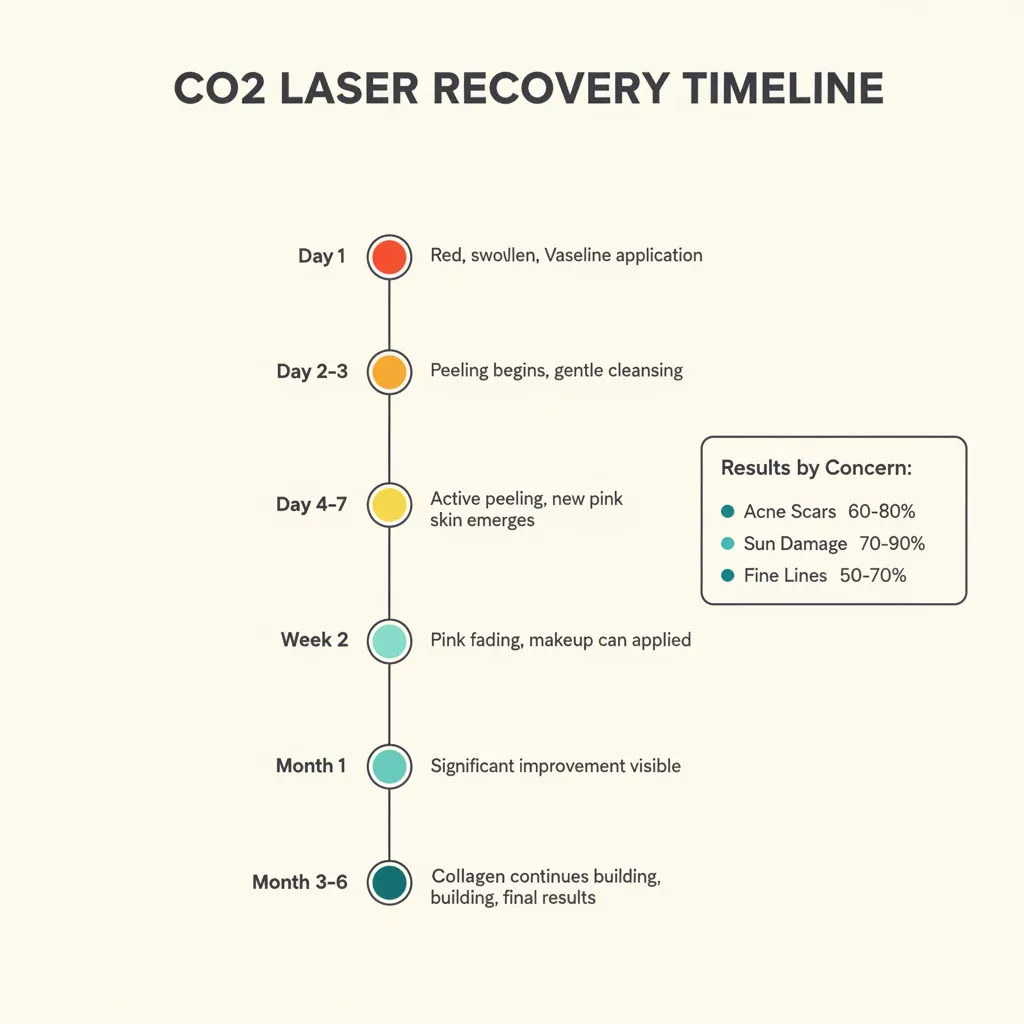
Recovery from fractional CO2 laser resurfacing follows a predictable pattern. While individual experiences vary based on treatment intensity and skin type, the timeline below represents what most patients experience after a standard fractional CO2 treatment.
| Timeframe | What to Expect | Care Instructions |
|---|---|---|
| Day 1 | Skin is red, hot, and swollen. Feels like a significant sunburn. Some oozing of clear fluid is normal. | Apply prescribed ointment (Aquaphor or similar). Use cool compresses. Sleep elevated. Avoid touching the face. |
| Days 2 to 3 | Swelling peaks, especially around the eyes. Skin remains red with a bronze or dark brown tint forming. Tightness increases. | Continue ointment application every 2 to 3 hours. Gentle cleansing with mild soap. Stay hydrated. Avoid direct sunlight. |
| Days 4 to 5 | Peeling begins. Skin may look like it is flaking or shedding in sheets. Itching can be significant. | Do not pick or pull at peeling skin. Continue ointment. Gentle cleansing. Itching is a sign of healing. |
| Days 6 to 7 | Most peeling completes. New skin underneath is pink, smooth, and sensitive. Swelling is mostly resolved. | Transition to gentle moisturizer. Begin using mineral sunscreen (SPF 30+). Avoid active skincare ingredients. |
| Days 8 to 14 | Pink/red tone persists. Skin is noticeably smoother but sensitive. Most patients feel comfortable returning to work with makeup. | Mineral makeup can be applied gently. Continue strict sun protection. Avoid retinoids, acids, and exfoliants. |
| Weeks 3 to 4 | Pinkness fades significantly. Texture improvement becomes visible. Skin feels tighter and more refined. | Gradually resume normal skincare. Sunscreen remains critical. Follow-up appointment to assess healing. |
| Months 2 to 3 | Collagen remodeling continues. Scars continue to improve. Skin tone evens out. Most pinkness resolved. | Full skincare routine can resume. Continue SPF. Results are approaching their peak. |
| Months 3 to 6 | Full results are visible. Maximum collagen production achieved. Skin looks its best. | Maintenance treatments or complementary procedures can be discussed at this stage. |
Plan your CO2 laser treatment for fall or winter when sun exposure is lower and you can wear scarves and hats comfortably. The single most important post-treatment habit is rigorous sun protection for at least 3 months.
Questions about laser and skin?
Our providers offer consultations to discuss your options. The $50 fee is applied toward your first treatment.
Talk to a ProviderFractional vs Fully Ablative CO2: How They Compare
Understanding the difference between fractional and fully ablative CO2 treatment helps you set appropriate expectations for both results and recovery.
Fully ablative CO2 laser removes the entire surface layer of skin in the treatment area. The laser vaporizes tissue in a continuous pass rather than a pixelated pattern. This approach produces the most dramatic results in a single session but comes with 2 to 3 weeks of intense recovery and a higher risk of complications including prolonged redness, hypopigmentation, and scarring. Fully ablative treatment is rarely performed today for full-face treatment, though it may be used on small areas of severe scarring.
Fractional CO2 laser delivers energy in a grid pattern of tiny treatment columns (called microthermal zones), leaving healthy tissue intact between each column. This preserved tissue serves as a reservoir for rapid healing. Because only 20% to 40% of the skin surface is directly treated, recovery is significantly shorter and complication risk is lower. Most patients achieve excellent results with fractional treatment, and those who need more dramatic improvement can undergo a second session after full healing.
At Allen Medical Aesthetics, we use fractional CO2 for the vast majority of resurfacing treatments. Our laser system allows us to precisely control the depth and density of treatment, so we can deliver aggressive treatment where it is needed (such as areas of deep scarring) while using lighter settings on areas with thinner skin or less damage.
Who Is a Good Candidate for CO2 Laser Resurfacing
CO2 laser resurfacing can produce life-changing results for the right patient. However, it is not appropriate for everyone. Your candidacy depends on your skin type, medical history, current skin condition, and ability to commit to the recovery process.
Ideal candidates for CO2 laser resurfacing typically have Fitzpatrick skin types I through III (fair to medium skin tones) and want to address acne scars, sun damage, skin texture concerns, or moderate to deep wrinkles. They should be in good overall health, be non-smokers (or willing to stop smoking for at least 4 weeks before and after treatment), and have realistic expectations about both results and recovery.
Patients should also be able to commit to 7 to 14 days of social downtime and strict post-procedure care, including diligent sun avoidance for at least 3 months. This is not a lunchtime procedure. It requires planning and dedication to the healing process.
Who Should Use Caution or Avoid CO2 Laser
Patients with darker skin tones (Fitzpatrick types IV through VI) face a higher risk of post-inflammatory hyperpigmentation (PIH) and should approach CO2 laser with caution. This does not mean treatment is impossible for darker skin types, but it requires an experienced provider who understands how to adjust settings and manage the risk. Alternative treatments such as RF microneedling may be a better first-line option for these patients.
Other contraindications include active acne or skin infections in the treatment area, recent use of isotretinoin (Accutane) within the past 6 to 12 months, a history of keloid scarring, active cold sore outbreaks (antiviral prophylaxis is typically prescribed), pregnancy or breastfeeding, and certain autoimmune or connective tissue disorders that impair wound healing.
What to Expect at Your CO2 Laser Appointment
Knowing what your appointment will look like helps reduce anxiety and ensures you arrive prepared. A typical CO2 laser resurfacing session at Allen Medical Aesthetics follows a structured protocol designed for both safety and comfort.
Before your treatment, you will have a thorough consultation to review your goals, assess your skin, and discuss the treatment plan. If you have a history of cold sores, an antiviral medication (valacyclovir) will be prescribed starting 2 to 3 days before treatment to prevent an outbreak during healing.
On treatment day, plan to arrive with clean skin free of makeup, sunscreen, or skincare products. A topical numbing cream is applied 30 to 60 minutes before the procedure. For more aggressive treatments, we may use nerve blocks or oral sedation for additional comfort. The laser treatment itself typically takes 15 to 45 minutes depending on the area being treated.
During treatment, you will feel warmth and a stinging or pricking sensation. Most patients describe the discomfort as moderate and manageable with numbing. After treatment, a soothing ointment is applied and you are given detailed written post-care instructions. You will need someone to drive you home, as your vision may be slightly impaired from swelling and ointment if the periorbital area was treated.
CO2 Laser and Erbium YAG: How Allen Medical Uses Both
At Allen Medical Aesthetics, we have both CO2 fractional laser and Erbium YAG laser available. This dual capability allows us to customize treatment in ways that a single-laser practice cannot.
CO2 laser is the more aggressive option. It penetrates deeper, produces more thermal injury, and triggers a stronger collagen response. It is the best choice for patients with significant sun damage, deep acne scarring, or moderate to deep wrinkles who are willing to accept a longer recovery.
Erbium YAG laser operates at a different wavelength (2,940 nm) that is absorbed even more efficiently by water. It removes tissue precisely with less surrounding thermal damage. This translates to a shorter recovery period (typically 5 to 7 days), less post-treatment redness, and a lower risk of hypopigmentation. Erbium YAG is an excellent option for patients who want resurfacing results with less downtime, or for areas with thinner skin where CO2 may be too aggressive.
In some cases, we combine both technologies in a single session, using CO2 on areas that need deeper treatment (such as acne-scarred cheeks) and Erbium YAG on more delicate areas (such as the eyelids or upper lip). This combination approach gives us maximum flexibility to deliver the best results for your specific skin.
Having access to both CO2 and Erbium YAG lasers means your treatment can be truly customized. Areas with deep scarring receive more aggressive treatment, while delicate areas benefit from the gentler, faster-healing Erbium approach.
Long-Term Results and Maintenance
The results of CO2 laser resurfacing are long-lasting but not permanent. The collagen produced during the remodeling phase remains in the skin, and the textural improvements are durable. However, your skin continues to age, and new sun damage can accumulate if you do not maintain proper protection.
Most patients enjoy significant improvement for 3 to 5 years after a single CO2 treatment, with some benefits lasting even longer. The degree of lasting improvement depends on your post-treatment skincare routine, sun protection habits, and the natural rate at which your skin ages.
To maintain and build on your results, many patients incorporate less aggressive maintenance treatments between CO2 sessions. Options include RF microneedling every 6 to 12 months for ongoing collagen stimulation, medical-grade skincare with retinoids and antioxidants, consistent broad-spectrum sunscreen use (SPF 30 or higher, reapplied throughout the day), and periodic chemical peels or DiamondGlow facials for surface maintenance.
If your concerns return or progress over time, a repeat CO2 treatment is possible after the skin has fully healed (typically 12 months or more after the initial treatment). Many patients find that a second session, if needed at all, requires less aggressive settings because the foundation of healthy collagen from the first treatment is already in place.
Frequently Asked Questions
How painful is CO2 laser resurfacing?
With proper numbing (topical anesthetic applied 30 to 60 minutes before treatment), most patients describe the sensation as moderate warmth with intermittent stinging. The discomfort is manageable and the treatment is relatively quick (15 to 45 minutes). Post-treatment discomfort is similar to a sunburn and is managed with cool compresses and prescribed ointment.
How long does it take to see CO2 laser results?
Initial improvements in texture and tone are visible once peeling completes (around day 7 to 10). However, the most significant results develop over 3 to 6 months as collagen remodeling progresses. Many patients report that their skin looks its best at the 3- to 4-month mark.
Can CO2 laser remove acne scars completely?
CO2 laser can meaningfully improve acne scars, often after a single treatment. Complete elimination of deep scars is unlikely with any single treatment, but 2 to 3 sessions can produce a more dramatic result. Rolling and boxcar scars respond best; deep icepick scars may also benefit from combination treatments.
Is CO2 laser safe for dark skin?
CO2 laser carries a higher risk of post-inflammatory hyperpigmentation in Fitzpatrick skin types IV through VI. Treatment is possible with an experienced provider using conservative settings and appropriate pre- and post-treatment protocols, but alternative treatments like RF microneedling may be safer first-line options for darker skin tones.
How many CO2 laser sessions do I need?
Many patients achieve excellent results with a single session. For deeper concerns like severe acne scarring, 2 to 3 sessions spaced 6 to 12 months apart may be recommended. Your provider will assess your skin and recommend a treatment plan during your consultation.
Can I wear makeup after CO2 laser?
Most providers recommend waiting 7 to 10 days before applying makeup, and only mineral-based makeup should be used initially. Avoid conventional makeup until the skin has fully healed (typically 2 weeks), as ingredients in standard makeup can irritate healing skin and increase infection risk.
What is the difference between CO2 laser and Erbium YAG?
CO2 laser penetrates deeper and produces more thermal injury, resulting in stronger collagen stimulation but longer recovery (7 to 14 days). Erbium YAG is more precise with less thermal damage, meaning shorter recovery (5 to 7 days) and lower risk of side effects. CO2 is better for deep scars and significant sun damage; Erbium YAG is ideal for moderate concerns or delicate areas.
How much does CO2 laser resurfacing cost?
According to the American Society of Plastic Surgeons, the national average for a CO2 laser treatment is $2,509. Your actual cost depends on the treatment area, intensity, and geographic location. A consultation will provide an accurate estimate based on your specific treatment plan.
Related Articles
This article supports our Co2 Laser Resurfacing service page. Learn more about treatment options, candidacy, and what to expect.