

A double chin is one of the most common aesthetic concerns patients bring to our clinic, and it is also one of the most frustrating. Diet and exercise can reduce overall body fat, but submental fullness (the clinical term for a double chin) often persists regardless of how healthy your lifestyle is. Genetics, aging, and weight fluctuations all contribute to fat accumulation beneath the chin, and for many people, no amount of effort seems to make a difference.
Kybella is the first and only FDA-approved injectable treatment designed specifically to destroy fat cells under the chin. At Allen Medical Aesthetics in Des Moines, WA, we use Kybella to help patients achieve a more defined jawline and profile without surgery, liposuction, or general anesthesia. This guide covers everything you need to know about how Kybella works, what treatment involves, and what kind of results you can expect.
Kybella is an FDA-approved injectable made of synthetic deoxycholic acid that permanently destroys fat cells under the chin. Most patients need 2 to 4 treatment sessions spaced about a month apart. Once the fat cells are destroyed, they cannot store or accumulate fat again, making results long-lasting.
Kybella is the only injectable approved by the FDA for reducing submental fat (double chin). Results are permanent because destroyed fat cells do not regenerate.
How Kybella Works: The Science Behind the Treatment
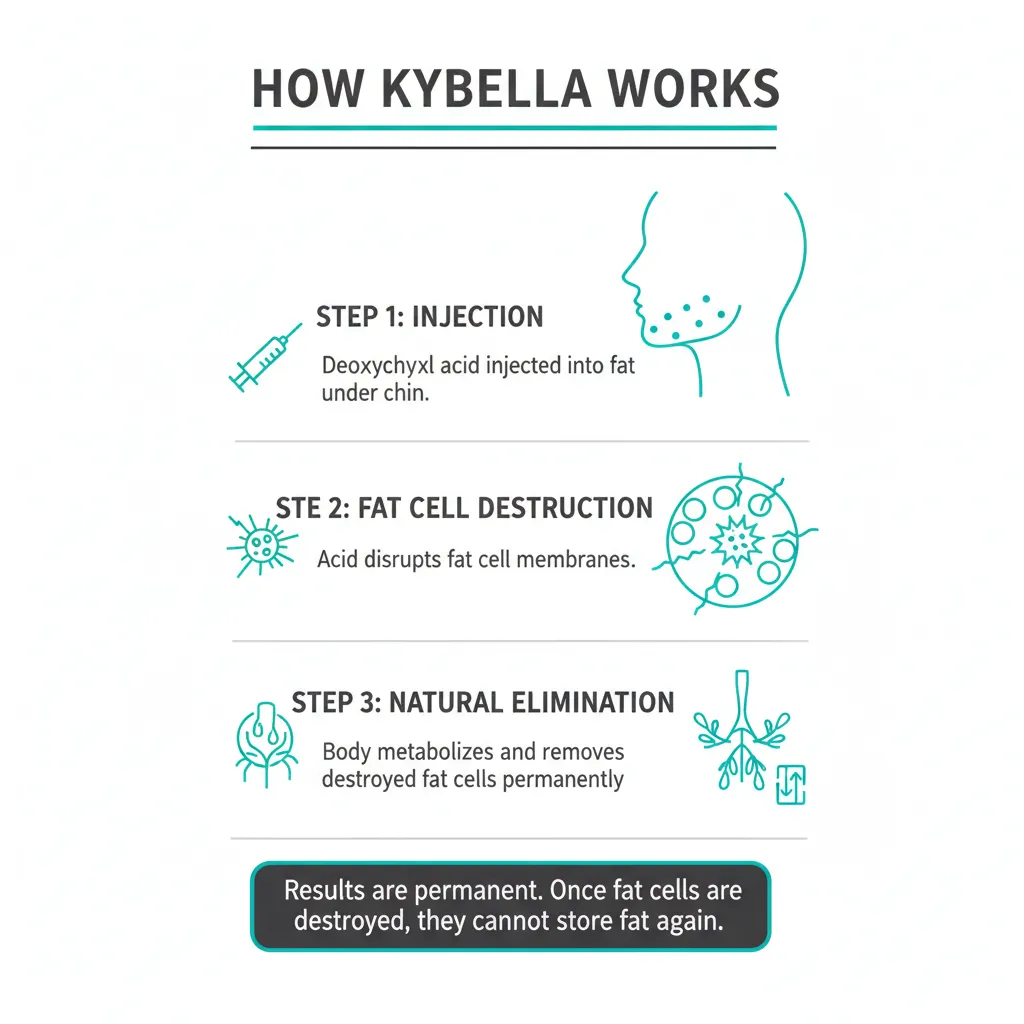
Kybella's active ingredient is synthetic deoxycholic acid, a molecule that occurs naturally in your body. Your gallbladder produces deoxycholic acid as part of the digestive process, where it helps break down and absorb dietary fat. When this same molecule is injected into the fat layer beneath the chin, it disrupts the membrane of fat cells (adipocytes), causing them to rupture and die.
Once the fat cell membranes are compromised, the contents of the cells are released into the surrounding tissue. Your body's natural inflammatory and metabolic processes then clear away the cellular debris over the following weeks. The destroyed fat cells are permanently eliminated. They do not regenerate, and they cannot store fat again. This is what makes Kybella's results different from weight loss alone, where fat cells shrink but remain in place, ready to expand again.
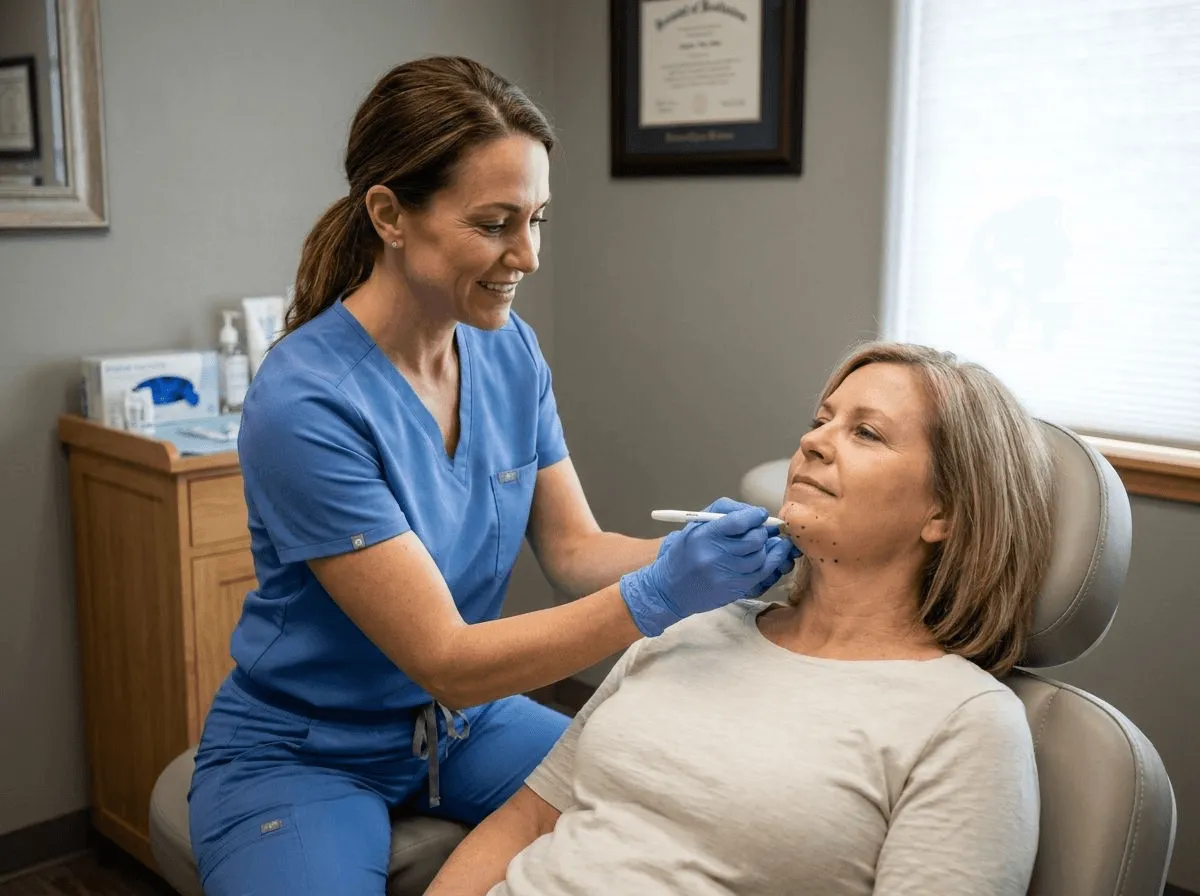
The treatment is highly targeted. Your provider marks a precise grid of injection points on the underside of your chin and administers small doses of Kybella at each point. This grid-based approach ensures even distribution of the medication throughout the treatment area while avoiding surrounding structures like nerves and the marginal mandibular nerve that controls lower lip movement.

“What patients find most compelling about Kybella is the permanence. Deoxycholic acid breaks down the fat cell membrane completely, and once that cell is destroyed, it is gone for good. Your body clears the debris naturally over the following weeks, and those fat cells never come back. That is fundamentally different from treatments that shrink fat cells temporarily.”
Brittanie Lane, MSN, ARNP Functional Wellness Nurse Practitioner
FDA Approval and How It Was Established
Kybella (deoxycholic acid injection) received FDA approval in April 2015 for the reduction of moderate to severe submental fat in adults, the first and only injectable approved specifically for this indication.
Because the treatment intentionally destroys fat cell membranes, some inflammatory response (swelling, tenderness, firmness) is an expected part of how it works rather than a sign of a problem. Most side effects are localized to the treatment area and temporary.
Since its approval, Kybella has been used in a large number of treatments. It is manufactured by Allergan (now part of AbbVie), the same company that produces Botox and the Juvederm line of dermal fillers. The treatment is available exclusively through licensed healthcare providers and cannot be purchased over the counter or self-administered.
Who Is a Good Candidate for Kybella?
Kybella works best for adults who have moderate to severe submental fullness, meaning a noticeable pocket of fat beneath the chin that creates a "double chin" appearance. The ideal candidate has good skin elasticity, is at or near their goal weight, and is bothered enough by the fullness under their chin to commit to a multi-session treatment plan.
Candidacy is determined during a consultation where your provider evaluates the amount of submental fat present, the quality and elasticity of your skin, and the anatomy of your neck and jawline. Patients with a small to moderate amount of fat and firm skin tend to see the most dramatic results because the skin contracts nicely as the fat volume decreases.
Good Candidates for Kybella
You may be a strong candidate if you have a visible double chin that persists despite healthy eating and regular exercise. Candidates typically range in age from their late 20s to their 60s. You should be in generally good health, not pregnant or breastfeeding, and free of infections or medical conditions affecting the treatment area.
Who May Not Be a Good Fit
Kybella may not be the best option for patients with very loose or sagging skin under the chin. Because Kybella reduces fat volume, patients with significant skin laxity may find that removing the underlying fat leaves them with excess, drooping skin. In these cases, a surgical procedure like a neck lift or submentoplasty may produce a better result. Patients who have had prior surgery in the neck or chin area should disclose this during their consultation, as scar tissue can affect treatment planning.
Kybella is also not recommended for patients with swallowing difficulties or for those who are pregnant, planning to become pregnant, or breastfeeding. If you have an active infection in the treatment area, treatment should be postponed until it resolves.
During your consultation, your provider can perform a simple "pinch test" to assess how much submental fat is present versus loose skin. This helps determine whether Kybella alone will achieve your goals or whether a combination approach would be more effective.
Questions about injectables?
Our providers offer consultations to discuss your options. The $50 fee is applied toward your first treatment.
Talk to a ProviderWhat to Expect During a Kybella Treatment Session
A Kybella session is performed in-office and typically takes 15 to 30 minutes from start to finish. No general anesthesia is required, and you can return to most normal activities afterward, though some downtime should be planned for swelling.
- 1. Consultation and marking: Your provider examines your chin and neck, discusses your goals, and marks a series of injection points on the underside of your chin using a temporary grid. The grid ensures precise, even distribution of the medication.
- 2. Numbing: A topical numbing cream or ice is applied to the treatment area 15 to 20 minutes before injections. Some providers also use a local anesthetic to improve comfort.
- 3. Injection: Using a fine needle, your provider administers multiple small injections of Kybella into the marked grid points. Most sessions involve 20 to 50 small injections, depending on the size of the treatment area and the amount of submental fat present.
- 4. Post-treatment care: After the injections, ice may be applied to reduce initial swelling. Your provider will review aftercare instructions and schedule your next session if needed.
Expect significant swelling under the chin for 2 to 5 days after each session. This swelling is a sign that the deoxycholic acid is actively disrupting fat cells. Many patients describe looking like they have a "bullfrog chin" for the first few days, which then gradually resolves.
Results Timeline: When Will You See a Difference?
Kybella results develop gradually. Because the treatment works by destroying fat cells that your body then clears through its metabolic processes, visible improvement unfolds over weeks rather than days.
In the first week after treatment, swelling is the dominant feature. This swelling actually makes the area look temporarily larger, which can be disconcerting if you are not expecting it. By weeks 2 to 3, the swelling subsides and you begin to see initial contouring. The most noticeable improvement typically becomes apparent 4 to 6 weeks after each session, as the body continues to process and eliminate the destroyed fat cells.
Most patients see meaningful results after 2 to 4 sessions, with each session building on the previous one. The final result is a slimmer, more contoured profile that reflects the cumulative fat reduction from all sessions. Because the fat cells are permanently destroyed, the results are long-lasting provided you maintain a stable weight.
| Timeframe | What to Expect |
|---|---|
| Days 1 to 3 | Significant swelling, numbness, possible bruising. Area may look larger temporarily. |
| Days 4 to 7 | Swelling begins to decrease. Mild tenderness and firmness in the treated area. |
| Weeks 2 to 4 | Swelling resolves. Early contouring becomes visible. Numbness may linger. |
| Weeks 4 to 6 | Most noticeable improvement from that session. Fat cells continuing to clear. |
| 6 to 12 weeks | Full result of that session visible. Ready for next treatment if needed. |
Common Side Effects and Recovery
Kybella has a well-documented safety profile, and the most common side effects are localized to the treatment area. Because the medication is intentionally causing cell destruction, some inflammatory response is expected and even desirable.
Common Side Effects
Swelling is the most universal side effect, occurring in nearly all patients. It typically peaks at 24 to 48 hours and resolves within 5 to 7 days, though mild swelling can linger for up to 2 weeks. Bruising is common and usually fades within 7 to 10 days. Numbness or decreased sensation in the treatment area is common and can last several weeks. Pain, tenderness, and firmness at the injection sites are expected for the first few days. Redness and small areas of hardness (induration) may also develop temporarily.
Rare but Serious Side Effects
The most notable rare side effect is marginal mandibular nerve injury, which can cause an uneven smile or facial weakness. When it occurs, it typically resolves on its own within 1 to 3 months. This is why precise injection technique and thorough anatomical knowledge are essential. Dysphagia (difficulty swallowing) has been reported rarely and also resolves on its own. Tissue necrosis (skin death) is an extremely rare but serious complication that can occur if the medication is injected too superficially.
At Allen Medical Aesthetics, we use careful anatomical mapping and conservative dosing to minimize these risks. Your safety is always the top priority.
Kybella Treatment Areas: Beyond the Double Chin
While Kybella is FDA-approved only for submental fat (the area under the chin), some providers use it off-label in other small pockets of fat. These off-label uses include the jowl area along the jawline, small fat deposits on the upper arms (sometimes called "bra bulge"), and the area above the knees. However, off-label use carries additional considerations, and the evidence base is much smaller than for submental treatment.
The submental area remains the primary, FDA-approved use for Kybella. The anatomy of this region is well understood, the fat pocket is accessible and well-defined, and dosing and technique are well established for this indication. For other areas of unwanted fat, alternative treatments such as surgical liposuction or CoolSculpting may be more appropriate.
How Kybella Compares to Surgical Options
For patients considering double chin reduction, the main alternatives to Kybella are submental liposuction and neck lift surgery. Each approach has distinct advantages depending on the patient's anatomy, goals, and tolerance for downtime.
Submental liposuction is a surgical procedure performed under local or general anesthesia. It removes fat through a small cannula inserted via a tiny incision. Liposuction typically achieves more dramatic results in a single session and can address larger volumes of fat. However, it involves surgical risks, anesthesia, and a recovery period of 1 to 2 weeks with compression garments.
A neck lift addresses both fat and excess skin. It is the most comprehensive option but also involves the most downtime, cost, and surgical risk. For patients with significant skin laxity, a neck lift may be the only way to achieve a truly contoured result.
Kybella occupies a middle ground. It is non-surgical, requires no anesthesia beyond topical numbing, and involves minimal downtime per session. The trade-off is that results develop gradually over multiple sessions rather than appearing immediately after a single procedure. For patients who want visible improvement without surgery, Kybella offers a compelling option.
Kybella is ideal for patients who want fat reduction without surgery. If you have significant skin laxity or a large volume of fat, surgical options may deliver a more complete result. Your provider can help you determine the best approach during a consultation.
Frequently Asked Questions
Is Kybella painful?
Most patients describe the injections as a mild to moderate burning or stinging sensation that lasts a few minutes. Topical numbing cream and ice are applied before treatment to minimize discomfort. The area may feel sore, tight, and tender for several days after each session.
How many Kybella treatments will I need?
Most patients need 2 to 4 treatment sessions, though some may need up to 6. Sessions are spaced approximately 4 to 6 weeks apart. The number of sessions depends on the amount of submental fat present and your desired result. Your provider will create a personalized treatment plan during your consultation. Learn more in our guide to Kybella treatment sessions.
Are Kybella results permanent?
Yes, the fat cells destroyed by Kybella are permanently eliminated and cannot regenerate. However, remaining fat cells in the area can still expand if you gain a significant amount of weight. Maintaining a stable weight helps preserve your results indefinitely.
How much does Kybella cost?
The cost of Kybella varies based on the number of vials used per session and the total number of sessions required. A single session typically costs between $600 and $1,800 depending on dosing. Most patients need 2 to 4 sessions, so total treatment cost generally ranges from $1,200 to $5,000.
Can Kybella tighten loose skin under the chin?
Kybella reduces fat but does not directly tighten skin. However, many patients experience mild skin tightening as the fat volume decreases and the skin contracts over time. Patients with good skin elasticity tend to see the best contouring results. If you have significant skin laxity, your provider may recommend combining Kybella with a skin-tightening treatment.
Is there any downtime after Kybella?
Kybella does not require formal downtime, but most patients plan for 2 to 5 days of noticeable swelling that can affect their appearance. You can return to work and most activities the same day, though many patients prefer to schedule treatments before a weekend or a few days off.
Related Articles
This article supports our Kybella Fat Reduction service page. Learn more about treatment options, candidacy, and what to expect.